
In the world of martial arts, understanding the ranking system is essential for progression and motivation. Krav Maga, known for its practical self-defense techniques, employs a belt ranking system that guides students from beginner to expert. This system not only marks your journey but also ensures you’re learning effective and progressive combat skills. Many practitioners wonder how these rankings impact their training and what each level signifies about their proficiency. Exploring the nuances of the Krav Maga belt system can ignite your passion for learning and help you set achievable goals. Join us as we delve into the details of Krav Maga’s ranking process, addressing common questions and concerns, ultimately empowering you on your self-defense journey.
What Is the Krav Maga Ranking System?
The Krav Maga ranking system is designed to provide a framework for student progression through various skill levels in this self-defense martial art. Unlike many traditional martial arts that display colored belts prominently, Krav Maga often adopts a less visible approach, with advancement generally signified by a six-level belt system, though the specific belt colors may vary by school. The brackets in this system help instructors assess a student’s proficiency and understanding of techniques, allowing for clear goals as students train and improve their defensive skills.
Krav Maga belts typically signify a student’s competency in self-defense techniques, ranging from basic skills to advanced strategies for dealing with real-life confrontations. This progression is crucial because it encourages continuous learning and regular practice. When a student earns their belt, it symbolizes not just technical skill but also their understanding of the ethical and legal implications of using self-defense effectively.
Advancing through the rank levels demands much more than mere physical ability; students must also demonstrate knowledge of legal considerations surrounding the use of force, as well as proficiency in de-escalation techniques. This multifaceted approach not only enhances a student’s technical abilities but also prepares them to respond appropriately in various situations, promoting a balanced view of conflict resolution that respects safety and legality.
Ultimately, the Krav Maga ranking system is not just a means of organization; it serves as a motivational tool, empowering practitioners to take control of their personal safety while fostering a community of responsible self-defenders.
Understanding Krav Maga Belt Colors and Levels
It’s essential to understand that the Krav Maga ranking system is both a reflection of skill and a framework that encourages personal development in self-defense. Each belt color not only signifies a student’s level of technical ability but also represents their understanding of the psychological and ethical implications of self-defense. The colors and levels within Krav Maga may vary between schools, but the general structure provides clear progress markers for practitioners.
### Belt Colors and Their Significance
Krav Maga typically features a series of belts that range from beginner to advanced levels, often including:
- White Belt: Represents a beginner’s entry into the world of self-defense, focusing on basic techniques and principles.
- Yellow Belt: Expands on foundational skills, including more complex techniques and legal considerations related to self-defense.
- Orange Belt: Introduces the application of skills in various scenarios, enhancing decision-making during confrontations.
- Green Belt: Develops proficiency and integrates advanced techniques while emphasizing ethical responses.
- Blue Belt: Focuses on self-defense against weapons and multiple attackers, highlighting situational awareness.
- Brown and Black Belts: These signify advanced mastery, with the black belt often representing a commitment to teaching others and a deeper understanding of the art.
### Progression and Responsibilities
Advancing through the ranks requires dedication not only to physical training but also to comprehending the legal and moral responsibilities that accompany self-defense. Each level builds upon the last, reinforcing the idea that Krav Maga is as much about mental acuity and ethical decision-making as it is about physical capability. For instance, a student must demonstrate knowledge of applicable self-defense laws and engage in de-escalation techniques, preparing them to handle potential conflicts thoughtfully and safely.
### Practical Insights into the Ranking System
For many practitioners, the belt system also serves as a source of motivation. Whether you’re a beginner or an advanced student, setting goals around belt progress can enhance your training experience. It’s important to remember that earning a belt is not purely a physical attainment; it also requires an understanding of the implications of using force. As students train, they should respect the seriousness of the martial practice, understanding that Krav Maga empowers them to protect themselves while legally and ethically navigating potential confrontations.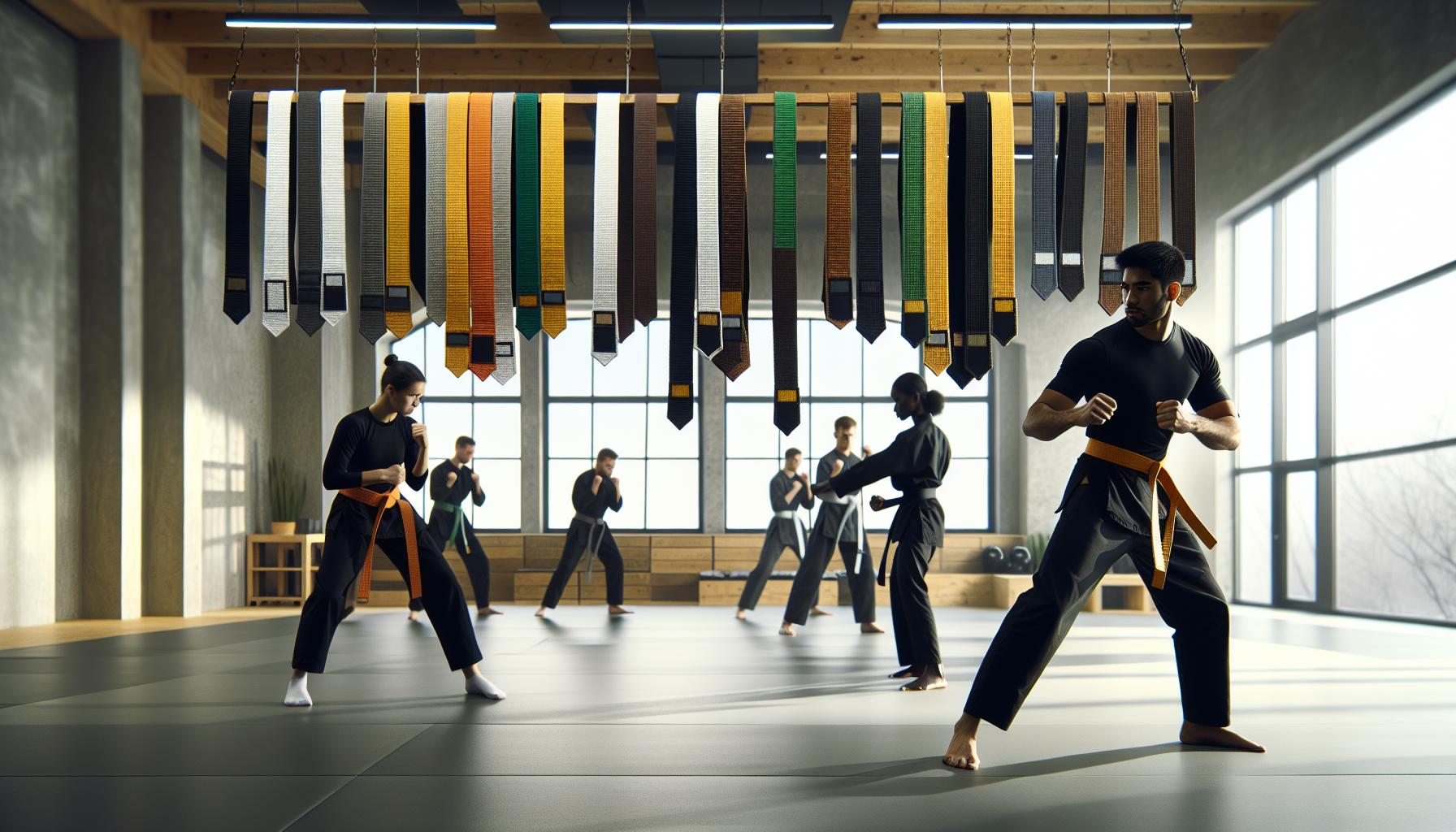
The Importance of Belts in Krav Maga Training
The belt system in Krav Maga serves a vital role in shaping the training journey of practitioners, providing essential feedback on skill development while emphasizing the ethical and legal considerations of self-defense. Each belt color marks a specific level of proficiency, guiding students through a structured path that fosters growth, confidence, and responsibility. Understanding this system is crucial for anyone involved in Krav Maga, as it is not just about physical prowess but also about becoming a thoughtful and responsible defender.
Advancing through the ranks instills a sense of achievement that motivates practitioners to persevere in their training. For example, the transition from a white belt to a yellow belt is not solely indicative of mastering basic techniques; it introduces students to fundamental legal knowledge that governs self-defense. This awareness encourages students to approach every training scenario with seriousness and respect. They learn that martial arts practice goes beyond the dojo, impacting real-life situations where decisions can have profound consequences.
Moreover, the ranking system encourages a continuous cycle of learning and teaching. Higher-ranking practitioners often take on mentoring roles, helping to instill the values and techniques of Krav Maga in newer students. This sharing of knowledge not only enhances the instructor’s understanding of the material but also fosters a community environment that prioritizes safety and ethical conduct. Through this mentorship, seasoned students reinforce the importance of using self-defense techniques judiciously, focusing on de-escalation and conflict resolution whenever possible.
Ultimately, the belt system in Krav Maga is a multifaceted approach to training, emphasizing not just the technical aspects of self-defense, but also the crucial legal and moral responsibilities that accompany the use of force. As practitioners advance, they are continually reminded that their skills empower them to protect themselves and others, while also requiring a profound respect for the gravity of their actions in the context of real-world scenarios.
How Ranking Influences Your Krav Maga Progression
Advancement in Krav Maga is not merely a matter of acquiring new techniques but involves a holistic growth process that deeply influences a practitioner’s self-defense capabilities and mindset. Each belt level serves as both a milestone and a curriculum, embedding crucial lessons that go beyond physical skills. From the very first steps as a white belt to the profound responsibilities of a black belt, the ranking system molds practitioners into capable defenders who understand the legal and ethical implications of their actions.
With each ranking, students are not just learning how to defend themselves; they are also encouraged to engage with the legal framework surrounding self-defense. For instance, transitioning to a yellow belt often includes education on what constitutes reasonable force in an altercation. This foundational knowledge ensures that students are equipped not only with technical skills but also with an awareness of the moral responsibilities involved in self-defense situations.
Continuous Learning and Mentorship
The ranking system encourages a culture of mentorship where higher-ranking practitioners take on roles as educators for newer students. This dynamic fosters community and accountability, compelling advanced students to consistently practice what they teach. In this way, each rank achieved isn’t just for personal advancement; it benefits the entire training community by promoting an environment focused on ethical behavior and responsible use of force.
A Pathway to Mastery
Moreover, as students progress through the ranks, they acquire a deeper understanding of self-defense techniques and scenarios. For example, practitioners at the brown or black belt level are not only expected to execute strategies seamlessly but also to interpret complex situations and respond with appropriate levels of force. This evolution requires disciplined practice and a mature mindset-an acknowledgment that mastery in Krav Maga is achieved through a continuous journey of learning, teaching, and self-reflection.
In essence, ranking in Krav Maga is a critical component of a practitioner’s journey that instills confidence, safety awareness, and a profound respect for the discipline and its implications in real-world scenarios. With every new belt, students reinforce their commitment to personal growth and to the ethical practice of self-defense.
Differences Between Krav Maga and Other Martial Arts Belts
The distinction between Krav Maga’s ranking system and those of other martial arts lies primarily in its functional approach to self-defense. While many martial arts, such as Brazilian Jiu-Jitsu (BJJ) and karate, utilize a colorful belt system to signify a practitioner’s skill level-often characterized by a strong adherence to traditional forms and techniques-Krav Maga adopts a more pragmatic and direct path. It focuses on real-world self-defense scenarios rather than aesthetic or ceremonial practices.
In Krav Maga, practitioners typically start from a white belt and progress through a series of colored belts, culminating in black. Each belt represents not only a new set of skills but also an understanding of the legal and ethical applications of those skills in self-defense contexts. Unlike traditional martial arts, where the belt color may be linked to performance in kata (forms) or sparring, Krav Maga emphasizes practical scenarios that reflect likely confrontations one might face in real life. This is particularly vital, as it advocates for responsibility and awareness about proportional response during a confrontation.
Krav Maga also promotes an urgent timeline for progression compared to other martial arts. While some disciplines may require years of training before achieving higher ranks, Krav Maga enables students to advance based on competence in applicable techniques and situational awareness. This adaptability ensures that practitioners, regardless of their starting point, can rapidly gain confidence, which is essential in both training and real-life altercations.
Furthermore, the absence of ornate rituals associated with promotions in other martial arts marks a key difference. In traditional settings, promotions may involve elaborate ceremonies and demonstrations of form and technique. In contrast, Krav Maga focuses on the individual’s ability to respond effectively to threats, reinforcing the idea that training is ultimately about personal safety. As practitioners earn each belt, they also deepen their commitment to ethical self-defense practices, understanding that proficiency in martial skills comes with significant responsibility.
Overall, while both Krav Maga and other martial arts utilize a belt system to mark progress, the emphasis in Krav Maga on practical self-defense, accelerated learning, and ethical awareness sets it apart. This approach can be particularly empowering for individuals seeking to enhance their ability to protect themselves while fostering a responsible attitude towards the use of force.
Gaps in the Krav Maga Belt Ranking System
While Krav Maga’s ranking system is designed to facilitate practical skill development and real-world application, there are notable gaps that practitioners should be aware of. One of the primary concerns is the inconsistency in belt recognition across different Krav Maga organizations. Unlike other martial arts with widely accepted standards, the Krav Maga belt system can vary significantly from one school to another. This inconsistency may lead to confusion regarding a practitioner’s actual skill level when transitioning between schools or regions.
Another gap lies in the lack of formalized testing procedures for each belt rank. In many traditional martial arts, practitioners often undergo rigorous examinations that assess technical skills, form execution, and even philosophical understanding of the art. In contrast, Krav Maga testing can be less standardized, relying heavily on the discretion of individual instructors. This variation means that a practitioner might earn a belt in one school for demonstrating proficiency in specific techniques, while the same skills might not meet the requirements in another school. This disparity can create misunderstandings about a practitioner’s abilities and readiness to defend themselves in real-life situations.
Moreover, the practical training aspects of Krav Maga are sometimes overshadowed by the emphasis on belt ranking. While the urgency of progression is designed to build confidence quickly, it can also lead to gaps in foundational skills if early belts are achieved without fully mastering the necessary core techniques. This rapid advancement may result in a level of complacency, where students feel they are prepared for self-defense situations when they might lack the complete technical foundation to respond effectively.
Lastly, the philosophical and ethical dimensions of self-defense may not always be thoroughly integrated into the ranking process. While Krav Maga strongly emphasizes the legal and moral responsibilities of self-defense, there are instances where students might prioritize rank advancement over internalizing these critical concepts. Addressing these gaps requires not only a commitment to personal training but also a community approach among practitioners to uphold the principles of safety, legal awareness, and ethical use of force. By fostering a culture of responsibility and continuous learning, Krav Maga practitioners can better align their skills with the demands of real-world encounters.

How Long Does It Take to Earn a Krav Maga Belt?
The time it takes to earn a Krav Maga belt can vary significantly based on several factors, including the practitioner’s commitment, the school’s specific requirements, and the instructor’s approach to ranking and testing. Generally, practitioners can expect to progress through the belt ranks over a span of months to several years, depending on their dedication and the number of classes attended.
Most schools adopt a structured timeline for belt promotions, often recommending practitioners train consistently-commonly at least twice a week. For example, a student may spend around 4 to 6 months at the beginner level (White to Yellow belt) before qualifying for testing, while higher belts (such as Blue or Green) may take upwards of 6 months to a year to achieve. The later belts, like Brown and Black, often require years of experience and mastery over an extensive syllabus of techniques.
Progression through the ranks is not just about time on the mat; skill execution, understanding of techniques, and ability to apply concepts in real-world scenarios play vital roles in the advancement process. Belts are intended to signify a practitioner’s level of proficiency and not merely the time spent training. Hence, instructors may emphasize practical application during personal assessments, ensuring students are adequately prepared for self-defense situations.
Ultimately, the Krav Maga ranking system is designed to help practitioners build confidence and competence in their abilities over time. As they earn belts, students not only refine their techniques but also cultivate a deeper understanding of the ethical implications and responsibilities of self-defense. Each school may have its own criteria, so it’s crucial for practitioners to discuss their goals and expectations with their instructors, aligning their training towards achieving the desired belt level at a sustainable pace.
Krav Maga Belt Promotions: What to Expect
Advancing through the ranks in Krav Maga involves more than just showing up to class; it’s a journey rooted in hard work, skill development, and an understanding of self-defense principles. Promotions are structured to ensure that practitioners are genuinely prepared to handle real-world situations effectively, emphasizing responsible use of force and ethical conduct in all interactions. Expect an assessment of both technical ability and situational awareness during the promotion process.
What to Expect During Promotions
When it comes time for a promotion, practitioners should anticipate a rigorous testing process. This typically includes:
- Skills Assessment: Candidates demonstrate their proficiency in various techniques, including strikes, defenses against grabs or weapons, and situational awareness exercises.
- Scenario-Based Evaluations: Practitioners may be presented with simulated attacks that require them to apply their techniques effectively and safely.
- Theoretical Knowledge: An understanding of the legal implications of self-defense, as well as the ethical considerations of using force, is often evaluated. Review of relevant local laws is crucial.
Being well-prepared is essential. Attend classes consistently, seek feedback from instructors, and practice techniques outside of class when possible. Often, promotions are scheduled periodically throughout the year, so staying informed about your school’s timeline allows you to pace your preparation effectively.
Tips for Earning Your Next Belt
To maximize your chances of a successful promotion, consider the following strategies:
- Train Regularly: Commit to a consistent training schedule, ideally two to three times per week, to build muscle memory and familiarity with techniques.
- Study the Curriculum: Familiarize yourself with the techniques required for your current belt level as well as those expected for the next level. Resources may include class notes, instructional videos, or discussion with advanced students.
- Practice Sparring: Engage in controlled sparring sessions to refine your application of techniques under pressure. This practice not only enhances skill but also builds confidence.
In essence, belt promotions in Krav Maga are designed to ensure that practitioners aren’t just moving up the ranks, but are genuinely equipped to face the realities of self-defense scenarios. Embrace the training as a path to empowerment-and remember that each belt signifies not just a level of technical skill, but a commitment to safety, respect, and ethical responsibility in all practice and application.
Understanding the Testing Process for Each Belt
Preparing for a belt promotion in Krav Maga requires dedication and a thorough understanding of not just techniques, but also the principles underlying self-defense. Each belt level reflects a practitioner’s skill and readiness, and the testing process is crucial for ensuring that candidates can effectively apply what they have learned in real-world scenarios.
The testing process typically consists of several components designed to evaluate both practical skills and theoretical knowledge. A skills assessment is the first hurdle, where students will demonstrate their proficiency in key techniques, such as strikes, counterattacks, and defenses against grabs or weapon threats. Candidates need to execute these skills fluidly and with confidence, emphasizing accuracy over sheer power. Additionally, scenario-based evaluations play a critical part, simulating real-life attacks where students must apply their techniques under pressure, showcasing not only their physical abilities but also their situational awareness.
Theoretical knowledge is equally important; students are often assessed on legal definitions of self-defense, ethical considerations regarding confrontation, and the implications of their actions under local laws. For example, understanding when it is legally permissible to use force and the concept of proportionality in defense situations is critical. Candidates should familiarize themselves with the relevant statutes and ethical principles that guide self-defense.
Preparation for these tests involves regular training, consistent practice, and seeking feedback from instructors. By integrating these elements, students can enhance their readiness for promotions and ensure they are equipped to handle the responsibilities that come with advancing through the ranks. Emphasizing practice beyond regular classes, such as engaging in sparring or situational drills, will also be beneficial in reinforcing techniques and building practical confidence. This comprehensive approach not only fosters skill development but helps instill a sense of safety and ethical responsibility that is paramount in martial arts training.
Krav Maga Training: Preparing for Your Next Belt
To advance in Krav Maga and prepare for your next belt, it’s essential to adopt a proactive and thorough approach to your training. Each belt represents a significant progression in skills and understanding, emphasizing both practical techniques and the underlying principles of self-defense. Here’s how you can effectively prepare for your next promotion.
Begin by honing the specific techniques required at your current belt level. Practice with a partner to refine your execution of strikes, defenses against grabs, and counterattacks. Focus on fluidity and precision; techniques should feel natural and instinctual. Scenario training is also vital-simulate various attack patterns and practice responding effectively. Understand that in real situations, the ability to adapt your response is as critical as the techniques you’ve learned.
Moreover, dive deep into the theoretical aspects of self-defense. Familiarize yourself with the legal implications of using force and the ethical considerations surrounding confrontation. Knowing when it’s appropriate to defend yourself can not only protect you in a physical confrontation but also legally safeguard you afterward. Study local laws surrounding self-defense, as these can vary widely and impact your training significantly.
Set clear training goals for the weeks leading up to your testing date. These might include achieving specific proficiency in certain techniques or enhancing your physical fitness, which is integral to your performance. Engage in strength and conditioning exercises to enhance your overall capabilities. Don’t hesitate to seek feedback from your instructors-they can provide invaluable insights that can shape your training regimen. By adopting a comprehensive and responsible approach, you will not only be equipped to pass your belt test but also gain the confidence to handle the moral and legal weight of self-defense effectively.
Common Misconceptions About Krav Maga Belts
Belts in Krav Maga, much like in other martial arts, symbolize a practitioner’s progress and level of expertise. However, there are several misconceptions about what these belts represent and how they contribute to a practitioner’s training.
One common misunderstanding is that higher belt levels automatically equate to a greater ability to defend oneself in real-life situations. While it is true that each belt level indicates a certain proficiency in techniques and theory, effective self-defense also relies heavily on situational awareness and the ability to apply skills in unpredictable scenarios. A black belt may have extensive training in techniques, but without practical experience or an understanding of de-escalation tactics, they might still struggle in a real confrontation.
Another misconception is that the belt system in Krav Maga is purely about hierarchy and prestige. In reality, belt progression involves rigorous testing that evaluates both skill and understanding of legal principles related to self-defense. For instance, practitioners must not only demonstrate physical techniques but also articulate when and how to apply them ethically and legally. This holistic approach underlines the importance of responsibility alongside martial skills.
Additionally, some individuals might believe that a quick advancement through ranks is achievable, often leading to disappointment when faced with the requirements. Krav Maga’s belt system encourages depth of knowledge rather than superficial learning. Practitioners often need to engage in extensive sparring and scenario-based training to master skills before moving up in rank.
In summary, while belts in Krav Maga signify achievement and progression, they do not alone guarantee competence in self-defense. Effective training transcends the color of a belt; it is fundamentally about understanding how to use learned techniques ethically and responsibly in real-life situations.
Faq
Q: What does each color belt represent in Krav Maga?
A: Each color belt in Krav Maga signifies different skill levels and competencies. Typically, students start with a white belt, progressing through colors like yellow, orange, green, blue, brown, and eventually black, each requiring mastery of specific techniques and training principles. For details, see the “Understanding Krav Maga Belt Colors and Levels” section in the article.
Q: How are promotions handled in Krav Maga?
A: Promotions in Krav Maga are based on performance in training and during belt testing. Instructors evaluate students’ technical skills, knowledge of techniques, and overall progress. For a deeper understanding, refer to the “Krav Maga Belt Promotions: What to Expect” section in the main article.
Q: What is the purpose of a belt in Krav Maga training?
A: Belts serve as a visual marker of a student’s progression and skills in Krav Maga. They motivate students and signify their achievements, encouraging continuous improvement and commitment to training. To learn more, check the “The Importance of Belts in Krav Maga Training” section.
Q: How long does it take to earn a Krav Maga belt?
A: The time to earn a Krav Maga belt varies by individual dedication and training frequency. Generally, students might take 6 months to 1 year to advance between belts, but this can differ based on the school and instructor. For more insights, see the “How Long Does It Take to Earn a Krav Maga Belt?” section.
Q: Are there specific requirements for Krav Maga belt testing?
A: Yes, each belt level in Krav Maga requires specific techniques to be demonstrated, along with physical conditioning and theory knowledge. Students should consult their instructors to understand what is expected for their upcoming test. Details can be found in the “Understanding the Testing Process for Each Belt” section.
Q: What can I expect during a Krav Maga belt test?
A: During a belt test, students typically showcase their learned techniques, undergo sparring, and may be asked questions about the principles behind the techniques. Preparing well and practicing with peers is crucial. For more on this, see the “Krav Maga Training: Preparing for Your Next Belt” section.
Q: How does the Krav Maga ranking system compare to other martial arts?
A: Unlike traditional martial arts that may have a lengthy progression, Krav Maga focuses on practical self-defense skills, resulting in a ranking system that is more streamlined. This can make progression feel quicker, but the emphasis remains on competency and application. For a comprehensive comparison, check the “Differences Between Krav Maga and Other Martial Arts Belts” section.
Q: What are common misconceptions about Krav Maga belts?
A: One common misconception is that belts in Krav Maga only indicate time spent training, rather than skill level. In truth, meaningful progression is based on demonstrated abilities and understanding, not just longevity. For further clarification, refer to the “Common Misconceptions About Krav Maga Belts” section.
The Way Forward
Understanding the ranking system in Krav Maga is essential for anyone looking to progress in their training. Remember that, while belts signify your skills and commitment, the ultimate goal is to master self-defense techniques and develop a confident mindset. Don’t wait-consider signing up for a local class today to experience the benefits firsthand.
Still curious? Dive deeper into related topics, such as the differences between Krav Maga and other martial arts, or explore the legal aspects of self-defense to ensure you’re prepared both physically and mentally. For even more valuable insights, subscribe to our newsletter or check out our resource page to stay updated on upcoming seminars and training opportunities. Your journey in self-defense starts now-let’s get moving!