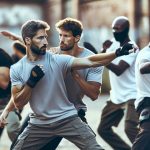
Krav Maga, known for its practical self-defense approach, often raises the question: does it involve a significant amount of floor fighting? Understanding the ground game in Krav Maga is crucial for anyone interested in self-defense, as encounters may unexpectedly end up on the ground. This article will dissect the role of ground techniques in Krav Maga, addressing common concerns about effectiveness and safety. Whether you’re a beginner pondering the realities of real-world confrontations or an experienced practitioner looking to refine your skills, a clear grasp of ground fighting principles is essential. With insights into how to safely navigate these scenarios, we’ll empower you to make informed decisions about your training and personal safety, ensuring you’re prepared for any situation. Let’s explore the nuances of Krav Maga’s ground game and its importance in your self-defense toolkit.
Understanding Krav Maga’s Ground Fighting Techniques
In a real-world confrontation, a significant portion of physical altercations can end up on the ground. Understanding the specific ground fighting techniques employed in Krav Maga is essential for anyone serious about self-defense. This martial art emphasizes practicality and effectiveness, adapting techniques to suit real-life scenarios rather than adhering to traditional sports or competition-based rules. Effective ground fighting in Krav Maga focuses on quickly neutralizing threats while maintaining awareness of surroundings and potential escape routes.
Krav Maga’s ground techniques are characterized by their adaptability and emphasis on survival. Practitioners are trained to respond effectively whether they are on their feet or on the ground, utilizing a blend of strikes, joint locks, and positional control. A fundamental principle is to always maintain a defensive posture while seeking to escape or gain a dominant position. Techniques may include swift counterattacks when under assault and applying leverage to subdue an attacker. Additionally, students learn how to deal with multiple attackers and potential threats from weapons during ground scenarios, as the real world rarely presents a single-faceted challenge.
Another vital aspect of Krav Maga ground fighting is its integration of situational awareness. This not only involves understanding how to defend oneself while on the ground but also recognizing the larger environment. Practitioners are encouraged to continually assess their surroundings, anticipating potential threats and planning exit strategies. This proactive approach minimizes the risk of additional dangers arising during a ground encounter.
In conclusion, grounding oneself in the principles of Krav Maga’s ground fighting techniques provides crucial skills necessary for effective self-defense. These techniques are designed not only to subdue an attacker quickly but also to facilitate safe disengagement from the situation, emphasizing the importance of both physical and mental readiness in any confrontation.
How Floor Fighting Differs from Other Martial Arts
In a confrontation where a fight goes to the ground, the techniques and mindset adopted from Krav Maga set it apart from many traditional martial arts. While disciplines like Brazilian Jiu-Jitsu (BJJ) typically prioritize submission grappling and positional control in a sport context, Krav Maga focuses on rapid threat neutralization and immediate escape. One of the key differences lies in the foundational philosophy of each martial art – Krav Maga is built on real-world self-defense scenarios, not competition.
Krav Maga teaches practitioners to adapt quickly, often reacting to multiple attackers or weapon threats during ground engagements. This contrasts with arts like BJJ, which primarily emphasize positional strategy and submission holds, often under the assumption of one-on-one combat in a controlled environment. In Krav Maga, when the fight goes to the ground, the aim is not merely to control the opponent but to end the confrontation swiftly and safely. This is achieved by stressing techniques that allow practitioners to strike effectively, create distance, or escape rather than staying entangled in lengthy exchanges.
Moreover, the legal and ethical considerations weaved into Krav Maga training cannot be understated. Practitioners are educated about using appropriate force levels and the importance of de-escalation. Unlike traditional martial arts that sometimes celebrate the artistry of grappling, Krav Maga instills a sense of urgency: every second counts when on the ground, and the priority is keeping oneself safe and getting out of harm’s way. Such an outlook reinforces the critical nature of situational awareness and proactive self-defense tactics during ground fighting scenarios.
Ultimately, understanding these differences empowers individuals to make informed choices in their self-defense training. Krav Maga not only equips practitioners with effective techniques for ground fighting but also emphasizes the importance of the mental state required to navigate real-world threats, balancing the need for decisive action with awareness and responsibility.
Essential Principles of Krav Maga Ground Game
In the realm of self-defense, understanding the ground game is crucial, particularly in Krav Maga, where confrontations can often end up on the floor due to the chaotic nature of real-life situations. The essence of the Krav Maga ground game is not just about grappling techniques but about maintaining a tactical mindset focused on survival. Practitioners are trained to think on their feet, prioritize escape, and utilize strikes in scenarios that could otherwise lead to prolonged contact with an aggressor.
One of the primary principles of the Krav Maga ground game is adaptability. Unlike traditional martial arts that may emphasize particular positions or submissions, Krav Maga teaches that the ground is an unpredictable arena where multiple factors come into play, including potential attacks from additional assailants or the presence of weapons. This highlights the importance of maintaining situational awareness at all times-it’s critical to understand your environment and the potential threats it presents. Practitioners learn to transition from standing to ground fighting fluidly, using techniques that facilitate a rapid exit rather than prolonging physical engagement.
Another essential aspect is the principle of decisive action. Krav Maga prioritizes neutralizing threats as quickly as possible. This focus on immediate effectiveness means that techniques taught are often designed for striking vulnerable areas, creating distance, or finding opportunities for escape. For instance, if a practitioner finds themselves on their back, they would utilize effective movement such as bridging or rolling, combined with striking or counter-attacking to regain control and create an escape path. The goal is not to submit or control the opponent per se, but to neutralize the threat and evade.
In terms of ethical responsibility, Krav Maga practitioners are also educated about the legal ramifications of their actions. They learn to assess the level of force appropriate to the situation, which may sometimes require de-escalation tactics instead of physical confrontation. This education is about more than physical techniques; it’s about fostering a mindset that integrates effectiveness with morality, ensuring that each action taken is legal and responsible within the broader context of self-defense.
In conclusion, the primary tenets of Krav Maga’s ground game center on adaptability, decisive action, and ethical considerations, enabling practitioners to effectively respond to threats while ensuring they remain within the boundaries of appropriate self-defense. Understanding these principles not only prepares individuals for combat situations but also emphasizes the importance of clear moral judgment in self-defense scenarios.
Effective Defensive Strategies on the Ground
In ground fighting, maintaining a solid defensive posture is essential to surviving and potentially escaping an altercation. One of the fundamental defensive strategies in Krav Maga is to keep your body aligned and centered, minimizing your vulnerability to strikes. When you find yourself on the ground, either due to a fall or being taken down, your first instinct should be to protect vital areas while preparing to counterattack or disengage.
A critical element of defense while on the ground involves creating space. This can be achieved by utilizing elbow strikes or pushing against your opponent to gain distance. When facing a potential attacker, using your feet effectively can help create an escape route. For instance, using your legs to push an opponent away while simultaneously rolling to your side can provide the necessary space to transition to a standing position or to escape.
Recognizing Threat Levels
Situational awareness remains paramount, even when on the ground. If you feel the threat of multiple attackers, or the possibility that your opponent may have a weapon, defensive strategies must adapt accordingly. In these cases, it’s crucial to quickly evaluate and react to the situation. Keep your head up, remain alert, and be prepared to transition to more aggressive defensive tactics as the situation dictates. Diversifying your reactions based on these threats can potentially avert prolonged engagement.
Using common techniques such as the “bridge and roll” can not only help you escape being pinned but can also shift the momentum back in your favor. When executing this move, explosively lift your hips while turning to the side, using your opponent’s weight against them to become mobile once again. Effective defensive ground strategies in Krav Maga involve tenacity and a proactive approach to both defense and potential escape routes.
Strengthening your knowledge and application of these techniques significantly contributes to confidence and situational control. Remember, defensive strategies should prioritize personal safety and quick disengagement over prolonged confrontation-always aiming to minimize conflict when possible, keeping both legal and moral implications at the forefront of your mind.
Krav Maga vs. Brazilian Jiu-Jitsu: A Comparative Analysis
When comparing self-defense systems, the differences in their ground fighting techniques can significantly influence practitioner choices. Krav Maga, developed for real-world self-defense, emphasizes quick, effective responses to threats, integrating ground fighting as a means of survival rather than as an end in itself. In contrast, Brazilian Jiu-Jitsu (BJJ) focuses extensively on floor fighting, with intricate techniques for submission, control, and positional advantage.
Krav Maga’s approach to ground fighting is practical and survival-oriented. Practitioners aim to escape or incapacitate an attacker swiftly, using effective strikes and defensive maneuvers. The techniques prioritize situational awareness, quick escapes, and the ability to handle multiple attackers or weapons. For example, Krav Maga drills might emphasize how to regain an upright position from the ground under duress, ensuring that the practitioner’s focus remains on de-escalation or escape, rather than prolonged grappling.
On the other hand, Brazilian Jiu-Jitsu excels in ground control and submission techniques. BJJ practitioners spend extensive training time on mats, learning to leverage body mechanics, joint locks, and chokeholds. This martial art turns an opponent’s weight and movements against them, aiming for dominant positions. While BJJ also values self-defense, many techniques are developed within a sport context, emphasizing grappling competition rules rather than immediate escape.
For those considering which discipline to pursue, understanding the distinct philosophies is crucial. If you are looking for a system that prioritizes self-defense in unpredictable situations and involves simpler, more aggressive methods on the ground, Krav Maga may be the right fit. If you desire a deeper understanding of ground techniques and enjoy the sport aspect of grappling, Brazilian Jiu-Jitsu offers a comprehensive curriculum that enhances both defensive and offensive capabilities on the mat. Each system has merits and can complement the other; hence, cross-training can be beneficial for comprehensive self-defense preparation.
Basic Ground Techniques Every Practitioner Should Know
In real-world self-defense situations, understanding the basic ground techniques is crucial for anyone practicing Krav Maga. Ground fighting is often unavoidable when an altercation goes to the ground, and knowing how to respond effectively is essential for self-preservation and safety. Essential techniques that every practitioner should be familiar with include defense against an opponent’s mount, escaping from side control, and how to transition back to a standing position quickly.
One of the fundamental techniques in ground fighting is the defensive posture. This involves positioning your body to protect vital areas while being prepared to counter any attacks. When on the ground, your arms should shield your head and face, while your legs can help push away an opponent. Practitioners should learn how to use their hips effectively; this can help create distance or leverage for an escape.
Another critical skill is the hip escape (also known as the shrimp move), allowing you to disengage from an opponent when they are on top of you. By lifting your hips and pushing off the ground with your feet, you can create space to roll away or reposition yourself. This technique is foundational for regaining control and should be practiced holistically to embed it into reflexive actions during stress.
Additionally, understanding how to properly regain a standing position from the ground is vital. This can involve turning onto your side and using your hands to push off the ground (similar to getting up from a squatting position) while maintaining awareness of your surroundings. Practitioners should prioritize regaining their feet as quickly as possible to enhance their chances of escaping a dangerous situation.
To summarize, core techniques in Krav Maga’s ground game encompass defensive posture, hip escapes, and regaining your feet. Regular practice of these skills will enhance your confidence and effectiveness during ground encounters, empowering you to respond appropriately while emphasizing safety, legal boundaries, and ethical considerations in self-defense scenarios.
The Role of Situational Awareness in Ground Fighting
In the chaos of a ground encounter, maintaining situational awareness can be the linchpin to turning the tide in your favor. Ground fighting inherently involves a shift in dynamics; when the confrontation descends to the ground, it becomes crucial to remain vigilant. Having a keen sense of your environment allows you to recognize escape routes, identify potential threats, and anticipate your opponent’s movements. Effective ground fighting isn’t just about grappling; it also requires an acute awareness of one’s surroundings and the ability to make quick, informed decisions.
A fundamental aspect of situational awareness is scanning the area while engaged in combat. This means not merely focusing your attention on your opponent but also being aware of the potential hazards. For instance, are there multiple attackers? Is there an opportunity to get to safety? Additionally, understanding the context of the situation aids in deciding when to engage and when to disengage. If the setting involves obstacles or other people, awareness can help you maneuver accordingly, avoiding unnecessary risks.
Practitioners should regularly train to cultivate this awareness, incorporating drills that simulate real-life scenarios where attentiveness plays a vital role. Techniques such as ‘situational drills’ can heighten a fighter’s ability to analyze and adapt to changing circumstances. For instance, practice transitioning from defense to offense while maintaining a lookout for potential escape routes or using environmental features to your advantage, such as backpedaling to create distance or using walls to limit an opponent’s moves. This contextual awareness not only enhances effectiveness on the ground but also ensures that defensive moves align with broader safety protocols, ultimately fostering better decision-making during high-pressure encounters.
In conclusion, the interplay between situational awareness and ground fighting is critical. It empowers practitioners to remain proactive rather than reactive, ensuring that they not only defend themselves effectively but also position themselves advantageously. By incorporating situational drills into your training regime, you bolster your readiness to face real-world situations with confidence, reinforcing the principles of safe, ethical self-defense while navigating the complexities of ground combat.
Safety Protocols in Ground Fighting Scenarios
Engaging in ground fighting requires a clear understanding of safety protocols to ensure that practitioners can defend themselves effectively while minimizing potential injuries to themselves and others. One crucial guideline is to establish a clear understanding of the legal implications surrounding self-defense. In many jurisdictions, the law recognizes the right to defend oneself, but this right comes with the expectation that the response must be proportional to the threat faced. Practitioners should familiarize themselves with local laws regarding self-defense, especially when grappling on the ground, as the act of controlling an individual can be interpreted differently than a simple strike. Understanding the legal boundaries can significantly affect decision-making during an altercation.
Another important aspect of safety protocols is maintaining situational awareness at all times. In a ground fighting scenario, distractions can arise from environment factors-such as nearby objects that may pose hazards or bystanders who could inadvertently become involved. It’s essential to continuously assess these variables; practitioners should be trained to recognize opportunities to disengage and escape when necessary rather than engage in prolonged confrontation. This not only protects the individual from potential injury but also mitigates the risk of escalating a conflict unnecessarily.
Practitioners should also develop an awareness of their surroundings during training sessions and actual encounters. Incorporating drills that promote a 360-degree awareness can help athletes anticipate potential threats or opportunities for escape. Using props or mock obstacles in training can simulate real-life situations, helping to reinforce these strategies. This type of preparedness can be particularly beneficial when deciding whether to use techniques that rely on control versus those intended to incapacitate an opponent.
Lastly, understanding the psychological aspects of engagement is vital. Many practitioners may be overwhelmed by adrenaline during a confrontation, leading to panic or rash decisions. Regular training not only builds physical skills but also conditions the mind to respond calmly and rationally under pressure. Mental rehearsal techniques, including visualization of safe disengagements or controlled responses in various situations, can greatly enhance decision-making during actual encounters. By actively preparing both physically and mentally, individuals can foster an approach that respects the seriousness of self-defense while equipping themselves to act decisively and ethically in challenging situations.
Common Misconceptions About Ground Fighting in Krav Maga
Many people mistakenly believe that ground fighting in Krav Maga is primarily about grappling or extensive floor combat, akin to Brazilian Jiu-Jitsu. This misconception can lead to an underestimation of the versatility and strategic nature of Krav Maga’s ground techniques. In reality, while ground fighting is a component of Krav Maga, it emphasizes quick resolutions and effective escape strategies, rather than prolonged engagements on the floor.
Emphasis on Real-World Scenarios
A common misunderstanding is that Krav Maga practitioners will spend excessive time on the ground, akin to traditional grappling arts. However, Krav Maga trains individuals to utilize situational awareness actively, aiming to avoid ground confrontations whenever possible. This principle is grounded in the recognition that a standing position provides an inherent advantage for escape and mobility. The focus is placed on quickly disabling or neutralizing an attacker and then escaping to safety.
Training for Safety and Control
Another misconception pertains to the effectiveness of ground fighting techniques in Krav Maga. Critics often argue that these techniques lack the refinement seen in specialized martial arts. However, Krav Maga ground techniques are designed to be practical and adaptable, incorporating principles of control, leverage, and rapid response. Practitioners learn to create opportunities to regain a standing position efficiently, often utilizing joint locks and strikes to dissuade an attacker while preparing for recovery.
The Legal Perspective
It’s essential to address the legalities surrounding ground fighting in self-defense situations. Many individuals assume that any form of control used on the ground will favorably be seen as self-defense. However, this is not always the case. Legal interpretations differ by jurisdiction, and understanding the nuances of the law regarding proportional force and self-defense is critical. Utilizing techniques that maintain a balance between effective self-protection and compliance with legal standards is fundamental training in Krav Maga.
In conclusion, while ground fighting is indeed part of Krav Maga, it should not be perceived through a lens of equal footing with other martial arts. Its primary focus is on practical, safe, and effective self-defense strategies that facilitate recovery to a standing position, ensuring that practitioners are equipped to respond responsibly and legally.
Building Confidence Through Ground Fighting Practice
Relative to engaging ground fighting techniques, practicing Krav Maga on the floor can significantly bolster a practitioner’s confidence. As students repeatedly encounter scenarios that simulate real-life self-defense situations, they learn to rely on their skills in high-pressure environments. This familiarity with grappling and ground maneuvers fosters resilience, both mentally and physically. Students often experience a transformation in mindset; what once felt intimidating becomes an opportunity for growth and empowerment.
Honing ground techniques in a controlled setting enables individuals to develop critical situational awareness. A confident practitioner knows how to assess an opponent’s movements quickly, allowing them the ability to apply effective counters or escape plans. This not only builds confidence in their grappling abilities but also cultivates a broader understanding of self-defense principles-specifically the importance of rapid response and situational control.
In addition to practical skills, ground fighting practice emphasizes the importance of safety protocols. Clear, structured training focuses on legally acceptable techniques, helping practitioners understand the ethical implications of their actions in self-defense scenarios. Feeling secure in one’s skills and knowledge allows students to approach situations with a calm, composed demeanor, knowing that they can protect themselves legally and responsibly.
Ultimately, as individuals engage more with ground fighting, they learn not only how to defend against an attack but also how to manage fear and anxiety related to physical confrontation. A commitment to consistently practicing these techniques empowers them to handle potential threats with confidence. This proactive approach not only enhances their self-esteem but also instills a profound respect for the responsibilities of being a capable defender.
Legal Aspects of Self-Defense on the Ground
In any self-defense situation, understanding the legal implications of your actions is crucial, especially when it comes to ground fighting. Here’s what you need to know to navigate the complex interplay between self-defense tactics and legal responsibilities when engaged in floor fighting scenarios.
When defending yourself on the ground, it’s essential to remember that the use of force must be reasonable and proportional to the threat you are facing. In many jurisdictions, self-defense laws grant individuals the right to protect themselves; however, this right varies significantly by state or country. A fundamental principle is that you cannot use more force than necessary to escape and protect yourself from harm. For instance, if an assailant is retreating or no longer poses a threat, continuing to engage them could be seen as excessive force, leading to legal repercussions.
Understanding Reasonable Force
Legal definitions of “reasonable force” can vary, but there are some common considerations:
- Immediacy of Threat: Your response should correlate with the immediacy of the threat. If an attacker is on top of you and attempting to harm you, using grappling techniques to escape is justified.
- Level of Aggression: The aggressiveness of your opponent can dictate your response. A lesser response may be required if the attacker appears to be trying to subdue rather than seriously harm you.
- Escape Opportunity: If you have a reasonable chance to escape without further confrontation, doing so is often seen as the preferred response.
Real-World Scenarios
Consider a scenario where you are taken to the ground in an assault. You might use techniques to gain control over your assailant or create an opening to escape. However, if the situation escalates and you maintain control using chokeholds or strikes without justification, you risk facing charges of assault. In legal terms, proving that you acted in self-defense will rely heavily on demonstrating that your response was immediate, necessary, and proportionate to the threat posed.
Moreover, documenting the incident is advisable. If possible, seek witnesses or record details immediately after the event to support your account. The burden of proof often lies with the defender to show that their response was appropriate under the circumstances.
In conclusion, while training in ground techniques for self-defense can significantly enhance your ability to protect yourself, being aware of the legal framework surrounding the use of force is paramount. Engaging in responsible practice not only prepares you for potential threats but ensures that you are also equipped to navigate the complexities of legal accountability should the need arise. Always consider consulting a legal professional in your area to understand your rights and responsibilities fully.
Training Tips for Improving Ground Game Skills
To enhance your ground game skills in Krav Maga, it’s essential to adopt a structured and comprehensive approach to training that balances technique, physical preparation, and mental preparedness. Ground fighting techniques require a unique physicality and mindset, as the dynamics can shift rapidly when on the floor. Here are several practical tips to consider for improving your effectiveness in ground scenarios.
Commence with a strong foundation in basic ground techniques. Familiarize yourself with the key positions such as guard, mount, and side control. Understanding how to transition between these positions effectively can not only improve your ground fighting but also your ability to escape. Practice drills that include positional sparring to simulate realistic scenarios where you might find yourself on the ground.
Strength and Conditioning
Physical conditioning is vital for success in ground fighting. Strength, endurance, and flexibility should be integral parts of your training regimen. Focus on exercises that enhance core strength and grip, as these are critical when grappling or trying to regain a dominant position. Incorporate bodyweight exercises like push-ups, pull-ups, and planks, along with specific movements such as hip escapes and bridge rolls to build functional strength that translates directly to your ground game.
Situational Awareness
While physical attributes are essential, situational awareness plays a crucial role in ground fighting. Always keep an eye on your opponent’s movements and be mindful of your surroundings. Practicing sparring with varying levels of intensity can help you react more spontaneously and appropriately in real-life confrontations. Use training sessions to simulate distractions and unpredictability, allowing you to build your response mechanisms.
Controlled Sparring
Participating in controlled sparring sessions can greatly enhance your ability to apply techniques under pressure. Start slowly and maintain a safe environment where you can practice with partners of varying skill levels. Focus on refining your techniques, making adjustments based on feedback from your instructor and peers. Remember that the goal is not merely to win but to improve, so be open to criticism and adapt your methods accordingly.
In through consistent practice and a focus on these key aspects, you will develop a more effective and reliable ground game. Always prioritize safety and legality in your training to prepare yourself effectively for potential real-world scenarios. Remember that every encounter is unique, and adaptable strategies are essential for successful self-defense in ground fighting situations.
Faq
Q: Does Krav Maga have a strong emphasis on ground fighting techniques?
A: Yes, Krav Maga incorporates essential ground fighting techniques. While the focus is primarily on self-defense, understanding how to fight effectively on the ground is crucial. This allows practitioners to defend themselves in real-life scenarios where they might end up on the floor.
Q: How does Krav Maga’s ground fighting differ from Brazilian Jiu-Jitsu?
A: Krav Maga’s ground fighting focuses on quick, effective self-defense rather than sport-oriented techniques. Unlike Brazilian Jiu-Jitsu, which emphasizes grappling for control, Krav Maga prioritizes escape and responding to multiple attackers or weapons in a dynamic street environment.
Q: What are some common misconceptions about ground fighting in Krav Maga?
A: One misconception is that ground fighting is not emphasized in Krav Maga; however, it plays a vital role. Some also believe it is solely about grappling, but it includes striking and escaping techniques to deal with opponents effectively.
Q: When should a practitioner use ground fighting techniques in self-defense?
A: Ground fighting techniques should be employed when the situation necessitates close-quarters combat and escaping is not immediately possible. Always assess your surroundings and prioritize personal safety in these scenarios.
Q: Why is situational awareness important during ground fighting?
A: Situational awareness is crucial because it helps you recognize potential threats and assess your surroundings, which can inform your decision to engage or escape. Being aware of your environment allows faster reactions and better choices during ground confrontations.
Q: What training tips can improve ground fighting skills in Krav Maga?
A: To improve ground fighting skills, focus on regular sparring, practice specific techniques repeatedly, and incorporate drills that simulate real-life scenarios. Enhancing physical conditioning and flexibility also significantly contributes to effectiveness on the ground.
Q: How does Krav Maga ensure safety during ground fighting practice?
A: Krav Maga emphasizes controlled environments and safety protocols during practice. Techniques are taught to minimize injury risk, and practitioners are encouraged to use protective gear and practice awareness of their partner’s physical limits.
Q: What legal aspects should be understood regarding ground fighting?
A: Understanding the legal implications of self-defense is crucial. Practitioners should know the laws surrounding reasonable force and the limits of self-defense in their jurisdiction, especially while engaging in ground fighting scenarios to protect themselves legally.
The Way Forward
As we wrap up our exploration of whether Krav Maga involves lots of floor fighting, it’s clear that this martial art blends efficient self-defense with practical ground techniques. While it isn’t focused solely on ground fighting, understanding these elements enhances your overall combat readiness. If you’re eager to deepen your knowledge, check out our guides on effective striking techniques and the importance of situational awareness in self-defense.
Don’t wait to empower yourself further-subscribe to our newsletter for the latest tips, resources, and training opportunities that could be vital in a real confrontation. Remember, staying prepared not only boosts your confidence but also reinforces your ability to respond appropriately under pressure. Share your thoughts below or explore our other articles to broaden your skill set and knowledge base. Let’s keep the conversation going and help each other become more adept at personal safety!