
The interplay between Krav Maga and Mixed Martial Arts (MMA) raises crucial questions about legality and practicality in self-defense scenarios. While Krav Maga focuses on real-life self-defense against violent confrontations, MMA is structured around competitive sport and technique. Understanding how Krav Maga techniques can be applied in the context of MMA, while adhering to legal and safety protocols, is vital for both practitioners and enthusiasts. Many wonder if Krav Maga can provide an edge in the cage or enhance self-defense capabilities outside of it. This exploration not only highlights the effectiveness of various techniques but also emphasizes the importance of ethical conduct, legal implications, and responsible use of force in any confrontation. As you delve into this topic, consider the practical limits and real-world applications of integrating these two distinct disciplines.
Understanding Krav Maga: Foundations and Principles
Krav Maga is more than just a martial art; it embodies a unique philosophy of self-defense designed for real-world situations. Originating from the Israeli military, it integrates techniques from various combat styles, evolving into a system built on instinctive movements and practical responses. This martial art prioritizes self-preservation through situational awareness, effective strikes, and the use of available resources, which makes it viable for self-defense against assailants armed with weapons or engaging in multiple attacks.
The principles of Krav Maga revolve around survival through speed, aggression, and the element of surprise. In scenarios where immediate action is necessary, practitioners are trained to respond decisively, addressing threats that appear in their environment. This approach emphasizes unlearning instincts that can hinder effective self-defense, such as the tendency to panic in a confrontation. Instead, training incorporates stress-inducing scenarios that prepare individuals for the unpredictability of real-life conflicts, honing their ability to maintain focus under pressure.
One of the core tenets of Krav Maga is the ethical use of force. In practice, this means applying the minimum level of force necessary to neutralize a threat while being acutely aware of the legal ramifications of physical confrontation. Different jurisdictions have varying laws related to self-defense encounters; thus, practitioners are encouraged to be knowledgeable about their local regulations. Understanding what constitutes justifiable self-defense is crucial; it’s not merely about combat efficiency but ensuring that actions taken during a confrontation are legally defensible and morally sound.
Krav Maga’s effectiveness in both self-defense and potential integration into mixed martial arts (MMA) training lies in its adaptability. By instilling foundational principles that encourage both proactive and reactive measures, it prepares individuals to navigate the complexities of real-life encounters while fostering a mindset that prioritizes personal safety and ethical responsibility in all engagements.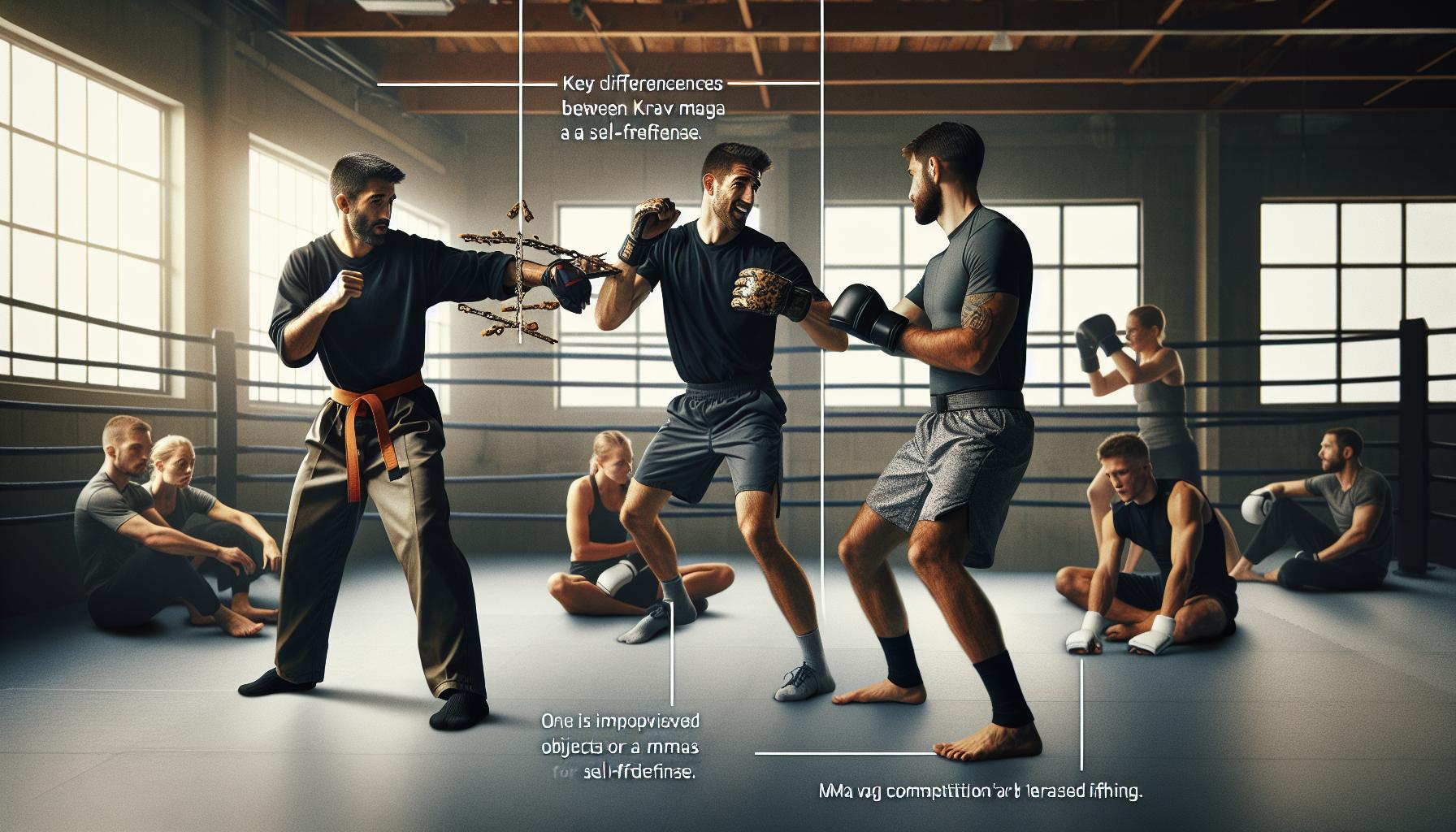
Krav Maga vs. MMA: Key Differences Explained
Combining fighting styles in a combat context often leads to intriguing discussions, particularly when exploring how Krav Maga and Mixed Martial Arts (MMA) differ. While both disciplines teach individuals to handle physical confrontations, their underlying philosophies, training methodologies, and intended applications diverge significantly.
Krav Maga is focused on real-world self-defense scenarios. It emphasizes swift, decisive actions tailored to neutralize threats effectively and often incorporates techniques for dealing with multiple attackers or armed assailants. This approach prioritizes survival and the ethical use of force, where practitioners are trained to assess situations rapidly and respond with the minimum necessary force to mitigate danger. In contrast, MMA is primarily a sport, characterized by a set of rules governing combat scenarios. It blends various martial arts techniques, including striking and grappling, and focuses on competitive fighting in a regulated environment.
Training Methodologies
The training regimes reflect these core differences. Krav Maga training often simulates high-stress situations, allowing students to practice techniques under pressure. This preparation cultivates a mindset centered on situational awareness and proactive response, which can be critical in unpredictable confrontations. On the other hand, MMA training usually emphasizes athletic performance, technique refinement, and strategic fighting within the rules of competition. This includes sparring with opponents, drilling techniques specific to MMA, and conditioning for endurance and strength.
Legal and Ethical Considerations
Understanding the legal framework surrounding self-defense is crucial for practitioners, particularly in jurisdictions with differing self-defense laws. Krav Maga practitioners are taught to be aware of the legal ramifications of their actions, ensuring they can justify their use of force within the parameters of the law. For those training in MMA, the focus is primarily on competitive performance rather than self-defense; hence, the legal considerations may appear less pressing outside the competitive arena.
Ultimately, while Krav Maga can provide valuable skills that may be applicable in MMA, the two disciplines serve fundamentally different purposes. Practitioners considering incorporating aspects of Krav Maga into their MMA training should remain cognizant of the ethical and legal responsibilities that accompany self-defense and sport engagement. Understanding these distinctions will empower individuals to make informed decisions about their training while prioritizing safety and legality in any confrontational scenario.
The Effectiveness of Krav Maga Techniques in MMA
While Krav Maga techniques are designed primarily for real-life self-defense situations, their application within the structure of MMA poses some intriguing considerations. Krav Maga focuses on immediate response, situational awareness, and using available resources to neutralize threats, which can translate to effective counter-responses in a competitive fighting scenario. However, the effectiveness of these techniques in MMA is influenced by regulations, the environment of competition, and the specific contexts that define martial engagements.
Krav Maga practitioners are trained to target vulnerable areas and utilize systemic techniques that can result in swift incapacitation of an opponent. This includes striking techniques that are not typically permitted in regulated MMA bouts, such as eye gouging or groin strikes. In competitive mixed martial arts, rules enforce a codified approach to striking, grappling, and submissions that systematically limit the use of many Krav Maga techniques. As a result, while the foundational principles of Krav Maga may enhance a fighter’s focus and readiness, the specific application of its techniques within MMA could lead to disqualification or penalties depending on the enforcement of those rules.
Integrating Principles for MMA Fighters
MMA fighters who incorporate Krav Maga principles may benefit from enhanced awareness and adaptability during fights. For instance, the mental conditioning gained through Krav Maga training-priming fighters to react instinctively to threats-can provide a psychological edge in the octagon. Training in scenarios that mimic the unpredictability of self-defense situations can foster a robust mentality, enabling fighters to remain composed under pressure.
Practitioners should focus on transferable skills that align closely with MMA techniques, such as effective striking combinations or defensive maneuvers that do not cross the line into illegal techniques. Developing integration strategies, such as situational drills that combine grappling with escape techniques derived from Krav Maga, can enhance an MMA fighter’s overall arsenal without straying into the realm of illegal maneuvers.
Prioritizing Safety and Responsibility
While exploring the intersections between Krav Maga and MMA, it is imperative to remain vigilant about safety and ethics. An understanding of legal and ethical implications surrounding the use of force is crucial. Practitioners must be aware of their jurisdictions’ self-defense laws and the moral responsibility that comes with using physical force. This knowledge not only informs tactical decisions but also aligns training with the ethical practice of martial arts.
In summary, while Krav Maga can impart valuable psychological and strategic advantages, the literal application of its techniques in MMA requires careful consideration and adherence to the sport’s rules. A responsible approach means integrating what works within the parameters of MMA, thereby fostering a blend of effective self-defense mentalities and competitive strategies that prioritize legality and ethical engagement.
Legal Considerations: Self-defense vs. Sport Fighting
In the realm of martial arts, understanding the distinctions between self-defense and sport fighting is crucial for practitioners, especially when integrating a discipline like Krav Maga into competitive settings such as MMA. At its core, self-defense is about protecting oneself from imminent harm, creating a context where the use of force is often justifiable under the law. In contrast, sport fighting operates within a structured framework of rules and regulations that dictate permissible actions, aiming to ensure fair competition rather than self-preservation.
Engaging in self-defense typically allows for a broader range of responses, potentially including strikes to vulnerable areas, leveraging available objects as improvised weapons, and utilizing techniques designed to neutralize threats swiftly. These actions must remain proportional to the threat faced; for example, using lethal force in response to a non-lethal threat can trigger severe legal consequences. Conversely, MMA adheres to strict guidelines that prohibit various self-defense techniques, such as joint locks outside of specific conditions, strikes to the back of the head, or any moves deemed dangerously excessive. Fighters must be acutely aware of these regulations to avoid penalties or disqualification during matches.
Moreover, legal considerations vary significantly by jurisdiction. States have differing laws regarding self-defense, often emphasizing the “reasonable person” standard-what a reasonable individual would deem acceptable under similar circumstances. Understanding these laws is critical for practitioners who may need to justify their actions in a legal context. For instance, many states endorse the “castle doctrine,” allowing individuals to use force in their homes without duty to retreat, while others may require a duty to disengage if safely possible. Knowledge of such laws not only informs martial tactics but also serves as a fundamental aspect of responsible training and application in both self-defense and competitive scenarios.
Incorporating Krav Maga into an MMA context thus requires grappling with these legal and ethical nuances. Fighters should prioritize methods that align with sport regulations, focusing on techniques that enhance their competitive edge without crossing legal boundaries. Training should emphasize the importance of controlling aggression and practicing de-escalation where possible, always respecting the serious implications that physical confrontations carry. This careful approach empowers practitioners to protect themselves while remaining well within the legal confines and ethical expectations of martial arts.
State-specific Legal Guidance for Self-defense Scenarios
Understanding the legal landscape of self-defense in different states is crucial for anyone practicing martial arts, particularly those incorporating Krav Maga techniques. Self-defense laws can vary significantly based on location, making it imperative for practitioners to familiarize themselves with the statutes in their respective jurisdictions. In many states, the principle of “reasonable force” is at the heart of self-defense laws, allowing individuals to use a level of force considered necessary to protect themselves from imminent harm. However, this concept is nuanced and can differ widely.
Many states provide legal frameworks for self-defense scenarios, often emphasizing conditions under which force can be justified. For example, the “castle doctrine” exists in several states, permitting individuals to use force, including lethal force, against intruders in their homes without a duty to retreat. In contrast, other jurisdictions require a duty to disengage or retreat, unless they are in their own residence. It is crucial for martial artists to be well-versed in these regulations to make informed decisions during potential confrontations.
- Duty to Retreat: In some states, individuals must attempt to retreat from a threat before resorting to physical force. This contrasts with other jurisdictions where retreat is not necessary.
- Stand Your Ground Laws: Certain states have laws allowing individuals to defend themselves without the obligation to retreat in any situation where they feel threatened.
- Use of Deadly Force: The acceptable use of lethal force can be highly variable. States often have specific criteria for when deadly force is appropriate, typically focusing on the immediacy and severity of the threat faced.
Practitioners should consult local laws and potentially seek legal advice to ensure a comprehensive understanding of the implications of their actions. Training in Krav Maga can empower individuals with effective self-defense techniques, but without understanding the legal ramifications, even justified actions can lead to significant consequences. As practitioners hone their skills, they must also integrate a commitment to responsible behavior and ethical considerations in the practice of self-defense. This understanding not only enhances personal safety but also reinforces the moral duty of martial artists to act judiciously in real-world situations.
Safety Protocols: Practicing Krav Maga in a Combat Sport Context
In the world of combat sports, blending different disciplines can enhance performance, but safety remains paramount. Practicing Krav Maga, which emphasizes real-world self-defense tactics, within a Mixed Martial Arts (MMA) framework demands strict adherence to safety protocols. This approach helps practitioners not only excel in techniques but also foster a secure training environment, ensuring that the lessons learned remain effective without instilling undue risk.
To start, training should always take place in a controlled environment where both partners understand the ground rules. Establishing clear communication about the intent of each session can prevent escalation and reduce injury risks. Additionally, a protective gear requirement-such as headgear, mouthguards, shin guards, and gloves-is essential. These items help absorb impacts and provide a baseline safety level when incorporating aggressive techniques traditional to Krav Maga.
Another critical safety protocol is implementing graduated exposure to sparring. This means beginning with light contact drills to enhance reflexes and technique. As comfort and skill levels increase, gradually introducing heavier sparring, while continuously monitoring the physical and emotional states of all participants, can help identify when someone may be on the verge of injury. Importantly, instructors should emphasize targeting specific areas rather than resorting to complete unrestricted engagement, a tenet that aligns with both Krav Maga principles and MMA competition regulations.
Finally, ongoing education on legal considerations in combat sports is crucial. Participants should familiarize themselves with state laws regarding self-defense and competitive engagement, as misunderstandings can lead to serious legal implications. Training sessions should include discussions about the moral responsibility of using force and the consequences of actions inside and outside the dojo or ring. This holistic approach ensures that practitioners remain aware of not just their physical skills, but also the ethical dimensions of their actions, fostering a culture of respect and responsibility that transcends the sport itself.
Incorporating Krav Maga into MMA Training Regimens
Incorporating Krav Maga techniques into MMA training can provide fighters with a unique set of skills centered on self-defense and real-world scenarios. Unlike traditional MMA disciplines, which focus primarily on sport and competition, Krav Maga prioritizes survival tactics, making it an interesting complement for fighters looking to enhance their effectiveness in varied situations. To effectively integrate Krav Maga principles into MMA training regimens, it’s essential to maintain a focus on safety, legality, and ethical use of force.
A fundamental approach is to weave Krav Maga’s striking and defensive techniques into existing MMA drills. Fighters should begin by practicing Krav Maga strikes-such as knee strikes, elbow strikes, and palm heel strikes-during pad work or bags. These techniques can be adapted for MMA, allowing athletes to surprise opponents with sudden and unexpected moves. Drills focusing on targeting vulnerable areas, like the eyes or throat, should be done under controlled conditions to ensure safety and understanding of appropriate applications without intent to cause harm.
Controlled Sparring and Techniques Integration
During sparring sessions, it’s crucial to adhere strictly to control protocols to minimize the risk of injury. Graduated exposure should be emphasized: start with light-contact sparring that incorporates Krav Maga tactics, gradually increasing intensity as fighters gain confidence and skill. This not only assists in honing technique but also builds a fighter’s ability to implement Krav Maga principles under pressure.
Additionally, integrating situational drills-where fighters encounter common aggressor scenarios-can significantly enhance preparedness. For example:
- Role-play scenarios where a fighter must defend against multiple attackers, utilizing Krav Maga’s emphasis on quick escapes and effective striking.
- Practice defensive tactics against grabs or holds, emphasizing the quick response that Krav Maga advocates.
Analysis of performance during these drills can guide fighters to identify situations where Krav Maga techniques could be most effective, fostering strategic thinking alongside physical skills. Instructors should remind athletes of the legal implications of their techniques, as self-defense laws vary by state, and understanding these limits is critical to maintaining ethical standards in training and real-world applications.
Incorporating Krav Maga into MMA not only expands a fighter’s arsenal but also cultivates an understanding of how to react in high-pressure situations responsibly. Balancing effective technique training with discussions about legalities creates a well-rounded environment that prepares fighters not just for competition, but for real-world encounters as well.
Real-world Applications: Success Stories of Krav Maga in MMA
Success stories of Krav Maga practitioners in the realm of MMA illustrate the practicality and effectiveness of its techniques in diverse combat scenarios. One notable example is the transition of fighters trained in self-defense disciplines into MMA competitions, where they have successfully used Krav Maga principles to overcome traditional combat sport opponents. These fighters often leverage specific Krav Maga techniques-such as aggressive striking and defensive maneuvers that target an opponent’s vulnerabilities-to gain the upper hand in fights.
A standout scenario occurred in a regional MMA competition where a fighter, originally from a Krav Maga background, faced an opponent with extensive experience in Brazilian Jiu-Jitsu. Instead of relying solely on grappling, the Krav Maga-trained fighter employed a combination of striking and evasive tactics learned from their self-defense training. They effectively dodged submissions by maintaining a strong awareness of their surroundings, utilizing techniques designed to create space and escape those holds. This ability to blend the striking effectiveness of Krav Maga with grappling defenses illustrates how its principles can be effectively integrated into MMA.
Furthermore, specific drills and situational training have proven beneficial. Instances where fighters role-played encounters against multiple aggressors or practiced escaping from various holds have translated well into actual combat situations. The application of these techniques has not only helped fighters in competitions but has also instilled confidence in their ability to handle real-world confrontations outside the sport, emphasizing the adaptable nature of Krav Maga.
Krav Maga’s foundational elements-instinctive movements and an emphasis on real-life applicability-enable fighters to act decisively under pressure. This adaptability is a key reason why fighters, even when faced with tougher opponents, can find success through a well-rounded approach that incorporates effective striking, quick escape tactics, and situational awareness, showcasing Krav Maga as a valuable asset in the MMA landscape.
Common Misconceptions About Krav Maga in MMA
Many enthusiasts assume that Krav Maga, characterized by its focus on real-life self-defense situations, is fully applicable in the arena of MMA. However, several misconceptions surround the integration of these two disciplines that can mislead aspiring fighters. Understanding these misconceptions is crucial for anyone considering the journey of combining Krav Maga techniques with MMA training.
One common belief is that Krav Maga is purely a fighting style, akin to boxing or Brazilian Jiu-Jitsu, which overlooks its primary purpose: self-defense. Krav Maga emphasizes protecting oneself in volatile situations rather than achieving victory in a controlled sporting environment. Consequently, techniques may not always align with the rules of an MMA competition, which can prohibit certain moves that Krav Maga teaches, such as strikes to vulnerable areas, bites, or eye gouging. This distinction underlines that while Krav Maga can enhance a fighter’s situational awareness and reaction speed, its techniques must be adapted to comply with the formal regulations of MMA fighting.
Another misconception is the belief that Krav Maga fighters can easily dominate traditional martial artists in the cage. While the aggressive and instinctive nature of Krav Maga may give practitioners an advantage in self-defense scenarios, MMA requires a broader skill set that includes grappling, ground fighting, and striking. Fighters trained solely in Krav Maga may lack the structured techniques and conditioning necessary for success in these areas. A balanced MMA fighter benefits from multiple disciplines, which often include but are not limited to wrestling, Muay Thai, and Brazilian Jiu-Jitsu, making adaptability essential in the competitive landscape of Mixed Martial Arts.
Additionally, there is a pervasive idea that Krav Maga equips fighters to maintain aggressiveness at all times. In reality, effective self-defense-and by extension, a smart MMA strategy-often includes de-escalation tactics and the capacity to assess situations before engaging. Not every encounter needs to escalate to physicality, even in competition, and understanding when to engage or retreat is as vital as being able to fight. Awareness of legal ramifications and ethical considerations in combat serves as a critical part of training, transcending any specific martial art.
These misunderstandings underscore the importance of viewing Krav Maga through the lens of its true intent rather than solely as a tactical arsenal for MMA. Integrating its principles into an MMA regimen necessitates a thoughtful approach that respects both the legal and practical limits of combat sport, enhancing the practice without compromising legality or safety.
Ethical Considerations: The Use of Force in Combat Sports
Understanding the ethical implications of using force in combat sports is essential for anyone training in martial arts, especially when considering the principles of Krav Maga in the context of MMA. While Krav Maga is recognized for its effectiveness in self-defense scenarios, employing its techniques within the framework of MMA introduces a plethora of ethical dilemmas that must be navigated thoughtfully. The primary focus should always be on maintaining safety and legality, reinforcing that the goal is not to glorify violence but to prepare oneself responsibly for potential confrontations.
One of the critical aspects of ethical force use is the concept of proportionality. In a self-defense situation, individuals are typically justified in using reasonable force to protect themselves from harm. However, in competitions like MMA, the rules explicitly limit the scope of permissible techniques, and exceeding these bounds can lead to serious consequences. Fighters must recognize that aggression should be tempered by respect for their opponent and adherence to the rules of the sport. Techniques intended for self-defense, such as strikes to vulnerable areas, should be left out of the cage to prevent unintended harm and to uphold the integrity of the sport.
De-escalation and Situational Awareness
Another important ethical consideration is the value of de-escalation and awareness. Effective self-defense doesn’t always equate to engaging in combat. Many situations can be diffused through verbal communication or a strategic retreat, enabling individuals to avoid violence altogether. This principle is particularly relevant for those transitioning from Krav Maga to MMA. While Krav Maga emphasizes proactive defense, athletes should understand that in the cage, the confrontation is structured and governed by rules, highlighting the importance of sportsmanship. Being perceptive to the dynamics of a fight and knowing when to move forward or back down can make a significant difference in the approach taken by a fighter.
Legal Implications and Training Considerations
When integrating Krav Maga into an MMA training regimen, it is also necessary to familiarize oneself with the legal ramifications of using force. Different jurisdictions may have varying laws regarding self-defense, so it’s crucial for martial artists to educate themselves about local regulations governing the use of force in various contexts. An understanding of these laws will aid practitioners in making informed decisions in the heat of the moment, ensuring that they act within legal boundaries and uphold moral standards.
In summary, engaging in combat sports requires a blend of technical skill, ethical reasoning, and a keen sense of responsibility. By focusing on proportional responses, embracing de-escalation tactics, and understanding the legal landscape, fighters can practice Krav Maga techniques effectively while maintaining the ethical standards expected in MMA competitions. Through thoughtful training and education, martial artists can equip themselves not just for the fight but for responsible citizenship both inside and outside the cage.
Training Safely: Avoiding Injuries While Practicing
In a discipline as physically demanding as Krav Maga, it is essential to prioritize safety to prevent injuries while practicing. Engaging in rigorous training can lead to strains, sprains, and other injuries if proper precautions are not taken. Understanding the legal and practical limits of using Krav Maga techniques in an MMA environment further emphasizes the need for a safety-first approach.
One of the most critical safety protocols is the use of appropriate protective gear. This should include gloves, shin guards, mouthguards, and headgear, depending on the intensity of the training. Practitioners are encouraged to invest in high-quality equipment that meets safety standards. Regularly inspecting this gear for wear and tear can reduce the risk of injury during practice.
Another vital aspect is the importance of understanding one’s body and limits. Prior training should include general conditioning to enhance flexibility, strength, and endurance, which can help mitigate the impact of physically demanding exercises typical in Krav Maga. Incorporating warm-up and cool-down routines is equally necessary to prepare the body for activity and assist in recovery, helping lower the likelihood of injuries.
Moreover, while sparring can provide realistic self-defense training, it is crucial to establish clear communication and consent with training partners. Discussing limits beforehand can prevent potential injuries and create a more controlled environment. Practicing full-force techniques should only occur under close supervision and in a safe context, ensuring participants are adequately trained to understand when to apply force and when to exercise restraint.
To further enhance safety, following a structured training regimen helps ensure that students develop skills progressively. Techniques should be introduced incrementally, allowing practitioners to adapt and improve their capabilities while reducing the chance of over-exertion or poor form, which are common causes of injury.
Ultimately, the objective of training in Krav Maga should be to empower individuals while fostering a mindset of caution and responsibility. This careful balance between self-defense training and safety is not only essential for personal well-being but also for maintaining ethical standards in the martial arts community. By adhering to these safety practices, practitioners can cultivate a fulfilling training experience that prepares them for real-world scenarios without compromising their health.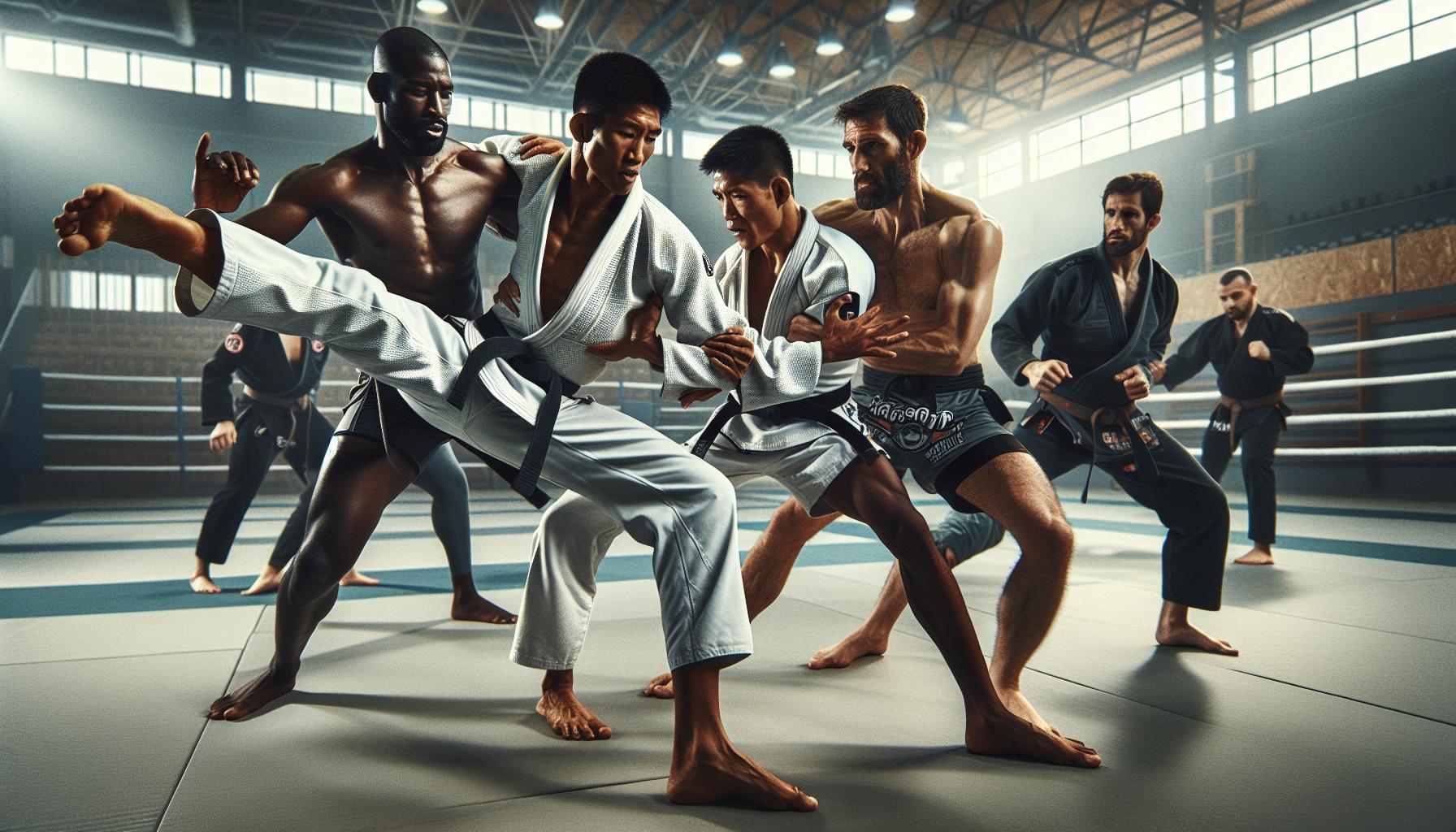
Comparing Krav Maga with Other Martial Arts in MMA
In the realm of mixed martial arts (MMA), understanding the interplay between different martial arts can significantly enhance one’s performance. While Krav Maga focuses on self-defense and situational awareness, comparing it to other martial arts like Brazilian Jiu-Jitsu (BJJ) or Muay Thai reveals unique strengths and weaknesses that can impact their effectiveness in an MMA context.
Krav Maga is fundamentally a self-defense system, designed to work efficiently in high-stress situations where real-life combat scenarios are imminent. Its techniques are direct and aim to neutralize threats quickly, often emphasizing strikes to vulnerable areas of the body. In contrast, BJJ is a grappling-based art that prioritizes ground fighting and submissions, encouraging practitioners to control and submit opponents regardless of size. This fundamental difference in approach reveals a critical aspect: practitioners of Krav Maga may be well-equipped to handle stand-up confrontations, whereas BJJ specialists excel in controlling fights once they reach the ground.
Incorporating Elements from Various Disciplines
It is crucial for MMA practitioners to integrate elements from multiple disciplines. For instance, combining the striking expertise of Krav Maga with the grappling techniques of BJJ and Muay Thai could create a more versatile fighter. By doing so, fighters can become adept at transitioning between striking and grappling phases effectively. This versatility not only enhances the chances of success in competitions but also enriches self-defense skills, providing a holistic approach to martial arts training.
While Krav Maga may not be as widely recognized in MMA competitions as established disciplines like boxing and wrestling, its principles offer valuable insights into self-protection and combat readiness. Techniques from Krav Maga, when adapted for the sport setting, can provide unique tools for improving situational awareness and resilience under pressure. For example, drills that simulate real-life attacks can enhance a fighter’s ability to react decisively in the octagon, acknowledging the urgent need for defense against unexpected movements from opponents.
Understanding Legal and Ethical Boundaries
When considering the application of Krav Maga techniques within the context of MMA, it’s essential to respect legal and ethical boundaries. Practitioners must understand the legal repercussions of applying self-defense principles in a competitive setting. The rules governing MMA fights typically prohibit certain techniques that are commonly taught in Krav Maga, such as strikes to the groin or attacks aimed at the throat. Therefore, mastering legal limits alongside practical applications ensures that fighters can effectively use their training without overstepping ethical boundaries.
In conclusion, while Krav Maga’s principles can certainly enrich an MMA fighter’s skill set, understanding its unique place among other martial arts is crucial. Combining the strengths of multiple disciplines, practicing within ethical and legal confines, and maintaining a focus on effective self-defense practices can greatly enhance a fighter’s overall capabilities. This thoughtful integration not only prepares individuals for competition but also instills the confidence needed to navigate real-life confrontations responsibly.
Frequently asked questions
Q: Can Krav Maga techniques be used in MMA fights?
A: No, Krav Maga techniques cannot be legally used in MMA fights due to its focus on targeting vulnerable areas, which are prohibited in MMA regulations. While Krav Maga is effective for self-defense, it is not designed for sport combat situations like MMA, where rules dictate permissible strikes and techniques [2].
Q: What are the main legal limitations of using Krav Maga in MMA?
A: The primary legal limitation is that Krav Maga techniques often include strikes to areas such as the groin and eyes, which are illegal in MMA. Such moves contravene the sport’s regulations, focusing instead on fair play and safety for participants [3].
Q: Why isn’t Krav Maga featured in MMA competitions?
A: Krav Maga isn’t featured in MMA due to its foundation in self-defense principles rather than structured sport fighting. It prioritizes quick, decisive action without consideration of sporting rules, making it incompatible with competitive fighting principles [1].
Q: Can MMA fighters incorporate Krav Maga for self-defense?
A: Yes, MMA fighters can incorporate Krav Maga techniques as part of their self-defense training. However, they’re encouraged to adapt these techniques to fit the sport’s safety and legal guidelines. Consider utilizing elements of situational awareness and defensive tactics [3].
Q: What are ethical considerations when using Krav Maga techniques in martial arts?
A: Ethical considerations include the appropriate use of force and understanding the distinction between self-defense and aggressive combat. Practitioners should always prioritize de-escalation and the legal implications of their actions in real-life scenarios [2].
Q: How does Krav Maga training differ from MMA training?
A: Krav Maga focuses on self-defense techniques and real-life scenarios, while MMA training emphasizes competition, sport-specific techniques, and athleticism. The objectives and training methods align differently, catering to distinct purposes [1].
Q: What impact does the legality of techniques have on MMA training?
A: The legality of techniques significantly impacts MMA training, as fighters must learn and practice within the sport’s regulations. Understanding what is permissible helps athletes remain competitive while avoiding disqualification and injuries [2].
Q: Are there specific self-defense laws that MMA fighters should know?
A: Yes, MMA fighters should be aware of their local self-defense laws, as regulations vary by state. Understanding the legal framework around self-defense can provide crucial knowledge applicable both in and out of the ring. Consult specific legal guidance relevant to self-defense scenarios to ensure compliance [3].
The Conclusion
As you delve into the question of whether Krav Maga can be effectively utilized in MMA, remember the importance of understanding the legal and practical boundaries that define self-defense. With an awareness of techniques allowed in MMA and the legal implications of their use, you can train smarter and safer. Don’t hesitate to explore our related articles on legal self-defense tactics and the differences between Krav Maga and Brazilian Jiu-Jitsu for additional insights.
Ready to take the next step? Sign up for our newsletter for updates on self-defense tips and exclusive training videos. If you have any questions or need further clarification, feel free to leave a comment below. Your safety and understanding are our top priorities as you navigate the world of martial arts. Join us in fostering a community centered on responsible self-defense.