
In recent years, self-defense training has become increasingly vital, with many individuals looking to enhance their personal safety. For U.S. Marines, mastering hand-to-hand combat is part of their rigorous training regime. This brings us to an intriguing question: Do Marines learn Krav Maga, a dynamic martial art known for its efficiency in real-world confrontations? Understanding how the Marine Corps integrates various combat skills can reveal much about the importance of self-defense techniques in diverse environments. As you delve into this topic, you’ll discover not only the nuances of Krav Maga within military training but also the broader implications for personal safety and combat readiness. Whether you’re a service member or simply interested in martial arts, the insights gained here will empower you to approach self-defense with knowledge and confidence.
Understanding Hand-to-Hand Combat in the USMC
The modern battlefield requires Marines to be adept in various forms of combat, and understanding hand-to-hand combat is essential for survival in close quarters. Hand-to-hand combat training in the USMC focuses on practical, efficient techniques that enable Marines to disable or neutralize threats quickly and effectively, especially when weapons are either unavailable or impractical to use. This training is not merely about striking or grappling; it also involves understanding the psychology of conflict, situational awareness, and the ethical implications of using force.
In the Marine Corps, hand-to-hand combat is grounded in the principles of self-defense and conflict resolution. The training teaches Marines to evaluate situations and respond appropriately, emphasizing minimal force and the de-escalation of confrontations whenever possible. By instilling a mindset that prioritizes safety and legal considerations, the courses prepare Marines to act within the bounds of the law while equipping them with the skills necessary for physical confrontations. Moreover, Marines learn to assess the environment and potential threats, making quick decisions that prioritize their safety and that of their fellow service members.
As Marines train in hand-to-hand combat, they are exposed to techniques that are often derived from various martial arts, including elements of Krav Maga. This blend of styles allows for a diverse skill set that can be adapted to different scenarios, each emphasizing straightforward, aggressive techniques designed for real-life situations. Such training fosters resilience and confidence, enabling Marines to navigate high-stress environments where split-second decisions can mean the difference between life and death. Ultimately, hand-to-hand combat training in the USMC equips Marines with the tactical acumen and physical abilities necessary to succeed in varied combat situations, reinforcing their role as some of the world’s most capable combatants.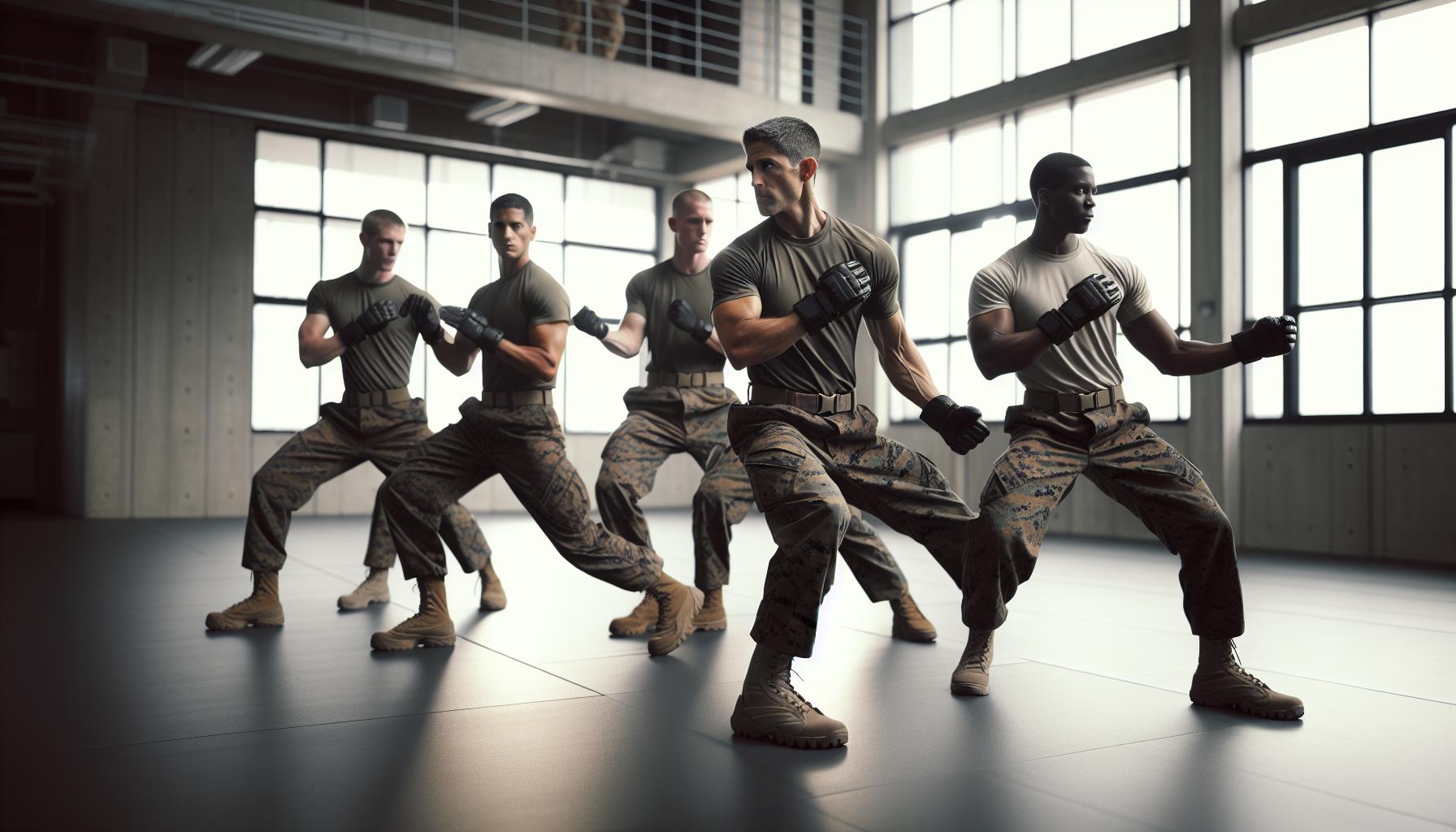
Krav Maga Basics: What Marines Need to Know
Krav Maga, originally developed for the Israeli Defense Forces, emphasizes practicality and effectiveness in self-defense, making it particularly relevant for Marines who often operate in unpredictable environments. The fundamental principle of Krav Maga is to neutralize threats quickly and efficiently, which aligns with the operational needs of Marines. This approach is rooted in the understanding that encounters can happen at close range, where traditional martial arts may fall short.
Key elements of Krav Maga training focus on real-world scenarios, incorporating techniques to defend against various attacks, whether from unarmed assailants or those wielding weapons. Marines are trained to remain aware of their surroundings and to respond to threats with decisive action while ensuring that their response is proportional to the level of threat faced. This mindset fosters both confidence and caution, empowering Marines to act without hesitation while respecting the legal and moral boundaries of self-defense.
In Krav Maga, emphasis is placed on quick reflexes and the ability to execute techniques under pressure. Typical moves include strikes to vulnerable points on an attacker’s body, effective grappling techniques to control or escape from holds, and methods for disarming opponents. It is crucial for Marines to not only learn these techniques but to understand when and how to apply them safely and legally.
Moreover, the effectiveness of Krav Maga lies in its adaptability. Marines can modify techniques based on their physical capabilities and the specific demands of their mission. Practical training exercises often simulate high-stress scenarios where Marines must make rapid decisions about engagement, reinforcing the importance of clear judgment in combat situations. Overall, Krav Maga serves as a vital component of hand-to-hand training, complementing the broader scope of martial arts used within the Corps, ultimately enhancing the Marines’ readiness for diverse combat challenges.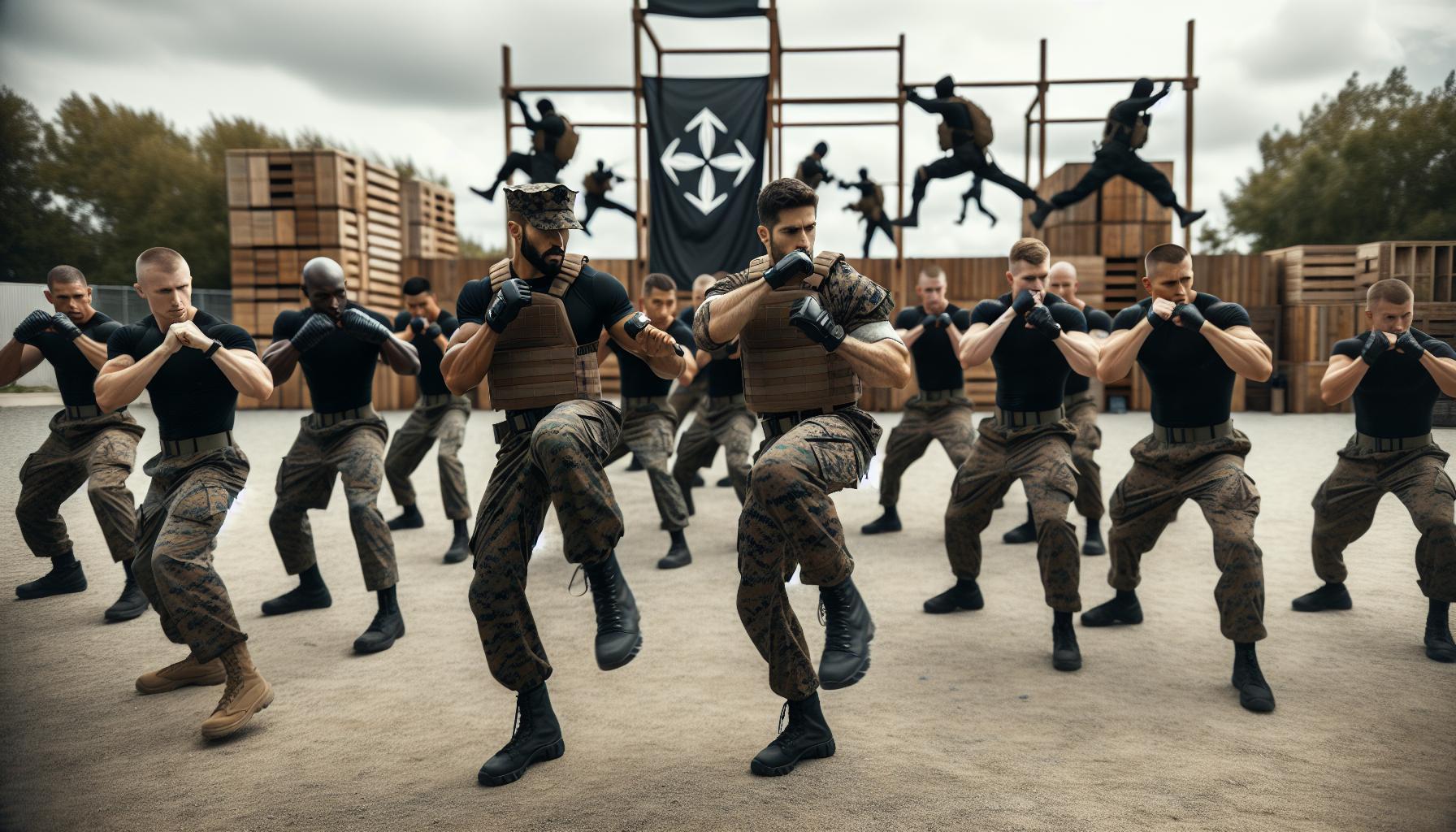
The Role of Krav Maga in Marine Training
In the high-stakes world of military operations, every Marine must be prepared for unexpected encounters that can occur at a moment’s notice. Krav Maga, with its focus on practical self-defense, plays a critical role in Marine training, ensuring that personnel are equipped with the skills to respond effectively under pressure. Unlike traditional martial arts, which often emphasize sport or form, Krav Maga prioritizes real-world application, making it well-suited for the unpredictable environments Marines frequently navigate.
Marines engage in rigorous Krav Maga training to develop essential capabilities such as situational awareness, quick reflexes, and the ability to adapt techniques to their physical attributes and mission-specific requirements. This training incorporates simulations of high-stress scenarios where Marines must quickly assess threats and decide on the best course of action. Importantly, training emphasizes not just the techniques themselves-such as striking vulnerable points, grappling, and disarming an attacker-but also the legal and ethical implications of using force.
The effectiveness of Krav Maga training is further enhanced by its integration with other combat skills and knowledge. Marines learn to coordinate these techniques with their weapon training, ensuring they can transition effectively between hand-to-hand combat and armed confrontation if necessary. This dual focus fosters a mindset geared towards de-escalation and proportional response, empowering Marines to neutralize threats while remaining mindful of the potential consequences of their actions. Such preparation is essential, as the realities of combat demand that Marines not only act decisively but also adhere to legal and ethical standards, making Krav Maga an indispensable component of their training regimen.
In sum, Krav Maga equips Marines with the tools they need to handle dangerous situations. By focusing on practical, adaptable techniques and embedding ethical considerations within training, Krav Maga enhances the overall readiness of Marines for diverse operational challenges, ensuring that they can protect themselves and others effectively and responsibly.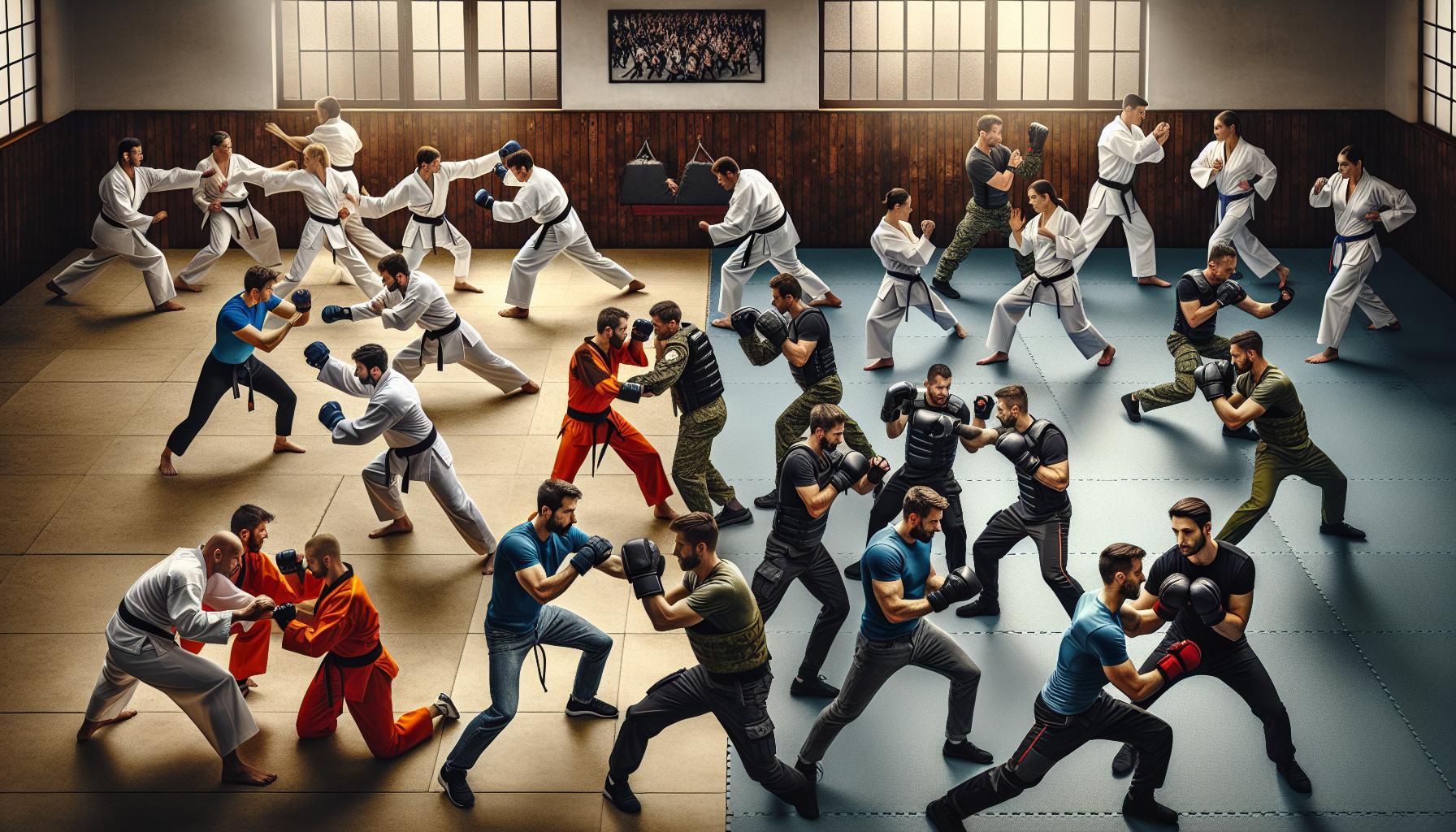
Comparison: Krav Maga vs. Traditional Martial Arts
In the realm of martial arts, the contrast between Krav Maga and traditional martial arts is stark, particularly in how they serve the specific training needs of the United States Marine Corps (USMC). While traditional martial arts often emphasize forms, aesthetics, and competition, Krav Maga is a system rooted in practical self-defense tailored for real-world situations, making it significantly relevant for Marines who must prepare for the unpredictability of combat scenarios.
Core Focus and Philosophy
Traditional martial arts, such as Karate, Judo, or Taekwondo, often prioritize discipline, technique, and sporting competitions. These disciplines frequently include a significant focus on forms (katas) or point-fighting rules that may not always translate to self-defense in unpredictable environments. In contrast, Krav Maga is designed with a single goal: to neutralize a threat as quickly and efficiently as possible. It emphasizes instinctive movements, aggression, and simultaneous defense and attack, blending seamlessly into the Marine ethos of decisive action under pressure.
Training Environment
The training approaches diverge considerably as well. Traditional martial arts training environments may simulate sparring and controlled situations. Alternatively, Krav Maga incorporates high-stress scenarios that provoke real reactions to fear and danger, which are essential in military training. Marines participating in Krav Maga are conditioned to respond to a variety of threats-regardless of their context. For instance, drills may involve defending against armed attackers or dealing with multiple assailants, ensuring that Marines develop the adaptability necessary for combat.
Legality and Ethical Considerations
An important aspect of martial training for Marines is understanding the legal and ethical implications of using force. Krav Maga training inherently incorporates these elements, teaching Marines when and how to respond to threats legally and ethically. While traditional martial arts may not emphasize this aspect to the same extent, Krav Maga instills a responsibility to use skills judiciously. This focus ensures that Marines comprehend the weight of their actions, promoting decisions that favor de-escalation and proportional responses over unnecessary aggression.
In summary, while traditional martial arts offer significant benefits such as discipline, fitness, and mental fortitude, Krav Maga’s practical focus on self-defense under duress makes it a superior choice for training Marines. The approaches extend beyond mere fighting techniques to envelop critical thinking, legal awareness, and readiness for real-life combat scenarios, crucial for those entrusted with safeguarding lives in tumultuous situations.
Key Techniques and Moves Used in Krav Maga
In the dynamic realm of self-defense, Krav Maga stands out as a highly effective martial art created specifically for real-life encounters. For Marines, mastering key techniques is not just about physical ability; it’s about understanding when and how to deploy these skills ethically and legally. The emphasis on practical application makes these techniques significant for military personnel who may face diverse scenarios requiring swift and decisive action.
A foundational approach in Krav Maga revolves around the concept of situational awareness. Marines are trained to constantly assess their environment, recognizing potential threats before they escalate. This awareness informs their choices in confrontational situations, allowing them to respond with appropriate techniques such as strikes, defenses, and disarms. Some essential techniques include:
- Choke Defenses: Techniques to escape from front or rear chokeholds, utilizing leverage and body mechanics to break free effectively.
- Strikes: Powerful strikes targeting vulnerable areas like the eyes, throat, and groin, designed to incapacitate an assailant quickly.
- Defense Against Armed Attacks: Specific methods to neutralize threats from various weapons, including firearms and knives, focusing on disarming the attacker safely.
- Ground Defense: Strategies for protecting oneself while on the ground, teaching Marines how to regain their footing or escape from a disadvantageous position.
When considering the intense nature of hand-to-hand combat, it’s crucial to remember the ethical dimensions woven into Krav Maga training. Each drill and technique practice incorporates a legal framework surrounding self-defense, ensuring that techniques like those above align with principles of proportional response. Through consistent training, Marines not only become proficient in physical techniques but also learn to assess situations that warrant their application, reinforcing the importance of responsible and judicious use of force.
Practical application of these techniques often occurs in controlled scenarios that simulate the chaos of real confrontations. Marines engage in drills that mimic various attacks and situations, allowing them to practice decision-making under pressure. This type of rigorous training instills not just the “how” of self-defense but the “when” and “why,” empowering Marines with the confidence to handle confrontational situations effectively and responsibly.
In sum, mastering Krav Maga techniques equips Marines with essential skills to navigate the complexities of self-defense, ensuring they can protect themselves and others while upholding their ethical obligations in high-stress situations.
Physical Conditioning for Marine Combat Training
Physical conditioning is a vital component of combat readiness for Marines, particularly when it comes to mastering effective self-defense techniques such as Krav Maga. Effective conditioning enhances physical strength, agility, and endurance, enabling Marines to execute complex movements and techniques when it matters most. Notably, the physical demands of hand-to-hand combat require not just muscle but also the ability to sustain energy during high-stress situations, making a comprehensive training regimen essential.
Marines typically engage in a variety of conditioning exercises designed to improve strength, flexibility, and cardiovascular fitness. These exercises include:
- Strength Training: Building muscular strength through weightlifting and bodyweight exercises (e.g., push-ups, pull-ups, squats) to enhance the power behind strikes and defensive maneuvers.
- Cardiovascular Training: Activities such as running, swimming, and cycling to increase stamina. Higher endurance levels help Marines maintain focus and physical capability during extended confrontations.
- Agility Drills: Incorporating agility ladders and cone drills to enhance footwork and reflexes, crucial for evading attacks and positioning during confrontations.
- Mobility and Flexibility Work: Stretching and mobility exercises to prevent injuries and improve range of motion, which are key for executing the wide variety of movements in Krav Maga.
Moreover, practical applications of physical conditioning often occur through scenario-based training, which simulates real combat situations. Such drills not only test the techniques taught in Krav Maga but also the effectiveness of the physical conditioning regimen-ensuring that Marines can perform under pressure. This method reinforces the connection between fitness and the ability to utilize self-defense skills effectively.
Additionally, it’s important for Marines to recognize the ethical dimensions of physical conditioning. Developing strength and combat skills comes with the responsibility of understanding appropriate force levels and the legal implications surrounding self-defense. Continuous education and training help Marines learn how to de-escalate situations, preserving safety while ensuring readiness. In doing so, they cultivate not only their bodies but also their judgment in high-pressure environments, ultimately becoming more effective and responsible service members.
Legal Considerations in Self-Defense Scenarios
In the realm of self-defense, understanding the legal framework surrounding defensive actions is crucial for Marines trained in disciplines like Krav Maga. Self-defense laws vary significantly by state and country, emphasizing that any physical response must be not only effective but also legally justified. For instance, the concept of reasonable force is pivotal-any action taken must be proportionate to the threat faced. This means that using a high level of force in response to a non-lethal threat may result in legal repercussions.
When engaging in Krav Maga training, Marines are taught the importance of de-escalation tactics. In many scenarios, the best defense is not necessarily a physical response. By utilizing communication skills and conflict resolution techniques, Marines can often diffuse a situation before it escalates to violence. This is especially prudent because most legal frameworks expect individuals to attempt to retreat or de-escalate before resorting to physical force.
The implications of using defensive techniques can be severe, leading to criminal charges or civil lawsuits if deemed excessive. For example, if a service member employs a level of force that exceeds what a reasonable person would consider necessary for self-defense, they could face charges ranging from assault to homicide, depending on the situation’s outcome. Furthermore, understanding the legal stipulations that surround weapons-such as firearms or pepper spray-adds another layer of complexity, as each state has different regulations governing their use in self-defense scenarios.
It is essential for Marines, equipped with Krav Maga skills, to continuously reflect on the ethical and legal dimensions of their training. With rigorous physical training comes the responsibility to engage mindfully and constructively, weighing the potential impact of their actions not just on themselves, but also on the assailant and the community at large. This awareness fosters a culture of responsible self-defense, emphasizing personal safety while upholding the law.
Safety Protocols for Marine Combat Training
Engaging in Marine combat training, particularly through techniques like Krav Maga, necessitates a rigorous adherence to safety protocols to ensure the well-being of all participants. Safety measures are crucial not only to prevent injuries but also to foster an environment where Marines can effectively learn techniques without fear of harm. Prioritizing safety begins with a comprehensive understanding of one’s physical limits and the limitations of partners during training exercises.
To create a safe training environment, Marines should follow several essential protocols:
- Protective Gear: Always wear appropriate protective gear including mouthguards, gloves, and shin guards during sparring sessions to minimize injury risks.
- Controlled Environment: Conduct training in a controlled space free from hazards, ensuring the training area is clear of obstacles that could cause accidents.
- Clear Communication: Establish open lines of communication with training partners, signaling when a technique may need to be moderated or stopped altogether to prevent injury.
- Respect Personal Limits: Emphasize the importance of respecting personal and partner limits. Training should not push anyone beyond their physical capabilities or understanding of the techniques being practiced.
- Focus on De-Escalation: Teach and practice de-escalation tactics as a primary response. This instills the principle that physical confrontation should always be a last resort.
Training scenarios can often escalate quickly; thus, incorporating situational awareness and the legal implications of physical engagement are critical. Marines should be well-versed in laws regarding the use of force, understanding that many legal systems endorse only the minimum force necessary for self-defense. Therefore, it is vital to incorporate discussions about legal ramifications into training routines.
Furthermore, utilizing realistic training scenarios enhances preparedness for real-life encounters. Conducting drills in controlled settings that mimic potential conflict situations can empower Marines to respond effectively under stress while reinforcing safety protocols. This type of training ensures retention of skills while fostering confidence in their ability to act judiciously.
Regularly reviewing and updating safety protocols according to feedback and new insights in self-defense techniques or legal guidelines can bolster the overall efficacy of the training program. By integrating rigorous safety measures, Marines can confidently cultivate their Krav Maga skills, equipping them to protect themselves and others responsibly, while respecting the seriousness of self-defense situations.
Real-Life Application of Krav Maga in the Field
In the extreme environment of military service, the ability to effectively apply self-defense techniques like Krav Maga can be crucial. For Marines, the real-life application of these techniques often reflects their training but involves situational awareness, legal considerations, and ethical boundaries. Krav Maga, with its emphasis on real-world scenarios and efficient responses, prepares Marines to react swiftly and decisively under pressure, whether in combat zones or security situations.
One strong aspect of Krav Maga is its focus on situational awareness-recognizing potential threats before they escalate. Marines train to not only engage physically but also to assess situations for possible exit strategies or de-escalation methods. Utilizing techniques such as verbal judo can redirect an aggressor’s focus, preserving safety without physical confrontation when feasible. Remember, understanding the legal implications of self-defense is paramount; Marines must know that self-defense laws vary by jurisdiction, and any force used should be proportional to the threat faced.
- Real-World Applications: Many Marines have experienced scenarios where Krav Maga techniques, such as quick strikes to vulnerable areas, wrist releases, and clinch techniques, enabled them to maintain control over a situation effectively.
- De-escalation Tactics: Training in negotiation skills alongside physical techniques helps Marines approach potential conflicts from a perspective of resolution, prioritizing non-violent outcomes.
- Decision-Making Under Stress: The stress of real-world events can cloud judgment. Regular training in Krav Maga allows Marines to practice decision-making drills, building the muscle memory and mental clarity necessary for effective responses.
The balance between being prepared for combat and exercising restraint is continually reinforced in training. Each grappling match or sparring session serves as a reminder of the importance of ethical force application. Consequently, scenarios presented during training-whether simulating an ambush or crowd control-train Marines to adapt their Krav Maga skills accordingly, enabling them to respond effectively while maintaining a commitment to minimize harm whenever possible.
Ultimately, successful requires ongoing education about the laws governing self-defense, periodical training refreshers, and evaluations of ethical boundaries regarding engagement. This holistic approach ensures that while they are equipped with potent self-defense skills, Marines handle potential conflicts with integrity, always prioritizing safety and moral responsibility above all.
Supplementary Training: Other Martial Arts for Marines
Incorporating diverse martial arts techniques into the training regimens of Marines not only broadens their skill sets but also enhances adaptability in various confrontation scenarios. While Krav Maga serves as a fundamental pillar for self-defense and hand-to-hand combat, other martial arts can complement this training effectively, providing a richer and more versatile combat training experience.
Brazilian Jiu-Jitsu (BJJ)
Brazilian Jiu-Jitsu focuses on ground fighting and submission grappling techniques, emphasizing an individual’s ability to control and submit an opponent through leverage and technique rather than brute strength. For Marines, mastering BJJ can enhance their grappling capabilities, ensuring they are well-versed in scenarios where a conflict moves to the ground. This skill is critical in police actions or close-quarters combat, where striking may be impractical due to proximity.
Muay Thai
Known as the “Art of Eight Limbs,” Muay Thai incorporates strikes from fists, elbows, knees, and shins. Training in this striking art provides Marines with effective tools for close-range combat. The use of clinch techniques in Muay Thai also complements Krav Maga training by teaching Marines how to control an opponent during close encounters, an essential skill in volatile situations where space is limited.
Boxing
Boxing drills enhance reaction time, footwork, and striking precision, which are invaluable during encounters that require quick engagement. The ability to throw effective punches and maintain defensive stances allows Marines to manage threats while minimizing risk to themselves and surrounding individuals. Boxing lessons also emphasize mental toughness and strategy, crucial aspects in high-pressure situations.
Self-Defense Laws and Ethical Training
Regardless of the martial arts training received, understanding the legal implications surrounding self-defense is critical. Each discipline bears unique principles regarding force application and response. Training should always include discussions on legal boundaries and ethical engagement. For instance, techniques that emphasize de-escalation and conflict resolution are vital in ensuring that Marines use their skills responsibly and within the law.
By integrating these martial arts into their training, Marines not only develop a comprehensive set of tools to defend themselves but also cultivate an adaptive mindset that enables them to handle various situations with ethical considerations in mind. This multifaceted approach enhances their effectiveness in the field while prioritizing safety and moral responsibility.
Incorporating Krav Maga into Personal Self-Defense
In today’s unpredictable world, self-defense has become an essential skill for many individuals. One of the most effective systems for personal safety is Krav Maga. This martial art focuses on practical techniques that can be applied in real-life situations, emphasizing quick, decisive actions in response to threats. It equips individuals with the tools necessary to minimize harm and maximize personal safety, making it an invaluable asset for anyone interested in self-defense.
When considering the incorporation of Krav Maga into personal self-defense, it’s critical to understand its core principles. Krav Maga techniques center around responding to threats in a simplified manner, focusing on survival and escape rather than engagement. Participants are taught to strike vulnerable areas on an attacker, create distance, and utilize available resources as improvised weapons. This straightforward approach allows individuals without extensive physical training to effectively defend themselves in crisis scenarios.
Understanding Legal and Ethical Considerations
Using Krav Maga as a self-defense tool also comes with the responsibility of understanding legal implications. Laws regarding self-defense vary greatly by state, and individuals must be aware of the boundaries of acceptable force. Engaging in self-defense is justified only when there are reasonable grounds to believe that one is in imminent danger. Training should include an examination of these legalities, promoting ethical decision-making and awareness of when de-escalation is the best course of action.
Real-Life Application and Safety Protocols
Moreover, real-life scenarios can significantly impact how techniques are executed in practice. For instance, practicing situational awareness is as important as mastering physical techniques. The ability to recognize potential threats before they escalate provides individuals with the opportunity to avoid confrontation altogether. Additionally, incorporating safety protocols-such as escaping to a safe location or alerting authorities following a self-defense situation-ensures that individuals prioritize their long-term safety and well-being.
By integrating Krav Maga into personal self-defense training, individuals not only gain confidence in their ability to protect themselves but also cultivate a respect for the ethical and legal responsibilities that accompany such skills. This balanced approach fosters not only effective self-defense strategies but also a mindset geared towards safety and responsibility in the face of potential threats.
The Evolution of Hand-to-Hand Combat in the USMC
Hand-to-hand combat, as employed by the United States Marine Corps (USMC), has undergone significant evolution since its inception, shaped by the need for effective self-defense and battlefield proficiency. Initially, Marine Corps training emphasized traditional boxing and wrestling techniques, which provided soldiers with crucial skills for physical confrontation. However, the nature of combat has drastically transformed over the decades, prompting the integration of modern martial arts and self-defense tactics into training programs.
Today’s USMC hand-to-hand combat curricula incorporate various techniques, including elements from Brazilian Jiu-Jitsu, Muay Thai, and notably, Krav Maga. This shift towards a comprehensive combat system reflects the Corps’ commitment to preparing Marines for diverse threats in various environments. Key to this evolution is the focus on practical applications and effective responses to real-world scenarios. For instance, Marines are trained to strike vulnerable areas, escape holds, and utilize their surroundings to gain an advantage-all essential skills derived from Krav Maga principles.
Practical Integration in Training
The integration of Krav Maga into Marine training facilitates a more holistic approach to combat readiness. It emphasizes situational awareness and decision-making under pressure, which are vital in modern combat. Marines not only practice techniques but also engage in scenario-based training that replicates threats they might encounter in the field. This hands-on experience is crucial, as it helps young Marines internalize tactics that prioritize de-escalation whenever possible while ensuring they can protect themselves and their fellow service members effectively.
Legal and Ethical Responsibility
As with any martial system, understanding the legal and ethical ramifications of self-defense is paramount. Marines are trained to be aware of the laws governing the use of force and the importance of proportional responses. This understanding not only prepares them for possible physical altercations but also fosters a mindset geared towards de-escalation and thoughtful engagement. Many training scenarios incorporate discussions on when force is justified, ensuring that Marines appreciate the weighty responsibilities that come with their training and potential use of force.
illustrates a dedication to adapting to the complexities of modern warfare. By incorporating systems like Krav Maga, the Marine Corps is better equipped to face unpredictable threats while instilling a sense of ethical responsibility in its members. This approach empowers Marines to handle confrontations with confidence, the knowledge of effective techniques, and the understanding of the moral implications behind their actions.
Q&A
Q: Do Marines receive formal training in Krav Maga?
A: Marines do not receive formal training in Krav Maga as part of their standard curriculum. Instead, they learn a blend of various hand-to-hand combat techniques suited for military scenarios, integrating methods inspired by Krav Maga’s principles.
Q: How does USMC hand-to-hand combat training differ from Krav Maga?
A: USMC hand-to-hand combat focuses on military objectives, incorporating techniques that are practical in combat situations. In contrast, Krav Maga emphasizes self-defense against armed attackers and street scenarios, prioritizing quick, efficient responses to threats.
Q: What are the key principles of Krav Maga that could benefit Marines?
A: Krav Maga’s core principles, such as situational awareness, the use of instinctive movements, and emphasis on defense against armed threats, are useful for Marines. These techniques can enhance their adaptability in unpredictable combat environments.
Q: Can Marines train in Krav Maga outside of their official duties?
A: Yes, Marines can seek Krav Maga training through civilian classes or martial arts schools. Engaging in external Krav Maga training can enhance their combat readiness and personal self-defense skills.
Q: What is the focus of the USMC’s hand-to-hand combat training?
A: The focus of USMC hand-to-hand combat training is on practical skills that are applicable in combat scenarios, including close-quarters combat, grappling, and striking techniques designed to neutralize threats quickly and efficiently.
Q: Are there any specific techniques from Krav Maga used in Marine training?
A: While the USMC does not formally integrate Krav Maga, some techniques, such as defensive maneuvers and quick counter-attacks, are similar. Understanding Krav Maga can help Marines enhance their combat adaptability.
Q: What should Marines consider when incorporating Krav Maga into their training?
A: Marines should consider the safety protocols, legal implications, and the context of self-defense techniques they learn from Krav Maga, ensuring that they use appropriate levels of force while adhering to military law.
Q: What resources are available for Marines wanting to learn Krav Maga?
A: Marines interested in Krav Maga can find local classes, online courses, or training camps specializing in this martial art. Additionally, books and instructional videos can provide foundational knowledge and techniques.
Key Takeaways
In summary, while the USMC incorporates various hand-to-hand combat techniques, including elements of Krav Maga, understanding the legal implications and effectiveness of these practices is essential. Training in martial arts empowers Marines with vital self-defense skills, but it’s crucial to use this knowledge responsibly. If you’re interested in exploring more about military self-defense strategies or want to delve deeper into the differences between Krav Maga and other martial arts, check out our articles on “Martial Arts for Self-Defense” and “Legal Considerations in Self-Defense Situations.”
Don’t wait-enhance your knowledge and skills today! Subscribe to our newsletter for the latest insights and tips, and join our community to share your thoughts or experiences in the comments below. Remember, being prepared is just as important as knowing when to de-escalate. Stay safe, stay informed, and explore our resources to empower your self-defense journey with confidence!