
In moments of imminent danger, the instinct to protect oneself can lead to serious questions about legality and ethics-especially when it comes to using a knife for self-defense. Can you stab someone in self-defense? This crucial inquiry goes beyond the fear of physical harm; it delves into understanding legal boundaries, the appropriateness of force, and the responsibilities that accompany self-defense actions. Knowing when and how you can legally use a knife for protection is essential for anyone concerned about safety. The implications of such choices can be life-altering, not just physically but also legally. This article will clarify the legal landscape surrounding knife use in self-defense, helping you navigate these complex issues while emphasizing the importance of de-escalation and proportional responses. Join us as we explore the nuances of self-defense legality and the critical role that understanding these principles plays in effectively safeguarding yourself.
Understanding Self-Defense Laws for Knife Use
Understanding the legal intricacies surrounding self-defense involving knives is crucial for anyone considering using such a weapon for personal protection. Laws can vary significantly from one jurisdiction to another, and knowing these details can be the difference between being justified in using your knife and facing legal consequences. In many places, the use of a knife as a means of self-defense is legally permissible only when one perceives an imminent threat to their safety and has no reasonable alternatives for escape or de-escalation. Understanding this critical definition of self-defense is essential.
When evaluating self-defense laws, the standard often hinges on the “reasonable person” doctrine, which assesses whether an average person in a similar situation would feel that responding with a knife is necessary and proportional to the threat faced. Factors such as the size and behavior of an attacker, the environment, and whether an escape path existed are critical in determining whether the use of lethal force is justifiable. For instance, if someone is attacked physically without weaponization, using a knife could be seen as excessive unless the attacker poses a significant threat to life.
In terms of actual application, each state may impose specific requirements or restrictions around the carry and use of knives, including blade length and type. Some states have “stand your ground” laws, while others require a “duty to retreat” before using force. This complexity underscores the necessity of consulting local laws and potentially seeking legal advice before considering a knife for self-defense. Knowledge of these legal nuances not only prepares individuals for responsible self-defense practices but also emphasizes the importance of seeking non-violent solutions whenever possible.
Lastly, powerful stories from real life can illustrate these points effectively. In some cases, individuals have successfully defended themselves using knives within the legal framework of self-defense; however, others have faced criminal charges due to misunderstandings of the law or misinterpretation of the threat level they faced. These narratives serve as cautionary tales, reinforcing the idea that while self-defense is a right, it comes with significant legal responsibilities and ethical considerations. Always…
In summary, the landscape of self-defense laws regarding knife use must be navigated with caution and knowledge, as it involves both the situational context and a thorough understanding of the law. Prioritizing de-escalation and non-violent responses should remain at the forefront of personal safety practices.
Evaluating the Necessity of Stabbing in Self-Defense
When considering the use of a knife in self-defense, it is critical to assess whether the situation truly warrants such extreme measures. The decision to confront an aggressor with a blade can have irrevocable consequences, both legally and ethically. It’s essential to recognize that self-defense involving stabbing is only justifiable in emergencies, where there is a clear and immediate threat to one’s life or serious bodily injury. Understanding the gravity of this choice can help you navigate those high-stress situations with a clearer mindset.
In many jurisdictions, the legality of using a knife in self-defense hinges on the principles of necessity and proportionality. This means you must determine if there are genuine alternatives to using lethal force. Try to evaluate factors such as the aggressor’s intent, the surrounding environment, and your own opportunity to escape or de-escalate the situation. Ask yourself: is there truly no other option? If you can retreat to safety without resorting to violence, that option should always be prioritized. The law generally supports actions that are measured against the level of threat faced; a knife may be viewed as excessive if the aggression does not involve a weapon or lethal intent.
Using a knife should never be your first response; instead, focus on de-escalation tactics. These include verbal persuasion or adopting a non-threatening body language to diffuse tension. Should you find yourself in a confronted scenario where retreat is impossible, ensure that any response remains proportional. The reasonable person standard applies here-would an average individual perceive a knife as the necessary response?
Moreover, it’s vital to familiarize yourself with the specific legal landscape of your area, as laws surrounding self-defense and the use of knives can vary widely by state. Research requirements on knife carry, potential charges for misuse, and any stipulations regarding justified use in self-defense scenarios. Engaging local legal resources or self-defense training can provide additional insight into your rights and responsibilities. Always remember that the ultimate goal is to protect yourself while minimizing harm to others and adhering to legal frameworks that govern such circumstances.
Legal Limits: When Is Self-Defense Justifiable?
In critical situations where self-defense comes into play, understanding the legal framework surrounding the use of a knife is essential for personal safety and accountability. The legality of using a knife for self-defense varies significantly across jurisdictions and hinges on commonly accepted principles of necessity and proportionality. It’s crucial to recognize that self-defense is generally justified only when an individual perceives a credible and imminent threat to their life or serious bodily harm. Thus, before resorting to a knife, ask yourself: is the threat real and immediate?
Key Considerations for Justifiable Self-Defense
When assessing whether to use a knife in self-defense, consider the following factors:
- Immediacy of the Threat: There must be an immediate danger; past threats or general fears do not justify lethal force.
- Possibility of Retreat: If you can escape or de-escalate without violence, the law encourages you to take that option.
- Level of Force Used: Your response must be proportional to the threat faced. If the aggressor is unarmed, using a knife may be seen as excessive.
Each of these factors contributes to the determination of whether the use of a knife is justifiable under the law. For instance, if faced with an unarmed than if your assailant wielded a weapon, you might be expected to use non-lethal means of self-defense.
State-Specific Laws
You must familiarize yourself with the legal landscape in your specific state regarding knife carry and the use of knives for self-defense. Some areas may have specific restrictions on the length of the blade or the type of knife permitted for carry. Engaging local legal resources can provide clarity on these laws and help you understand the consequences of misuse. In some cases, even the perception of threat can lead to legal repercussions if an aggressive response is deemed unwarranted.
Ultimately, the responsibility lies with you to understand the boundary between self-defense and unlawful aggression. While self-defense laws exist to protect individuals, misjudging a situation can lead to severe legal consequences. Prioritizing de-escalation and assessing the nature of the threat can aid in making responsible choices that reflect both legal and ethical considerations in high-stress confrontations. Always ensure that your actions align with local laws to safeguard your rights and responsibilities.
The Effectiveness of Knives in Self-Defense Scenarios
In a life-threatening situation, the instinct to reach for a knife can be compelling, but its effectiveness hinges not just on the weapon itself, but on the context of its use and the skills of the individual wielding it. Understanding the dynamics of self-defense involving knives is critical, as they can serve as both a deterrent and a lethal force depending on how they’re deployed. Importantly, the mere presence of a knife does not guarantee safety; rather, it requires a clear understanding of legal parameters, proper technique, and situational awareness.
The effectiveness of knives in self-defense largely comes down to two factors: the ability to neutralize the threat with minimal harm to oneself and the proportionality of the response. A knife can incapacitate an attacker quickly, potentially providing an escape opportunity. However, the legality of using a knife in self-defense varies significantly across jurisdictions. In many areas, it is essential to establish that you were faced with an imminent threat and that lethal force was necessary; otherwise, you might face legal consequences for your actions. For instance, in Canada, carrying a knife for self-defense is often seen as inappropriate and could lead to weapons charges if not justified as a necessary response to a real and immediate threat [1].
Additionally, training and skill level play a crucial role in determining how effective a knife will be in a self-defense situation. Mere possession of the knife does not equate to effectiveness; knowing how to properly wield it, understanding the vital areas of the body to target, and having adequate practice can mean the difference between successfully defending oneself and causing unintended harm or escalating the confrontation. Situational de-escalation strategies, such as verbal negotiation and withdrawal, should always be prioritized whenever possible, as these approaches can defuse a situation without resorting to violence.
Ultimately, while knives can indeed be powerful tools for self-defense, their use is accompanied by serious responsibilities. It’s essential to weigh not just the immediate need for protection, but also the long-lasting emotional and legal repercussions that can arise from engaging in a violent confrontation. Prioritizing safety, understanding legal limits, and employing de-escalation techniques should always be at the forefront of any self-defense strategy involving knives.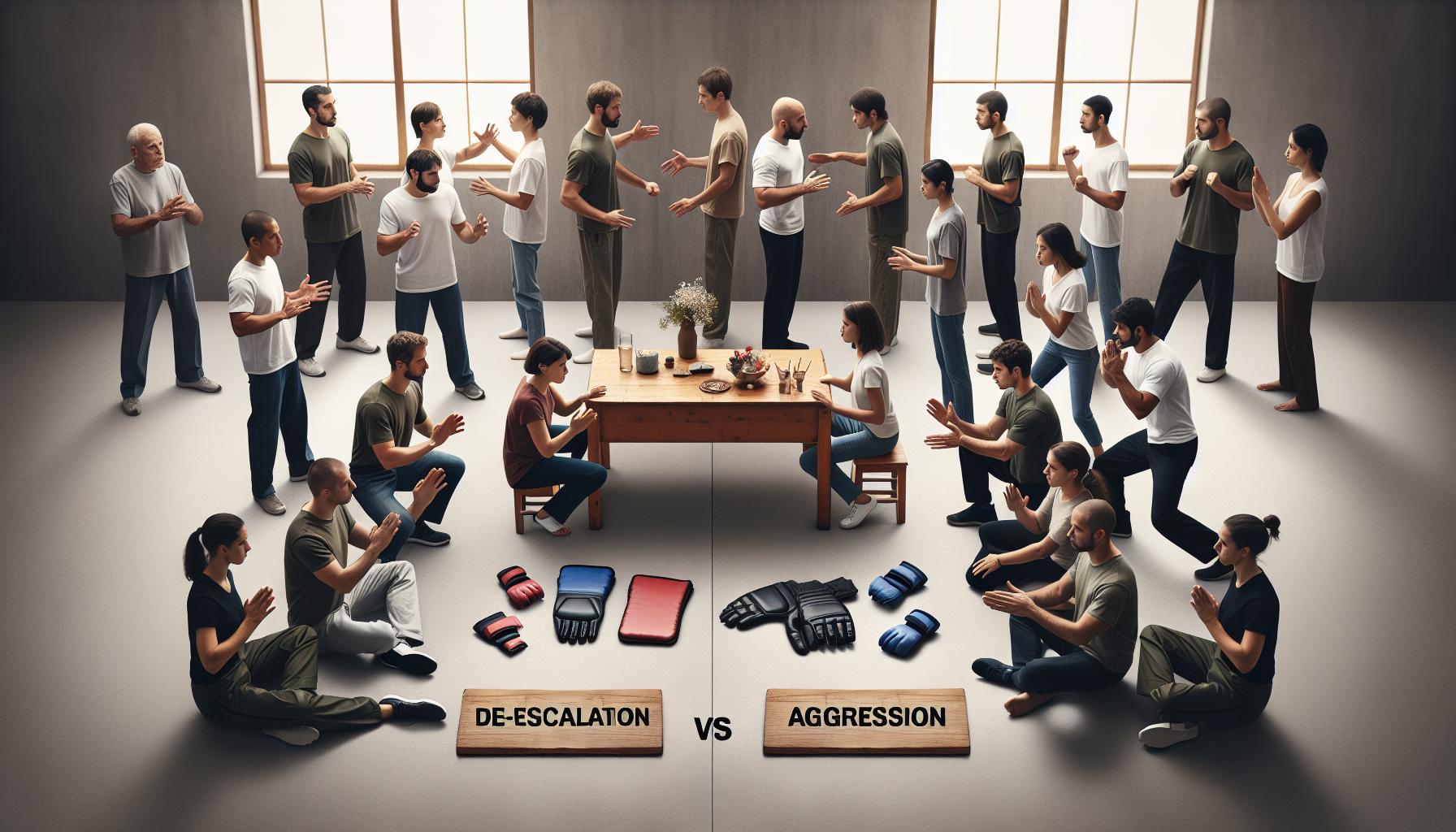
Self-Defense Techniques: De-escalation vs. Aggression
In heated and potentially violent encounters, the choice between de-escalation and aggression can define not only the outcome of a confrontation but also the legal and emotional repercussions that follow. Skilled practitioners and instructors often emphasize that self-defense is not an invitation to violence but a call to ensure safety. When faced with a threat, your first instinct might be to retaliate aggressively. However, many scenarios allow for non-violent resolutions that preserve safety and legal integrity.
De-escalation techniques involve strategies aimed at defusing a tense situation before it escalates into violence. These methods include maintaining a calm demeanor, using non-threatening body language, and negotiating verbally. For example, stating, “Let’s talk this out. I don’t want any trouble,” can redirect a confrontational individual’s focus and potentially diffuse their aggression. It’s essential to remember that in many jurisdictions, the law favors individuals who attempt to avoid confrontations and resort to self-defense only as a last resort. Some states even require that you prove you attempted to escape or de-escalate before using any form of self-defense, including a knife.
On the other hand, if de-escalation fails and an imminent threat persists, understanding aggression in self-defense becomes crucial. In such situations, the use of force-whether with a knife or any other means-must be proportional to the threat faced. If an assailant appears ready to attack, the law may permit you to respond with reasonable and necessary force to protect yourself. This does not mean that aggressive force is always justifiable; context matters significantly. For instance, using a knife against an unarmed individual would likely be judged as excessive and could lead to severe legal consequences.
Ultimately, the principles of self-defense dictate that the goal is to protect oneself and escape danger, not to cause harm for its own sake. The moral and legal responsibilities associated with using a weapon, including knives, should never be underestimated. The most effective strategy is to prepare for conflict through training in both de-escalation and when to appropriate force, thereby ensuring you’re equipped to respond correctly and safely in real-world scenarios.
Safety Protocols for Carrying and Using Knives
Carrying and using a knife for self-defense involves significant responsibilities and requires a solid understanding of both safety protocols and legal implications. Individuals must prioritize safety not only for themselves but also for those around them. It’s essential to approach the subject with seriousness and caution, recognizing that while knives can be effective tools for defense, their misuse can have devastating consequences.
First and foremost, always ensure that your knife is legal to carry in your state. Laws vary widely concerning blade length, types of knives, and where they can be carried. Consult local regulations to avoid legal troubles. Once legality is confirmed, focus on safe carrying practices. Use a sheath or knife case to prevent accidental cuts and keep the knife securely stored when not in use. This provides a layer of safety and discretion, preventing any unintended access to the knife.
When it comes to using a knife, understanding the context of self-defense is crucial. The use of a knife should be deemed a last resort, employed only when your safety is genuinely at risk. If you find yourself in a threatening situation, your first objective should always be to de-escalate. Should de-escalation fail, ensure that your response is proportional to the threat faced. Engaging an aggressor with a knife should only happen when there are no other options available to ensure your safety. Remember, using a knife against an unarmed individual or in a situation where retreat is possible can lead to severe legal ramifications.
Training in knife-specific self-defense tactics, coupled with situational awareness, can greatly enhance your ability to respond effectively. Consider enrolling in self-defense classes that emphasize the responsible use of knives or consult with a qualified instructor. Practice scenarios that reflect real-world encounters while focusing on de-escalation and legal justifications for using force. Understand that the goal is to protect oneself and escape, not to inflict harm unnecessarily. By being well-informed and prepared, you can navigate the complexities of self-defense with clarity and confidence.
State-Specific Laws on Knife Use and Self-Defense
Understanding the legal landscape of knife use in self-defense is crucial for anyone considering carrying a knife for protection. Laws governing knife possession and self-defense vary significantly from state to state and sometimes even between local jurisdictions. For instance, many states impose restrictions on the type and size of knives that can be carried, while others may have specific regulations regarding their use in defensive situations.
Legal Knife Carrying Guidelines
In many states, the legality of carrying a knife hinges upon several factors, including blade length, type, and intended use. For example, in New York, knives that are considered “gravity knives” or “switchblades” are prohibited, whereas folding knives with blades shorter than four inches generally fall within legal limits when carried for non-dangerous purposes [[1](https://www.tkellknives.com/blogs/default-blog/what-size-knife-is-legal-to-carry-in-ny-a-clear-guide?srsltid=AfmBOoqfg5V1eolnxi3BS31AeRXR5fAMQOQ8bcWNzbmfWhRJ5iQYLIKk)]. Before carrying a knife, it is essential to familiarize yourself with local laws to ensure compliance and avoid legal repercussions.
Implications for Self-Defense
When considering the use of a knife for self-defense, it is vital to understand that the notion of “reasonable force” is a cornerstone of legal justification. In many places, the law allows you to use force only if it is proportional to the threat faced. For example, using a knife against an unarmed aggressor may be viewed as excessive and could result in serious legal consequences. Situations that permit self-defense typically require that there be an imminent threat to your life or well-being. This understanding is vital, as it underscores the importance of seeking non-violent resolution before resorting to potentially lethal measures [[3](https://uppercuttactical.com/blogs/news/carrying-knife-self-defense?srsltid=AfmBOorSX8sQ7U8AQHqnUNzyp8I6fnFGgjF0VhKSGI7R_q3Y3z9kRP)].
Practical Advice and Training
To navigate the complexities of knife legality and self-defense effectively, consider engaging in training that emphasizes both knife safety and legal awareness. Self-defense classes are invaluable for learning appropriate responses to various scenarios while reinforcing the importance of de-escalation tactics. By honing your situational awareness and understanding the legal standards in your area, you can prepare yourself to make informed decisions in critical moments. Remember, the goal of self-defense is not to inflict harm but to protect oneself when necessary, always striving to retreat or diffusing the situation whenever possible.
Alternatives to Stabbing: Non-Lethal Self-Defense Options
In self-defense situations, relying on non-lethal options can be not only a safer choice but often a more legally justifiable one. While the instinctive response might lean toward using a knife or other deadly force, alternatives exist that prioritize safety for both the individual and the aggressor. Understanding these non-lethal options emphasizes the importance of restraint and legality in self-defense.
One effective non-lethal option is pepper spray, which can incapacitate an attacker without causing permanent harm. When used properly, it’s a potent deterrent that allows the victim time to escape. Additionally, personal alarms can disrupt an attacker’s focus or attract attention, often prompting them to flee. Portable stun guns are also available; they can incapacitate an assailant temporarily without the risk of fatal outcomes. These items often fall into acceptable legal categories, unlike knives, which can carry significant legal repercussions when used or displayed improperly.
Self-Defense Techniques: Enhancing Your Skillset
Training in martial arts can provide valuable tools for self-defense that don’t require lethal force. Disciplines like Krav Maga focus on situational awareness and using the environment to your advantage, allowing you to defuse a threat without causing harm. Jiu-Jitsu promotes grappling techniques that can help subdue an attacker without the need for weapons. This emphasizes de-escalation and managing confrontations with physical control rather than aggression.
Determining the best non-lethal self-defense method often depends on the situation and local laws. Researching state-specific self-defense regulations will ensure you are equipped legally and responsibly. In many jurisdictions, employing non-lethal methods could be viewed more favorably in legal situations. Always remember to maintain a mindset that prioritizes de-escalation. The aim is not to inflict injury but rather to protect oneself while minimizing harm to all involved parties.
Real-Life Scenarios: Appropriate Use of Force
In scenarios where self-defense becomes necessary, the distinction between appropriate and excessive force can be critical and legally complex. For instance, imagine a situation where you are confronted by an aggressor who threatens your safety with physical violence. Legally, the use of force must be proportionate to the threat faced. If the assailant seems unarmed but advances with aggressive intent, responding with a knife could be viewed as excessive, as local laws often require individuals to retreat or use minimal force before escalating to lethal means.
Understanding the legal framework surrounding self-defense is paramount. In many jurisdictions, the principle of “reasonable force” applies, meaning that you can defend yourself without resorting to lethal actions unless it’s absolutely necessary to prevent imminent danger to your life. For example, a person may use pepper spray to deter an aggressive individual, creating space to escape rather than escalating to a knife. This not only keeps the aggressor from serious harm but also reduces legal repercussions for the defender, as non-lethal force tends to be more favorable in legal scrutiny.
Consider a more nuanced example: two individuals are arguing and one becomes physically violent. If the person feeling threatened grabs a knife, they may argue that they felt their life was in imminent danger. However, if the confrontation hasn’t escalated beyond verbal threats, their decision to use a knife may be deemed unreasonable. Understanding that de-escalation tactics, such as retreating or seeking help, can be more effective and legally justifiable is vital. Self-defense training can emphasize these choices, showcasing alternatives that ensure safety without crossing legal boundaries.
When faced with a real confrontation, prioritize situational awareness and prepare to assess the potential for escalation. Keep in mind that self-defense laws vary widely by state or country, so it’s crucial to familiarize yourself with local regulations. Staying informed will better equip you to make safe, responsible choices when faced with dangerous individuals, thereby striking a balance between protecting yourself and acting within the law.
Comparative Analysis: Knife Defense vs. Other Martial Arts
In self-defense situations, understanding the nuances between using a knife and employing other martial arts techniques is essential. The choice of defense tool or method can significantly impact the outcome of a confrontation, both in terms of immediate self-defense and the potential legal repercussions afterward. While knives can serve as effective self-defense instruments due to their availability and lethal potential, they also carry a greater burden of legal scrutiny compared to traditional martial arts techniques.
One of the primary distinctions between knife defense and martial arts like Brazilian Jiu-Jitsu (BJJ) or Krav Maga is the escalation of force. When engaging in knife defense, the immediate goal is often to neutralize an aggressor who poses a credible threat to life. This can lead to more severe consequences compared to using non-lethal techniques, such as grappling or leverage-based methods found in BJJ. Advocates of martial arts emphasize that many threats can be de-escalated through control and restraint, focusing on immobilizing the attacker without resorting to lethal force. Techniques such as joint locks or throws allow a defender to protect themselves while minimizing the risk of serious injury or death to the aggressor, which in turn can lead to more favorable legal considerations.
Legal Implications of Knife Use vs. Martial Arts
It’s crucial to understand that the legal framework surrounding self-defense often views the use of a knife as a last resort. Many jurisdictions uphold the use of “reasonable force,” indicating that lethal options should be reserved for situations where there is an imminent threat to life. Here are some points of comparison regarding legal limits:
- Krav Maga: Focuses on quick, efficient responses to threats and emphasizes escaping rather than engaging, promoting techniques that often involve awareness and avoidance.
- BJJ: Teaches control over an opponent with minimal risk to both parties, highlighting the importance of technique and positioning without necessarily escalating to strikes or weapons.
- Knife Techniques: Can be effective in truly life-threatening situations; however, they require a strong understanding of the legal ramifications, as using a knife can lead to severe criminal charges even in self-defense scenarios.
Emphasizing safety protocols and legal awareness is paramount. Many martial arts instructors incorporate discussions on legal implications as part of their training, ensuring that students are aware of the ethical and legal standards that govern self-defense situations. Knowing when and how to act is as critical as mastering the physical techniques themselves. For individuals considering the use of knives, comprehending local laws regarding self-defense and weapon carry is essential for responsible decision-making.
Ultimately, while knives can provide a means of defending oneself effectively, they come with a heavy ethical and legal weight that practitioners must navigate with care. Mixing martial arts principles with awareness about the use of weapons can create a well-rounded approach to self-defense, aiding individuals in making wise decisions to protect themselves while remaining within legal limits.
Ethical Considerations in Using a Knife for Defense
In self-defense scenarios, the decision to use a knife brings with it significant ethical responsibilities that cannot be ignored. Understanding the weight of such decisions is essential, as using a knife is perceived not only as a physical response but also as a moral and legal one. The presence of a weapon increases the stakes of any confrontation, and making the choice to use a knife can have lasting consequences beyond the immediate threat. Practitioners must ask themselves: is using a knife truly justified, and can I fully accept the repercussions of that choice?
One key ethical consideration is the principle of proportionality. This concept emphasizes that the force used in self-defense must be proportionate to the level of threat faced. For example, if an assailant is unarmed and poses no imminent danger to your life, employing a knife would likely be deemed excessive force. In many jurisdictions, legal standards serve to guide individuals in determining appropriate responses in life-threatening situations, often stipulating that lethal force should only be a last resort when there are no reasonable alternatives. Educating oneself about these legal thresholds can lead to better decision-making under pressure.
Moreover, the psychological impact of using a knife extends beyond the immediate moment of self-defense. Engaging in such an act can lead to emotional and mental struggles, including guilt, post-traumatic stress, and fear of legal ramifications. These issues underscore the importance of seeking non-lethal alternatives whenever possible. Techniques from martial arts such as Brazilian Jiu-Jitsu focus on controlling a threat rather than neutralizing it through lethal means. They equip individuals with skills to de-escalate potentially violent situations without resorting to weapons.
Ultimately, when contemplating the use of a knife in self-defense, it’s vital to prioritize defensive strategies that emphasize safety, legality, and ethical considerations. Practitioners should invest time in understanding the local laws related to knife carry and usage, as well as engaging in training that promotes situational awareness and conflict resolution. Developing a mindset that values de-escalation, restraint, and proportional response not only enhances personal safety but also respects the moral complexities inherent in the use of force. The goal is to empower individuals to protect themselves while firmly grounding their actions in ethical responsibility and legal compliance.
Faq
Q: What makes stabbing someone in self-defense legal?
A: Stabbing in self-defense is legal when it meets specific criteria: the action must be reasonable and proportional to the threat faced. The threat should be imminent and serious, and there must be no viable alternative to protect oneself. Always evaluate local laws for nuances in legal definitions of self-defense.
Q: What should I do after using a knife in self-defense?
A: After using a knife in self-defense, immediately retreat and call the authorities. Document your account of the incident and gather any evidence. Seek legal counsel as soon as possible to understand your rights and navigate potential legal consequences.
Q: Are there specific circumstances where stabbing in self-defense is not justified?
A: Yes, stabbing is not justified in circumstances where there is no immediate threat to life or serious harm. Using lethal force becomes problematic if the assailant is retreating or if de-escalation was possible. Understanding the legal limits is crucial for self-defense claims.
Q: How do different states regulate knife use in self-defense?
A: Knife use laws vary by state, affecting what is considered justifiable self-defense. Some states implement “stand your ground” laws, while others have a “duty to retreat” principle. It’s essential to be familiar with your state-specific laws to ensure lawful self-defense.
Q: Can I face legal consequences for using a knife in self-defense?
A: Yes, even if you act in self-defense, you can face legal scrutiny. Consideration of intent, severity, and circumstances will influence the legal outcome. Always consult a legal expert to understand potential consequences and how to properly document your actions.
Q: How can I prove self-defense when using a knife?
A: To prove self-defense, provide evidence that showcases imminent danger and proportionality of your response. Witness statements, video footage, or previous threats can bolster your case. Maintaining a clear record of events is vital in substantiating your claim.
Q: What alternative methods exist to knife use in self-defense?
A: Alternatives to knives for self-defense include pepper spray, personal alarms, and self-defense classes focusing on martial arts techniques. Utilizing non-lethal options can often prevent escalation while still providing effective protection. Explore alternatives to enhance your self-defense strategy safely.
Q: How does self-defense training affect legal outcomes for knife use?
A: Having self-defense training can positively impact legal outcomes as it demonstrates intent to de-escalate and a commitment to safety. Courts may view trained individuals as more credible when they assert self-defense, particularly if they can articulate their reasoning effectively.
The Conclusion
Understanding the legality of knife use in self-defense is crucial for anyone considering their personal safety. Always remember, the use of a weapon like a knife carries serious legal implications that vary by state. It’s essential to act within legal limits and prioritize de-escalation. If you found this discussion enlightening, delve deeper into related topics: check out our guides on “Self-Defense Laws by State” and “Effective Non-Lethal Self-Defense Techniques.”
Feeling uncertain? Don’t hesitate to reach out for tailored advice or sign up for our newsletter for ongoing insights. Your safety and preparedness should always come first, so take the next step to empower yourself. Remember, protecting yourself is not just about knowing when to use force; it’s about understanding the weight of your choices. Stay informed, stay safe, and keep exploring the tools that empower you to defend yourself responsibly.