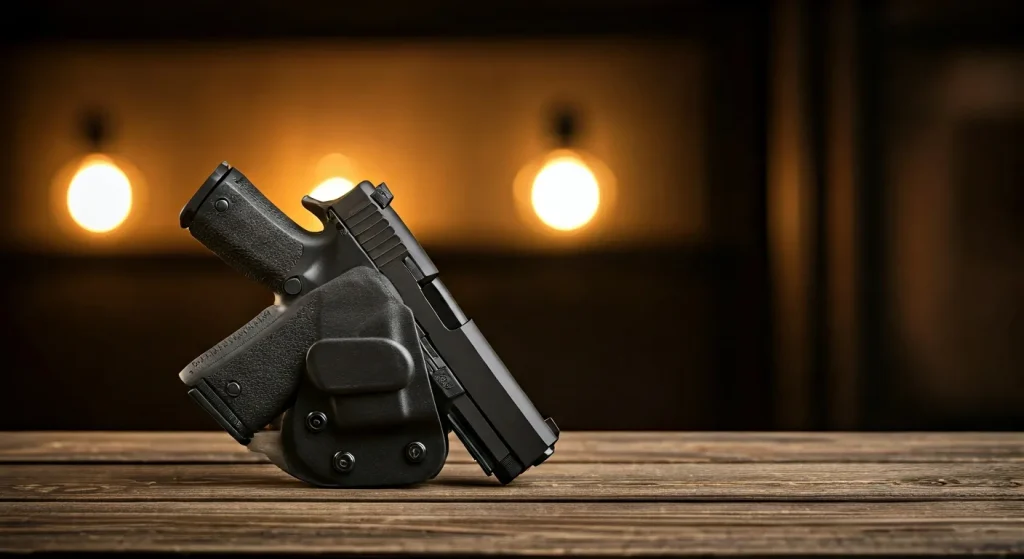
Protect Yourself With A Gun is an essential tactical consideration in personal safety, threat neutralization, and defensive biomechanics. Understanding how protect yourself with a gun functions in high-stress encounters enables practitioners to protect vital anatomical structures, apply proportionate defensive measures, and adhere strictly to justifiable use-of-force legal standards.
Guns self defense preparation is a massive, life-altering responsibility that demands a thorough understanding of the law, uncompromising safety habits, and relentless tactical training.
Deciding to use firearms for personal protection means committing to a mature lifestyle where your primary goal is avoiding physical conflict at all costs.
The core objective of a responsibly armed citizen is never to seek out a fight, but rather to safely navigate away from one whenever humanly possible.
Carrying a lethal tool requires an elevated standard of emotional control, forcing you to check your ego at the door and walk away from petty arguments.
Ultimately, the decision to pull a trigger will be the most consequential choice you ever make, impacting your freedom, your finances, and your conscience forever.
You might also like: How Often Are Guns Used in Self Defense? Real Statistics
Understanding the Legal Responsibilities of Armed Self Defense
You must always remember that self-defense is ultimately an affirmative legal defense for an act that would otherwise be considered a violent felony.
Engaging in a self defense shooting is an extreme event that will immediately subject you to intense law enforcement and prosecutorial scrutiny.
Familiarizing yourself with the specific lethal force laws in your jurisdiction is just as critical to your survival as knowing how to aim your weapon.
The concept of Lethal force generally dictates that you can only deploy a firearm to stop a threat that poses a direct, immediate danger of death or crippling injury.
It is vital to understand that a property crime alone, such as someone breaking the window of your unoccupied vehicle, rarely justifies pulling the trigger.
Depending entirely on where you live, you might be subject to a strict Duty to retreat, meaning you are legally required to attempt a safe escape before fighting back.
Conversely, many jurisdictions have implemented a stand your ground law, which removes the legal obligation to retreat if you are legally permitted to be in that location.
However, having a Stand your ground statute protecting you does not give you moral or legal permission to recklessly escalate a minor argument into a deadly confrontation.
Even if you are entirely in the right, a defensive incident will likely result in your temporary arrest, the confiscation of your weapon, and an exhaustive police investigation.
Securing the services of a specialized, pre-paid defense attorney program before you ever need one is a highly recommended aspect of your overall preparedness strategy.
Your actions, statements, and even text messages leading up to the event will be scrutinized under a microscope by prosecutors eager to establish a motive.
If you were the initial aggressor or provoked the physical attack in any way, you will almost certainly lose the legal right to claim self-defense in a courtroom.
A strong legal defense heavily hinges on your ability to articulate exactly why you felt your life was in imminent danger at that precise fraction of a second.
It is universally taught by legal experts to invoke your right to remain silent and request your attorney immediately following a traumatic self-defense incident.
Adrenaline can severely distort your memory of the event, making it dangerous to give a detailed sworn statement to detectives without legal counsel present.
Civil liability is another massive hurdle; even if you are cleared of criminal charges, the attacker’s family can still sue you for wrongful death in civil court.
Understanding the disparity of force concept is crucial, meaning multiple attackers, a younger and stronger attacker, or an armed attacker justifies a lethal response.
You cannot shoot someone who is merely verbally threatening you from a distance; they must possess the immediate physical capability and opportunity to carry out the threat.
Once an attacker turns their back and runs away, the imminent threat is over, and shooting them in the back will immediately transition you from victim to aggressor.
Educating yourself by reading past case law regarding defensive shootings in your state will provide sobering clarity on how juries view armed self-defense.
Ignorance of the law is never a valid excuse, meaning the burden of understanding these complex statutes rests entirely on your shoulders as a gun owner.
You might also like: Is Self Defense an Affirmative Defense? Legal Strategy Explained
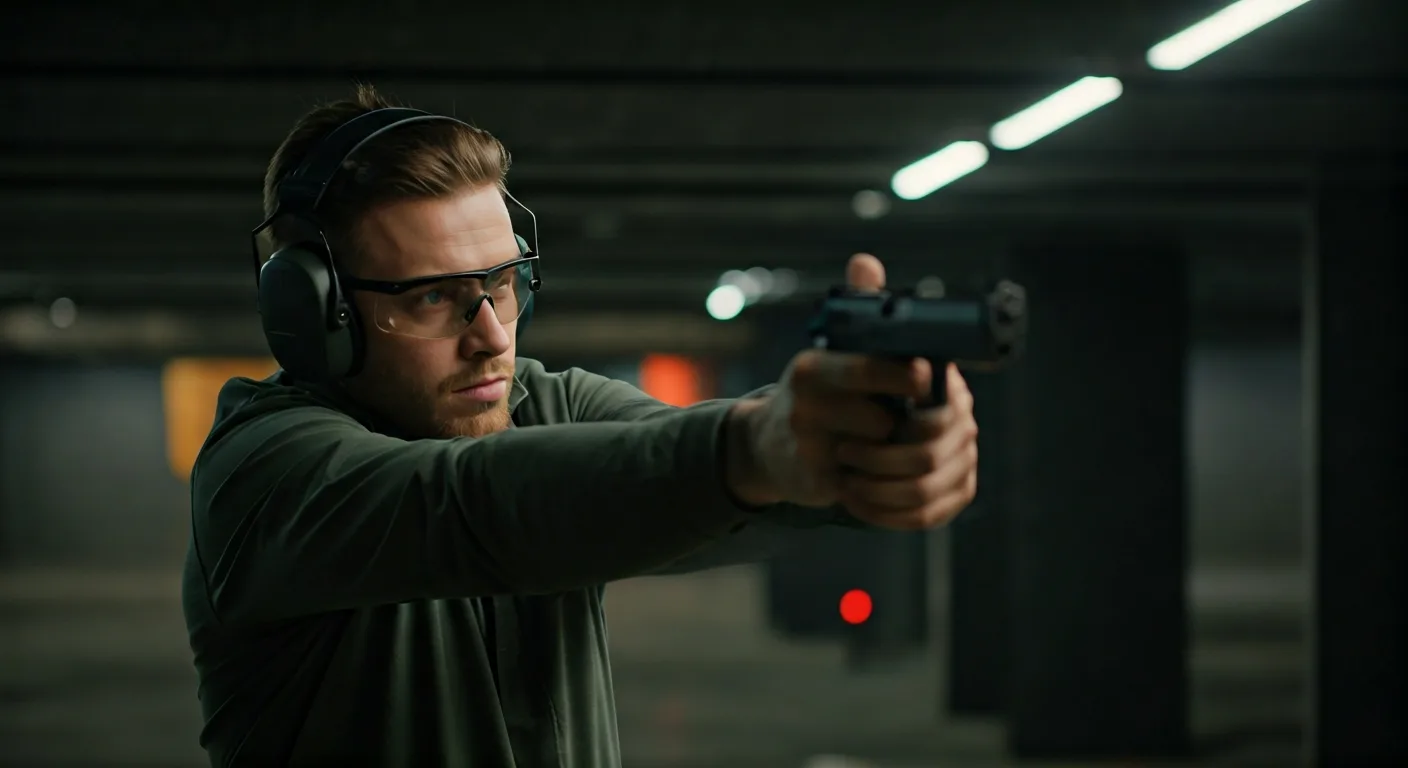
The Critical Importance of Situational Awareness and De-escalation
The most effective and legally sound gunfight you will ever participate in is the one you successfully manage to avoid entirely.
Mastering Situational awareness means keeping your head on a swivel and actively processing your immediate environment to spot danger before it gets uncomfortably close.
Staring mindlessly at your smartphone while walking through a dimly lit parking garage makes you an incredibly soft target for violent, opportunistic predators.
You should constantly be scanning for viable exits, assessing the aggressive body language of people around you, and implicitly trusting your primal gut instincts.
If a person or a specific location feels wrong or makes the hair on your neck stand up, give yourself permission to leave the area immediately without worrying about social politeness.
Maintaining a healthy physical distance between yourself and an unknown, potential threat buys you the most valuable commodity in any crisis: time to react.
De-escalation is an underappreciated art form that requires you to swallow your pride, modulate your tone of voice, and use verbal judo to calm down a highly agitated aggressor.
Apologizing, raising your open hands in a non-threatening, submissive posture, and slowly backing away can defuse many ego-driven confrontations before they ever turn violently physical.
A concealed firearm is not a magic talisman that makes you invincible to harm; it is a mechanical tool of absolute, last-ditch resort.
Getting into heated shouting matches over a stolen parking space or a minor traffic incident is a recklessly stupid gamble when you are secretly carrying a lethal weapon.
Your fragile ego has absolutely no place in your tactical decision-making process when considering the horrific gravity of taking a human life.
Choosing to be armed means you must hold yourself to the highest possible standard of emotional control, patience, and peaceful public behavior.
The exact moment you introduce a gun into an argument, you unnecessarily escalate the stakes to life and death for every single person involved in the vicinity.
Elite self-defense instructors universally teach that you should only draw your weapon when you have exhausted all other logical avenues of escape and verbal de-escalation.
Recognizing pre-attack behavioral indicators, such as a perpetrator checking their surroundings for witnesses or aggressively closing the distance, gives you a crucial, life-saving head start.
Criminals often interview their victims with distracting questions like asking for the time or a cigarette, allowing them to close the distance without raising alarm.
Interrupting this interview process by loudly stating boundaries and changing your angle of movement disrupts the attacker’s mental loop and ruins their element of surprise.
If you can safely walk, run, or drive away from a volatile, escalating scenario without getting hurt, that is always your smartest, safest, and most legally defensible option.
No amount of property, pride, or verbal insult is ever worth trading your life, your freedom, or your life savings in a courtroom battle.
Choosing the Right Firearm for Home Defense vs. Concealed Carry
Selecting a firearm is an incredibly personal, nuanced decision that should be based on your unique physical capabilities, daily lifestyle, and specific intended use case.
What works perfectly for a highly trained SWAT police officer on duty may be completely inappropriate for a civilian prioritizing all-day comfort and deep concealment.
The absolute best handgun for home defense is often a heavy, full-sized pistol featuring a high ammunition capacity and an attached, high-lumen weapon-mounted light.
A heavier, larger handgun actually absorbs recoil much better than a tiny pocket pistol, making it significantly easier to shoot fast and accurately under immense physiological stress.
Home defense scenarios almost always happen in the dead of night, which is why positively identifying your target with a reliable flashlight is absolutely non-negotiable.
However, trying to comfortably and covertly hide a massive duty pistol under a fitted summer t-shirt is frustrating and generally impractical for the average working person.
One of the most important concealed carry tips is to find a reliable, highly concealable micro-compact 9mm that you will actually carry on your body every single day.
Leaving your gun in the safe at home because it is too heavy, chafing, or uncomfortable completely defeats the entire purpose of obtaining a carry permit.
A dedicated Home defense weapon prioritizes shootability, maximum capacity, and accessory integration over concealment.
Because you do not have to hide it on your body, you can opt for full-size frames that offer superior ergonomics and stability.
Many experts also recommend an AR-15 platform or a short-barreled shotgun for home security due to their devastating terminal ballistics.
Your everyday Concealed carry firearm must be slim, lightweight, and snag-free to ensure it stays hidden under normal clothing.
Compromising on capacity and barrel length is often necessary to achieve a footprint that won’t print visibly when you bend over.
Despite their smaller size, modern micro-compacts still require you to maintain excellent fundamentals to achieve acceptable accuracy.
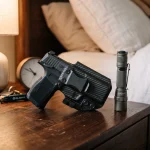
Concealed carry rigidly demands a high-quality Kydex holster that completely covers the trigger guard and retains the weapon securely during vigorous physical movement.
A purpose-built, stiffened gun belt is just as vital as the holster itself, as it distributes the weight evenly across your hips and prevents the weapon from sagging awkwardly.
Regardless of which specific make or model you ultimately choose, mechanical reliability is the single most important metric by which you must judge a defensive weapon.
You should aggressively test-fire at least a few hundred rounds of your chosen hollow-point defensive ammunition through the gun to ensure it cycles flawlessly without jamming.
A firearm that frequently jams at the shooting range is an annoyance, but a firearm that jams during a terrifying life-or-death struggle is a fatal liability.
Do not let aggressive internet forum users bully you into carrying a massive caliber that you cannot shoot quickly, accurately, and confidently.
In real-world shootings, anatomical shot placement is significantly more important than the physical diameter of the bullet, making a precise hit with a smaller caliber far better than a miss with a larger one.
Essential Firearm Safety Rules You Must Never Break
The foundational bedrock of all competent firearms handling rests entirely upon your strict, uncompromising adherence to the four universal gun safety rules.
Rule number one dictates that you must treat every single firearm as if it is completely loaded, even if you just watched someone manually empty it in front of you.
This specific mindset prevents the vast majority of tragic accidents caused by human complacency and the dangerous, foolish assumption that a weapon’s chamber is clear.
Rule number two demands that you never intentionally or unintentionally point the muzzle of your weapon at anything you are not entirely willing to destroy.
Maintaining flawless, continuous muzzle awareness ensures that even in the rare event of a catastrophic mechanical failure or negligent discharge, no innocent person is injured.
Rule number three is arguably the most frequently violated by beginners: keep your finger aggressively off the trigger and resting high on the frame at all times.
Your finger should only enter the trigger guard when your sights are firmly on the target and you have made the conscious, final decision to shoot.
Flawless Trigger discipline is exactly what separates a responsible, highly trained armed citizen from a reckless, dangerous amateur liability.
The human hand inherently has a sympathetic squeeze reflex, meaning if you trip, fall, or get startled while your finger is resting on the trigger, the gun will involuntarily fire.
Rule number four requires you to absolutely know your specific target, identify what is immediately around it, and verify what lies directly beyond it.
Fired bullets can easily over-penetrate interior drywall, hollow doors, vehicle bodies, and human tissue, putting invisible innocent bystanders severely at risk.
In a chaotic self-defense situation in public, you are legally, morally, and financially responsible for every single projectile that leaves your weapon’s barrel.
Implementing rigorous safe storage protocols is a critical extension of these fundamental safety rules, especially if you have curious children or unauthorized guests in your home.
A heavy-duty, quick-access biometric lockbox allows you to securely lock your weapon away from prying hands while keeping it rapidly accessible in a terrifying midnight emergency.
Hiding a loaded pistol loosely under a mattress, inside a nightstand drawer, or high up on a closet shelf is a negligent gamble that has tragically led to countless avoidable childhood deaths.
Your unwavering commitment to safety must remain absolute and flawless, operating continuously whether you are training at the range, carrying concealed in public, or relaxing on your couch.
Never allow complacency to infect your weapon handling habits, because one single moment of forgotten safety protocols can ruin your life in a fraction of a second.
You might also like: Can Airsoft Guns Be Used for Self Defense? Toy Gun Reality
Building Proficiency: Live-Fire and Dry-Fire Training Methods
Owning a grand piano does not miraculously make you a concert musician, and merely purchasing a pistol does not magically make you capable of surviving a violent encounter.
Participating in regular, highly structured defensive handgun training is the only proven method to forge the specific physical skills necessary to survive a deadly, fast-paced attack.
Standing perfectly still at a brightly lit, climate-controlled indoor range while shooting slowly at a stationary paper target will not adequately prepare you for the chaotic dynamics of a real gunfight.
Real-world violence happens incredibly fast, often in extremely low light, against aggressively moving targets who are actively trying to harm or kill you.
You must intentionally seek out professional, vetted instructors who teach dynamic movement, drawing safely from concealment, and complex malfunction clearance under extreme cognitive pressure.
While intense live-fire classes are absolutely essential, the vast majority of your core skill development will actually take place in the comfort of your living room for completely free.
Committing to a rigorous, weekly dry fire practice routine is the open secret weapon used by competitive grandmasters and special operations military personnel to refine their physical mechanics.
Dry-fire practice allows you to safely isolate and perfect your grip tension, sight picture alignment, and trigger press without the distracting flinch caused by loud live recoil.
You must always triple-check that your weapon is completely unloaded, visually inspect the chamber, and physically remove all live ammunition from the room before beginning any dry-fire session.
Repetition is the absolute key to building robust Muscle memory, which brilliantly allows your subconscious brain to handle complex weapon manipulation while your conscious mind processes the unfolding threat.
Under the terrifying, blinding adrenaline dump of a lethal encounter, you will never miraculously rise to the occasion; you will instantly default to your highest level of ingrained, repetitive training.
Mastering basic Marksmanship is just the starting point; you must also practice firing multiple, highly accurate rounds rapidly in succession to immediately stop a determined, drug-fueled attacker.
Scenario-based force-on-force training using non-lethal marking cartridges is a deeply eye-opening experience that severely tests your rapid decision-making in real time.
Force-on-force brilliantly teaches you how shockingly fast distances close, and it aggressively forces you to verbally communicate while dealing with the intense physical stress of a simulated, painful attack.
Understanding the physiological effects of stress, such as tunnel vision, auditory exclusion, and loss of fine motor skills, helps you mentally prepare for the horrific reality of a self defense shooting.
Dedicating ongoing time, focused energy, and financial resources to your continuous tactical education is a non-negotiable, lifelong requirement of being a responsibly armed civilian protector.
Layered Security: Why a Gun Shouldn’t Be Your Only Plan
A firearm is a highly specialized, exceptionally dangerous tool designed for one extremely narrow set of circumstances, and it absolutely cannot solve every single security problem you face.
Relying solely and exclusively on a gun for your personal safety is foolishly comparable to carrying only a heavy hammer and forcefully treating every minor inconvenience like a nail.
Adopting a comprehensive, layered security mindset means intentionally building multiple physical barriers and psychological deterrents to keep danger as far away from your family as possible.
Your very first line of robust home defense should always be physical security, aggressively including reinforced metal strike plates on exterior doors and shatter-resistant security films on ground-floor windows.
Installing bright, motion-activated exterior floodlights and visible, high-definition security cameras strongly deters opportunistic, cowardly criminals from aggressively targeting your property in the first place.
If a determined intruder somehow manages to forcefully breach your home, a loud, monitored alarm system serves a critical dual purpose: terrifying the burglar and waking you up with enough time to formulate a response.
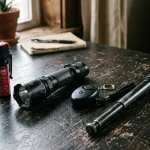
Carrying reliable non-lethal defensive options, such as high-strength pepper spray or an intense, blinding tactical flashlight, provides you with crucial intermediate force capabilities in public.
Not every single aggressive, intoxicated, or mentally ill individual warrants a lethal response, and having a less-lethal alternative gives you the legal flexibility to handle lower-tier threats without firing a shot.
Acquiring basic trauma medicine skills is another absolutely critical layer of your overall preparedness; if you carry a tool that can make holes in humans, you should logically also carry the medical tools to plug them.
Keeping a staged tourniquet, vented chest seals, and hemostatic packing gauze in your vehicle, office, and range bag could easily save your own life or the life of a loved one long before overwhelmed paramedics finally arrive.
Physical fitness plays an incredibly underrated, vital role in personal defense, as the simple cardiovascular ability to aggressively sprint away from danger is very often your absolute best tactical maneuver.
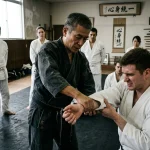
Taking practical martial arts or unarmed combatives classes teaches you how to effectively strike, grapple, and retain control of your holstered weapon if a violent struggle unexpectedly goes to the ground.
A holistic, mature approach to comprehensive self-defense ensures that you are a resilient, well-rounded protector, not just a fragile person relying entirely on a concealed weapons permit.
Your ultimate, overriding goal in life is to live a long, peaceful, and boring existence, intelligently using your layered defensive strategies to deter, detect, and delay violent trouble long before a firearm ever needs to leave its holster.
You might also like: Are Stun Guns Effective for Self Defense? Electroshock Truth
Frequently Asked Questions (FAQ)
What is the most important legal concept to understand regarding guns self defense?
The most important concept is that a firearm can only be used to counter an imminent, unavoidable threat of death or great bodily harm. Property protection alone almost never justifies the use of lethal force, and you must always understand your local duty to retreat versus stand your ground laws.
How much training do I actually need to be proficient with a defensive handgun?
Basic competency requires thoroughly learning the fundamentals of marksmanship and safety rules, but true life-saving proficiency demands regular, ongoing training. Incorporating weekly dry-fire practice at home and safely taking professional defensive handgun courses annually is highly recommended to build and maintain necessary muscle memory.
Why shouldn’t I just buy the smallest handgun available for concealed carry?
While micro-compact pocket pistols are incredibly easy to hide, their small size and light weight make them significantly harder to properly grip, aim, and control under the severe stress of rapid fire. You must carefully balance the convenience of daily concealment with your actual physical ability to shoot the weapon accurately and reliably.
Can situational awareness really prevent a dangerous gunfight?
Absolutely, as the vast majority of violent encounters can be completely avoided if you actively scan your environment and successfully recognize pre-attack behavioral indicators early. If you see trouble developing ahead and choose to leave the area immediately, you completely remove the need to ever deploy your defensive firearm.
Tactical and Biomechanical Analysis: Protect Yourself With A Gun
When evaluating the mechanical efficiency and physiological implications of protect yourself with a gun, personal protection practitioners must analyze three fundamental principles:
- Targeting Dynamics: Precision striking or tool application against designated soft-tissue zones and vulnerable nerve pathways produces maximum autonomic disruption with minimum necessary physical energy.
- Kinetic Energy Transfer: Maximizing velocity and proper skeletal alignment ensures that force penetrates beyond superficial skin layers, directly influencing muscular and neurological function.
- Disengagement Window Creation: The primary tactical objective of defensive engagement is terminating an adversary’s aggression and establishing sufficient distance and time to reach safe shelter.
Comparative Matrix and Physiological Assessment: Protect Yourself With A Gun
| Operational Metric | Tactical Assessment (Protect Yourself With A Gun) | Physiological / Medical Mechanism | Defensive Best Practice |
|---|---|---|---|
| Incapacitation Speed | Immediate (0–2 seconds on direct contact) | Autonomic reflex shock, motor dysfunction | Follow through immediately with tactical retreat |
| Gross Motor Requirement | High reliability under extreme adrenaline dump | Relies on large muscle groups rather than fine dexterity | Practice gross movements during scenario stress training |
| Legal Scrutiny Risk | Strict scrutiny based on proportionality of threat | Potential for severe bodily injury depending on impact zone | Cease defensive action immediately once threat ceases |
Legal Standards and Tactical Self-Defense Protocols (Protect Yourself With A Gun)
To safely navigate high-threat personal security situations involving protect yourself with a gun, adhere strictly to the following three-step operational protocol:
- Threat Assessment & Situational Awareness: Scan the environment continuously using Cooper’s Color Code to detect potential hazards before physical distance collapses.
- Verbal De-escalation & Boundary Setting: Establish clear verbal commands, maintain a non-aggressive defensive posture, and create physical escape avenues wherever possible.
- Decisive Proportional Countermeasure: If violent physical assault is unavoidable, deliver decisive, targeted interventions to neutralize the threat and immediately report the incident to emergency authorities.
How does protect yourself with a gun impact personal defense strategy?
Proper integration of this principle ensures that defenders do not rely on brute force, instead leveraging anatomical vulnerability and sound tactical decision-making to survive violent confrontations.
What legal precautions should be taken regarding protect yourself with a gun?
All physical defensive measures must remain strictly proportional to the imminent unlawful threat faced. Once the aggressor no longer presents an immediate danger, force must cease immediately to remain within statutory self-defense protections.
Get our latest guides, news, and insights highlighted in your Google Search & AI Overviews.