
Which is better for self defense depends entirely on your lifestyle, physical abilities, and willingness to train consistently. You might think learning a martial art is the only way, but the reality is a mix of awareness, non-lethal tools, and practical skills provides the ultimate safety net. There is no single magic answer that works for everyone in every situation. Your best bet is building a layered approach to personal security.
The Foundation of Self Defense: Situational Awareness
The absolute most important tool you have isn’t your fists or a high-tech gadget. It’s your active, engaged mind.
Understanding and practicing proper situational awareness techniques can prevent you from ever needing to fight. This means keeping your head up, staying off your phone, and observing your surroundings when walking alone.
By identifying potential threats early, you give yourself the time to escape or find a populated area. Situational Awareness is the ultimate shield because it stops violence before it even starts.
Predators look for easy targets who appear distracted, timid, or completely unaware of their environment. Simply making brief eye contact and walking with purpose can deter most casual attackers.
Experts often refer to Cooper’s Color Code to explain awareness levels. You should spend your time in “Condition Yellow,” meaning you are relaxed but alert to who and what is around you.
Never allow yourself to slip into “Condition White,” where you are entirely oblivious to the world. Walking to your car while staring at a text message is a prime example of this dangerous state.
Learning to trust your gut is another massive component of awareness. If an alley feels dangerous or a person gives you a bad vibe, do not second-guess yourself.
Your subconscious picks up on micro-expressions and environmental cues much faster than your conscious brain. Listen to that internal alarm system every single time.

De-Escalation: Winning the Fight by Not Fighting
If you cannot avoid a threat, your next best option is talking your way out of it safely. Ego has absolutely no place in street survival.
Using effective de-escalation tactics involves keeping a calm voice, maintaining a non-threatening posture, and actively creating distance. De-escalation isn’t about submitting; it’s about tactical retreat.
Apologize if you have to, hand over your wallet if demanded, and swallow your pride completely. Your goal is getting home safely, not winning an argument with a hostile stranger.
Keep your hands up in a passive “surrender” position, which secretly doubles as a ready guard. This placates the aggressor while keeping your hands near your face for immediate protection.
Use simple, repetitive phrases like “I don’t want any trouble” or “You’re right, my mistake.” Arguing logic with someone under the influence or in a rage will only pour gasoline on the fire.
Always maintain a minimum of two arm lengths of distance between you and the aggressor. This reaction gap gives you the split second needed to deploy a weapon or sprint away.
Top Martial Arts for Real-World Self Defense
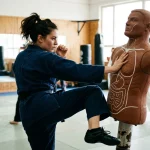
When violence is completely unavoidable, you need physical skills you can rely on instinctively. Finding the best martial art for street fight scenarios requires looking at combat-tested disciplines.
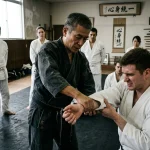
Not all dojos teach realistic combat or prepare you for genuine violence. You should strictly look for practical self defense classes that involve live sparring and pressure testing.
Traditional arts with flashy kicks and non-contact point sparring often fail miserably under the stress of a real assault. Let’s look at the disciplines that actually work when your life is on the line.
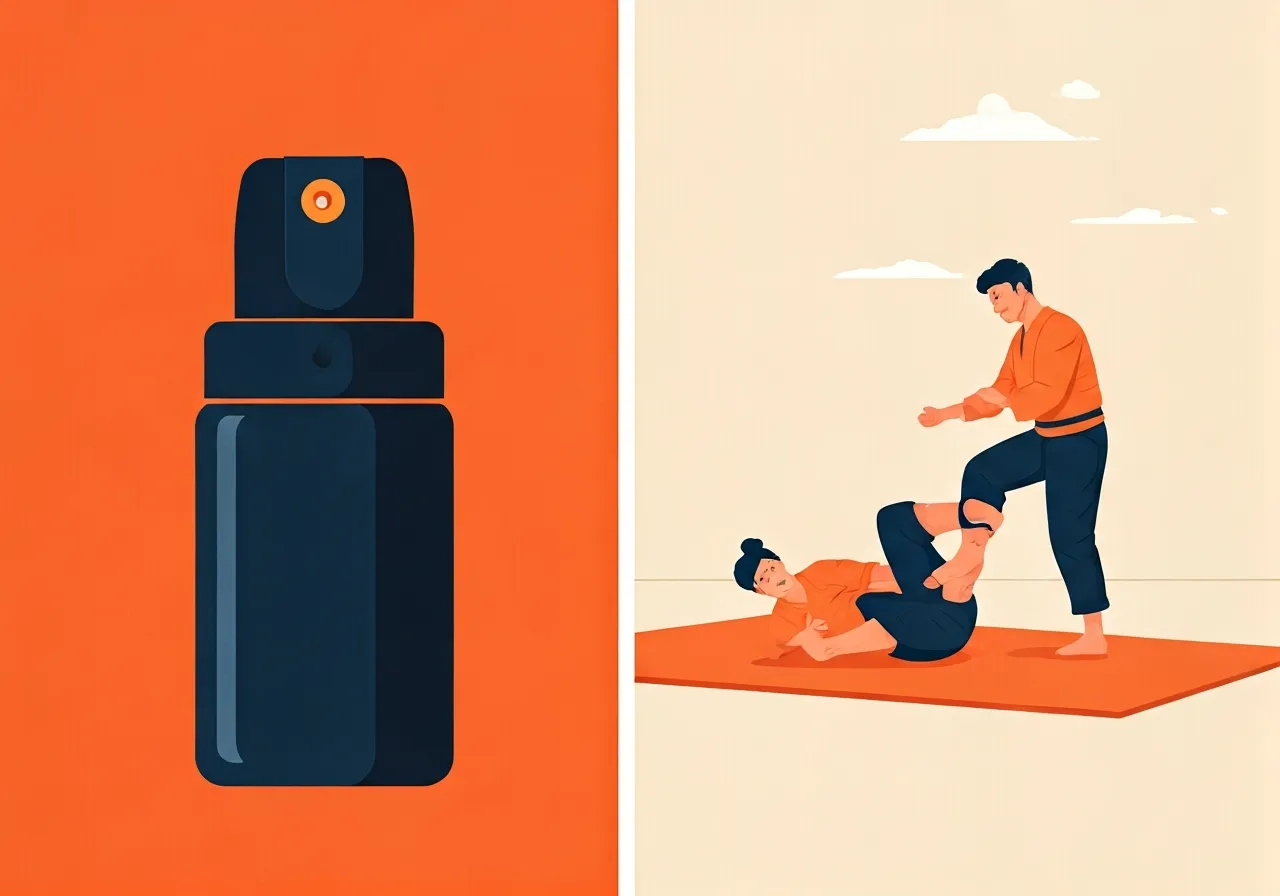
Krav Maga: Built for Survival
Developed by the Israeli military, Krav Maga is designed purely for neutralizing threats as quickly as possible. There are no rules, no rings, and no referees to stop the fight.
It focuses aggressively on targeting vulnerable points like the eyes, throat, and groin. This makes it incredibly efficient for smaller defenders facing much larger, stronger attackers.
Krav Maga also teaches you how to defend against multiple attackers and blunt or edged weapons. It builds aggressive, forward-moving reflexes that can save your life in a chaotic street encounter.
The system relies heavily on your natural flinch response, turning a defensive flinch into a counter-strike. This makes the techniques much easier to learn and retain over time.
However, quality control in Krav Maga gyms can vary wildly. Ensure you find an instructor who incorporates heavy pressure testing and active resistance into their curriculum.
Brazilian Jiu-Jitsu: Grappling and Ground Defense
Many street altercations involve grabbing, tackling, and inevitably ending up on the ground. This is where Brazilian Jiu-Jitsu (BJJ) absolutely reigns supreme.
BJJ teaches you how to use leverage, framing, and technique to control and submit a larger opponent. You learn how to sweep a heavy attacker, apply chokes, or break limbs.
When people debate krav maga vs jiu jitsu, they often miss that BJJ is unparalleled for one-on-one ground survival. Krav Maga will teach you how to avoid the ground, but BJJ makes you lethal once you’re there.
It is especially highly recommended for women, as sexual assaults almost always involve a larger attacker pinning the victim. BJJ provides the precise mechanical tools needed to escape from the bottom position.
The downside of BJJ is its heavy focus on single combat. It is less ideal if you are facing multiple opponents or if weapons are introduced.
Muay Thai: Striking and Clinch Work
Known globally as the “art of eight limbs,” Muay Thai utilizes fists, elbows, knees, and shins. It is arguably the most devastating and practical striking art on the planet.
The Thai clinch is particularly effective in street altercations, allowing you to control an attacker’s head while delivering brutal knees. In the classic debate of muay thai vs boxing, Muay Thai offers vastly more weapons for close-quarters self-defense.
Training Muay Thai also hardens your body, conditions your shins, and dramatically improves your cardiovascular endurance. You learn to take a hard hit, stay on your feet, and keep fighting.
It also teaches you how to manage distance effectively. A well-placed teep (push kick) can keep an aggressive attacker completely out of striking range.
Non-Lethal Self Defense Tools: What Actually Works?
Not everyone has the time, physical ability, or desire to master a combat martial art. This is exactly why carrying reliable tools is a highly recommended alternative.
When evaluating self defense tools for women or men, you must choose items that are legal, accessible, and incredibly easy to deploy under stress. Avoid complicated gadgets that require perfect aim or fine motor dexterity.
A good non-lethal weapon should allow you to create distance, inflict pain or blindness, and escape immediately. It should never give you a false sense of security.
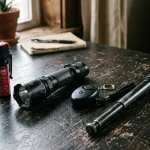
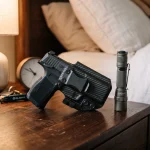
Tactical flashlights with high lumen outputs are fantastic, low-profile options. Shining a 1000-lumen strobe directly into an attacker’s eyes at night will completely blind them, buying you precious seconds.
Personal alarms are also useful for drawing attention, but they will not physically stop a determined predator. They should only be used in conjunction with a physical defense tool.
Pepper Spray and Gels
Pepper Spray is widely considered the absolute best overall non-lethal tool available to civilians. It causes immediate involuntary eye closure, intense coughing, and severe burning pain.
Pepper gels are also fantastic because they resist wind blowback and stick directly to the attacker’s face. Both options give you the ultimate advantage: the ability to fight from a safe distance.
Contact Stun Devices
A hand-held Stun Gun requires direct, forceful physical contact with the attacker to work effectively. While the loud electric crackle can be an intimidating deterrent, it has major flaws.
It forces you to stay dangerously close to the threat, putting you in grabbing range. Furthermore, heavy leather or winter coats can completely insulate the attacker from the electric charge.
Pepper Spray vs. Tasers
The intense debate of pepper spray vs taser is common among those looking for reliable daily protection. Both have their distinct pros and cons that you must weigh carefully.
A projectile Taser fires two metal prongs that deliver an incapacitating electric shock from up to 15 feet away. When both prongs connect, it causes total neuromuscular incapacitation, dropping the attacker instantly.
However, you generally only get one single shot. If you miss, or if heavy clothing blocks one of the prongs, the device becomes completely ineffective from a distance.
Pepper spray provides a continuous stream or cone of protection that can be easily adjusted mid-spray. It is vastly cheaper, much easier to aim under pressure, and can affect multiple attackers simultaneously.
The Reality of Adrenaline and Fine Motor Skills
When a violent attack occurs, your body immediately undergoes a massive, involuntary Adrenaline dump. Your heart rate skyrockets well above 150 beats per minute, fundamentally changing how your body operates.
You will likely experience tunnel vision, auditory exclusion, and a heavy feeling in your limbs. The world might seem to move in slow motion as your sympathetic nervous system takes over.
Under this intense physiological stress, you rapidly lose your Fine Motor Skills. Complex martial arts moves, small buttons, or fumbling with safety switches on a weapon become nearly impossible tasks.
This is exactly why simple, gross motor movements are so critical. Your defense strategy must rely on large, explosive motions that work even when you are terrified and shaking.
Training under pressure helps inoculate you to this adrenaline dump. The more you experience simulated stress in training, the better you will perform when it happens in real life.
Final Verdict: Combining Skills, Tools, and Mindset
There is no single best answer for self-defense, as every situation is dynamic and unpredictable. The most secure and intelligent approach involves layering your defenses strategically.
Start by developing sharp, everyday awareness to avoid bad situations before they materialize. Never compromise your safety for the sake of convenience or politeness.
Carry a reliable, accessible tool like pepper spray for immediate, distance-based defense. Ensure you practice deploying it quickly from your pocket or purse.
Finally, train in a practical martial art to build physical resilience, balance, and unshakeable confidence. By combining a proactive mindset, effective tools, and rigorous training, you become an incredibly hard target.
Frequently Asked Questions
What is the most effective martial art for street survival? +
Krav Maga and Brazilian Jiu-Jitsu (BJJ) are widely considered the most effective. Krav Maga focuses on immediate survival, weapon defense, and dirty tactics, while BJJ is unmatched if the fight goes to the ground.
Should I carry pepper spray or a stun gun? +
Pepper spray is generally highly recommended over a stun gun. It allows you to strike from a distance and severely affects the attacker’s vision and breathing, whereas a stun gun requires you to be within arm’s reach.
How important is situational awareness? +
It is the most critical component of all self-defense strategies. By noticing potential threats early, you can completely avoid physical conflict, which is always the safest and most successful outcome.
What are the best self defense tools for women? +
The best tools are those that are easy to access and use from a distance. Pepper gel, high-lumen tactical flashlights, and personal alarms are excellent choices that do not require extensive physical strength.
Get our latest guides, news, and insights highlighted in your Google Search & AI Overviews.