✨ This article was AI edited. Editorial responsibility: SelfDefenseGuides.info.
Produced with AI. This article was artificially generated. Editorial responsibility: SelfDefenseGuides.info.
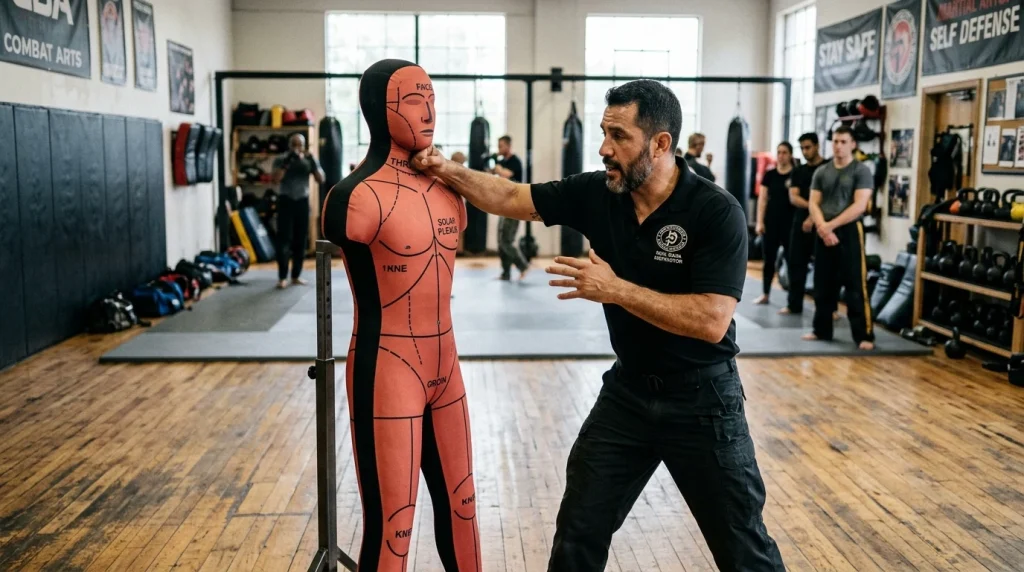
Photo of the male weak points of the body provides a clinical self-defense mapping of high-vulnerability anatomical zones—including the ocular structures, carotid sinus, solar plexus, liver, inguinal region, and peroneal nerve—where targeted kinetic energy produces immediate physiological disruption, postural collapse, or neuromuscular inhibition against an aggressive violent assailant.
In physical conflict, relying purely on brute physical strength against an aggressive adversary is an unreliable defensive strategy, especially when facing an opponent with greater body mass, leverage, or hormonal aggression. Effective personal defense relies on the precise application of force to physiologically vulnerable anatomical structures. By understanding the mechanical, neurological, and vascular architecture of the human male body, a defender can neutralize an imminent violent threat using minimal kinetic energy.
This comprehensive clinical guide breaks down the primary and secondary target zones on the human body, detailing the underlying biological mechanisms, effective striking surfaces, expected physiological responses, and the legal constraints surrounding proportional force.
Anatomical Target Vulnerability Matrix
The human body possesses specific anatomical zones where bone protection is absent, neural clusters are superficial, or critical vascular pathways are exposed. The following comparative matrix outlines these primary defensive target zones, their biological mechanisms, and their tactical utility in personal protection scenarios:
| Target Zone | Primary Structure | Biological Vulnerability | Recommended Striking Tool | Physiological Effect | Force Tier |
|---|---|---|---|---|---|
| Ocular Orbit | Globe of the eye, optic nerve | Soft tissue exposed; lack of skeletal protection | Fingertip thrust, open palm heel | Involuntary lacrimation, severe pain, loss of visual tracking | Non-Lethal / Disruptive |
| Carotid Sinus | Bifurcation of common carotid artery | Baroreceptors regulating blood pressure | Knife-hand chop, forearm ridge, palm heel | Vagal reflex, sudden cerebral hypotension, transient loss of consciousness | Potentially Incapacitating |
| Mandibular Angle | Temporomandibular joint, mental nerve | Lever arm to cervical spine; brainstem rotation | Hook punch, palm heel, elbow strike | Rotational concussion, vestibular disruption, knockdown | Incapacitating |
| Trachea & Larynx | Thyroid cartilage, cricoid ring | Cartilaginous airway easily compressed | Web-hand strike, forward drive | Airway constriction, respiratory distress, immediate panic response | Potentially Lethal / High Risk |
| Solar Plexus | Celiac nerve plexus (T5–T12) | Superficial neural cluster below sternum | Straight punch, driving palm, front thrust kick | Diaphragmatic spasm, inability to inhale, postural collapse | Incapacitating |
| Hepatic Margin (Liver) | Glisson’s capsule, vagus nerve branches | Large blood-filled organ under 8th–10th ribs | Shovel hook, upward angled punch, roundhouse kick | Intense neurogenic shock, blood pressure drop, involuntary knee collapse | Incapacitating |
| Inguinal / Groin Region | Testes, ilioinguinal nerve, femoral nerve | Highly innervated reproductive tissue; unshielded | Instep kick, upward knee, grab and twist | Excruciating visceral pain, flexion reflex, pelvic retraction | Disruptive to Incapacitating |
| Common Peroneal Nerve | Lateral branch of sciatic nerve (above knee) | Nerve runs across bone surface with minimal padding | Shin kick, heavy boot heel stamp | Temporary motor dysfunction (“dead leg”), structural collapse of support leg | Non-Lethal / Mobility Disruption |
Cranial & Cervical Vulnerability Zones
The head and neck represent the command and control center of an attacker. Strikes delivered to these zones directly impair neurological processing, visual tracking, or oxygen delivery to the cerebral cortex.
1. The Orbital Structures and Vision
The human eye is an exposed sensory organ protected only by thin facial bones and soft eyelid tissue. In self-defense scenarios where an attacker has established a dominant hold or grab, targeting the eyes creates an instant, involuntary survival reflex. Disrupting an opponent’s vision neutralizes their ability to land punches, maintain balance, or track defensive evasion. Open-hand techniques, such as a rake or spear-finger strike, require minimal muscular force to elicit maximum physiological compliance.
2. The Pterion and Temple Region
Located on the lateral aspect of the skull, the pterion is the junction where the frontal, parietal, temporal, and sphenoid bones fuse. The bone at this anatomical crossroad is exceptionally thin (often only 1 to 2 millimeters). Directly beneath the pterion lies the middle meningeal artery. High-impact kinetic strikes to this area carry a significant risk of epidural hematoma and skull fracture, classifying temple strikes under the highest tier of defensive force.
3. Mandible Angle and The Knockout Mechanism
The lower jaw (mandible) acts as a mechanical lever attached to the cranium via the temporomandibular joints (TMJ). When an explosive lateral or upward strike impacts the point of the jaw or mandibular angle, the skull undergoes rapid, violent rotation. The brain, suspended in cerebrospinal fluid, collides with the inner ridges of the cranial cavity. This rotational shearing force temporarily disrupts the reticular activating system (RAS) in the brainstem, producing an immediate loss of motor function and consciousness.
4. The Carotid Sinus and Vagal Shock
Positioned on either side of the thyroid cartilage along the anterior border of the sternocleidomastoid muscle, the carotid sinus contains specialized baroreceptors responsible for regulating systemic arterial pressure. A focused, sharp impact—such as a lateral forearm strike or ridge-hand—mechanically compresses these sensory receptors. The brain misinterprets this mechanical pressure as a sudden spike in blood pressure, triggering an intense vagal response: immediate bradycardia (drastic heart rate reduction) and vasodilation. The resulting cerebral ischemia can induce instantaneous unconsciousness within 1 to 3 seconds.
Torso, Respiratory & Organ Target Complexes
The torso contains the body’s primary metabolic and respiratory engines. Targeted defensive strikes to the midsection bypass superficial muscle tone by driving energy through skeletal gaps or causing rapid visceral displacement.
1. Solar Plexus (Celiac Plexus)
Located immediately inferior to the xiphoid process in the epigastric region, the celiac plexus is an intricate network of sympathetic ganglia serving the abdominal viscera. Because this area is unshielded by the ribcage, a direct linear strike compresses the plexus against the lumbar spine. This compression transmits shockwaves to the phrenic nerve and the diaphragm muscle, causing an immediate involuntary spasm. The attacker experiences sudden respiratory paralysis (commonly referred to as “getting the wind knocked out”), accompanied by a sharp visceral pain response that forces the torso forward into an involuntary fetal posture.
2. The Hepatic Strike (Liver Shot)
The liver is the largest internal gland in the human body, situated predominantly in the right upper quadrant of the abdominal cavity, protected partly by the 8th through 12th ribs. A powerful rising strike delivered at a 45-degree angle beneath the right costal margin compresses the liver against the diaphragm and spine. The liver is encased in Glisson’s capsule, a fibrous sheath heavily innervated by the autonomic nervous system. The rapid deformation of this capsule triggers an overpowering vagal reaction, causing profound vasodilation, an acute drop in systemic blood pressure, and complete neuromuscular failure. Attackers struck cleanly in the liver cannot remain upright, collapsing to their knees regardless of physical conditioning or pain tolerance.
3. Floating Ribs and Costochondral Junctions
Ribs 11 and 12 are “floating ribs,” lacking anterior cartilaginous attachment to the sternum. Lateral strikes to the flank easily fracture or displace these floating ribs. The resulting sharp intercostal nerve pain inhibits rotational movement and prevents the attacker from maintaining offensive pressure or core torque.
Lower Extremity Neuromuscular Targets & Mobility Destruction
The lower kinetic chain supports an attacker’s entire body weight and generates their forward momentum. Disabling the legs halts aggression, destroys balance, and creates an immediate window for escape.
1. The Inguinal & Scrotal Complex
The male genital structure is extraordinarily sensitive due to the dense branching of the pudendal, ilioinguinal, and genitofemoral nerves. A sharp kinetic strike causes acute visceral pain that radiates into the lower abdominal cavity via the sympathetic nerve chain. The automatic motor response is sudden pelvic retraction and forward torso flexion. However, defensive practitioners must note that individuals under the influence of severe adrenaline, alcohol, or narcotics may exhibit a delayed reaction to groin strikes; therefore, it should always be treated as a set-up technique rather than a guaranteed terminal stopping blow.
2. Common Peroneal Nerve
Running along the lateral side of the femur approximately 4 to 6 inches superior to the knee joint, the common peroneal nerve is pressed tightly against the bone. A roundhouse shin kick or heavy hammer strike directly into this lateral corridor causes temporary paresthesia and motor paralysis in the lower leg. The thigh muscles involuntarily contract, and the ankle joint buckles inward, causing the attacker’s support leg to collapse under their own body weight.
3. The Knee Joint and Ligamentous Weakness
The knee is a hinge joint optimized for sagittal flexion and extension, with virtually zero lateral or hyperextension tolerance. Low oblique kicks directed at the anterior patella or lateral collateral ligaments force the joint into hyper-extension or severe valgus collapse. Tearing the anterior cruciate ligament (ACL) or meniscus instantly eliminates an attacker’s ability to pursue a fleeing defender.
Defensive Biomechanics and Visual Strike Execution
Targeting vulnerable anatomy requires proper distance management, angle of entry, and kinetic alignment. Striking a small, mobile target with a rigid fist often leads to fractured metacarpal bones (boxer’s fracture). Instead, defenders should leverage durable striking surfaces:
- Palm Heel Strike: Directs the dense carpal bones of the wrist into facial, jaw, or solar plexus targets while keeping the defender’s fingers safely extended and protected.
- Elbow Strikes (Horizontal & Upward): The olecranon process of the ulna provides a devastating, unyielding bone surface ideal for close-quarter infighting against the jaw, neck, or clavicle.
- Forearm Ridge: Delivers broad kinetic dispersion against the carotid triangle or throat without requiring pinpoint accuracy.
- Knee & Shin Drives: Transfers whole-body kinetic mass into the groin, femoral triangle, or peroneal nerve clusters.
Legal Justification and Proportionality in Self-Defense
Understanding where the human body is vulnerable carries significant legal responsibility. In both statutory and common law jurisdictions, the use of physical force in personal protection is evaluated against three core legal pillars:
- Imminence: The threat of unlawful physical force or bodily harm must be active, present, and immediate—not speculative or retaliatory.
- Reasonableness: The defensive action must reflect what a reasonable, prudent person in the same situation, with the same physical attributes and knowledge, would believe necessary to prevent harm.
- Proportionality: The defensive force applied must not exceed the severity of the threat. Delivering potentially lethal strikes (such as targeted blows to the trachea, cervical spine, or temple) is legally justified only when facing an imminent threat of death, severe bodily harm, or violent felony.
Deploying force against vulnerable targets must cease the exact moment the threat is neutralized and the defender can safely disengage and notify law enforcement authorities.
Frequently Asked Questions
What is the single most effective self-defense strike on the male body?
There is no universal single strike, as effectiveness depends on distance, angle, and clothing. However, strikes to the ocular structures (disrupts vision), carotid sinus (disrupts blood flow), and liver (causes systemic collapse) yield the highest physiological stopping power independent of the attacker’s muscular mass.
Does a strike to the solar plexus cause permanent damage?
In most instances, a clean strike to the solar plexus causes temporary diaphragmatic spasm and celiac nerve shock lasting between 30 and 90 seconds. While intensely painful and completely debilitating, it rarely causes permanent structural injury unless the strike fractures the xiphoid process into underlying tissues.
Why are palm strikes preferred over closed fists for head targets?
The human facial bones (specifically the forehead and mandible) are significantly harder and more dense than the fragile metacarpal bones of the hand. Punching an attacker’s skull with a closed fist without gloves frequently results in broken hand bones, dislocated knuckles, and lacerations that introduce infection risks. The palm heel uses the sturdy carpal bones of the wrist, delivering massive shock without self-injury.
How does adrenaline affect an attacker’s vulnerability to strikes?
During a violent altercation, an attacker’s sympathetic nervous system floods their bloodstream with adrenaline, norepinephrine, and endorphins. This neurochemical surge raises their pain threshold substantially. Pain compliance techniques (such as wrist locks or minor pressure points) frequently fail under adrenaline. Defenders must target mechanical and neurological failure points—such as the liver, balance centers, or leg nerves—that physically prevent locomotion regardless of pain perception.
Get our latest guides, news, and insights highlighted in your Google Search & AI Overviews.