✨ This article was AI edited. Editorial responsibility: SelfDefenseGuides.info.
Produced with AI. This article was artificially generated. Editorial responsibility: SelfDefenseGuides.info.
Human body pressure points refer to localized superficial nerve pathways, vascular junctions, and tendon origins where concentrated mechanical pressure, friction, or sudden kinetic impact produces intense pain compliance, involuntary reflex withdrawal, or temporary muscular motor dysfunction for self-defense escape.
Few concepts in martial arts and self-defense have generated as much fascination—and misunderstanding—as pressure points. Often romanticized in cinema as mystical “death touches” (dim mak), the physiological reality of pressure points is grounded entirely in human neurology and neuromuscular anatomy. A pressure point is simply an area where a major peripheral nerve runs close to the surface of the skin, typically pressed over an underlying bony structure, or where a motor nerve interfaces with a major muscle group.
When evaluated through a realistic personal protection lens, pressure points serve specific tactical purposes: breaking grips, releasing chokes, destabilizing posture, and setting up primary defensive escapes. This comprehensive anatomical guide examines the biomechanical reality, neurological classifications, high-probability target locations, and operational limitations of pressure point applications in real-world conflict.
Defensive Pressure Point Classification Matrix
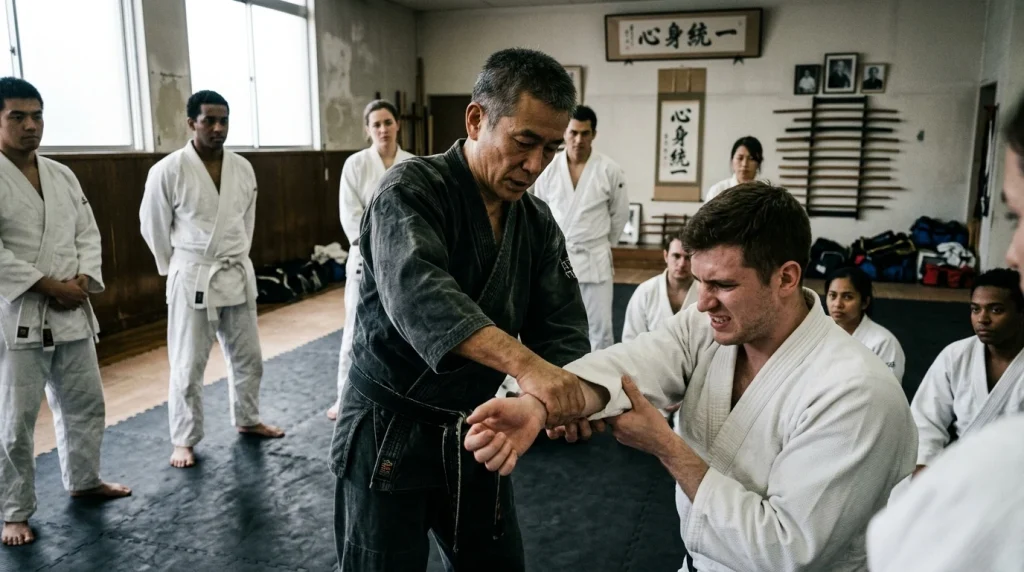
In tactical personal defense, pressure points are categorized not by esoteric meridians, but by their functional physiological outcome. The following comparative matrix details the primary pressure points utilized in defensive tactics, law enforcement control, and martial arts:
| Anatomical Target | Location & Landmark | Underlying Nerve | Application Type | Physiological Effect | Reliability Tier |
|---|---|---|---|---|---|
| Hypoglossal Angle | Under the mandible angle, inward and upward toward opposite ear | Hypoglossal Nerve (CN XII) | Digital thumb pressure / dig | Severe acute visceral pain, involuntary neck extension, head tilt | High (Escaping Grabs) |
| Mandibular Notch | Depression behind the earlobe, between mastoid process and jaw | Facial Nerve branch, Great Auricular | Pressure driving inward and forward | Intense localized pain compliance, defensive postural retreat | Moderate to High |
| Suprasternal Notch (Jugular Notch) | Soft depression directly above the sternum between clavicles | Trachea, Recurrent Laryngeal Nerve | Index/middle finger hook or drive | Cough reflex, acute respiratory disruption, immediate backward stumble | High |
| Brachial Plexus Origin | Side of the neck, midway between earlobe and clavicle | C5–T1 Spinal Nerves (Brachial Plexus) | Sharp kinetic strike (knife-hand or forearm) | Motor dysfunction, temporary arm weakness, transient disorientation | Very High (Striking) |
| Radial Motor Point | Outer forearm, approximately 2 inches below lateral elbow crease | Radial Nerve | Hammerfist or knuckle strike | Involuntary hand release, loss of grip strength (“dead hand”) | Very High (Weapon/Grip Defense) |
| Median Nerve Crease | Inner wrist center, between flexor carpi radialis and palmaris longus | Median Nerve | Thumb dig and twist against bone | Acute pain compliance, involuntary finger extension and release | Moderate (Low Stress Only) |
| Common Peroneal Point | Outside of thigh, 4–6 inches above the knee joint | Common Peroneal Nerve | Roundhouse kick, shin drive, heavy knee | Immediate motor failure (“dead leg”), structural collapse of leg | Highest (Tactical Standard) |
| Femoral Nerve Corridor | Inside of thigh, midway between groin crease and inner knee | Femoral Nerve | Instep kick, horizontal knee strike | Quadriceps buckle, acute leg numbness, inability to bear weight | High |
The Three Functional Categories of Pressure Points
Understanding when and how to apply pressure points requires categorizing them by their biological mechanism of action:
1. Pain Compliance Points (Sensory Overload)
These targets rely on stimulating dense sensory nociceptors (pain receptors) located near the surface of the skin. Examples include the hypoglossal nerve under the jaw, the infraorbital nerve beneath the nose, and the web of the hand (LI4 Hegu). When digital pressure is applied, the sensory cortex experiences an acute spike in localized pain, prompting the attacker to move away from the source of distress. While highly effective in controlled law enforcement compliance and seated holds, pain compliance points have a high rate of failure against attackers under the influence of extreme adrenaline, alcohol, or synthetic narcotics.
2. Motor Dysfunction Points (Nerve Motor Points)
Unlike sensory points, motor points are locations where a peripheral motor nerve penetrates the muscle belly. Delivering a focused, kinetic shockwave to a motor point causes an instantaneous electrical disruption across the neuromuscular junction. The muscle fibers undergo an involuntary tetanic spasm followed by complete temporary flaccidity. A clean strike to the radial motor point on the forearm causes an attacker’s fingers to fly open uncontrollably, releasing a weapon or collar grip without requiring pain perception.
3. Balance & Posture Disruption Points
These anatomical locations exploit the body’s natural postural righting reflexes. Applying pressure to the head and neck—such as lifting the hypoglossal point or driving the chin backward via the infraorbital point—forces the cervical spine into hyperextension. Because the body instinctively follows the direction of the head to protect the spinal cord, tilting an attacker’s head backward or sideways immediately eliminates their base of support, causing them to lose balance and fall.
Head and Neck Pressure Points: Tactical Breakdown
The cranial and cervical regions contain the densest clusters of sensitive nerve pathways in the human body. In close-quarters grappling or ground defense, these points offer high leverage:
1. The Hypoglossal Angle
To locate the hypoglossal point, position your thumb directly beneath the angle of the attacker’s jawbone (mandible). Apply firm, focused pressure directed inward and angled at 45 degrees upward toward the center of the brain. The sensation is an excruciating, deep-seated ache that forces the attacker to arch their head backward and push away from the defender. This technique is especially valuable when an attacker has pinned you against a wall or has initiated a front bear hug.
2. The Brachial Plexus Clavicular Notch
Located in the hollow above the clavicle (collarbone), near the base of the neck, this target exposes the trunks of the brachial plexus. Driving the tips of the fingers downward into this hollow causes an acute nerve shock that radiates down the entire arm, accompanied by an involuntary drop of the attacker’s shoulder.
3. The Supraorbital Notch
Along the superior ridge of each eye socket, approximately one inch outward from the bridge of the nose, is a small anatomical indentation called the supraorbital notch. The supraorbital nerve emerges through this opening. In extreme ground survival situations where an attacker is mounted on top of you, hooking your thumbs into the supraorbital notches produces severe pain and forces the attacker’s head backward, creating space to execute a bridge-and-roll escape.
Extremity Pressure Points for Grip and Weapon Defense
When an attacker grabs your clothing, wrists, or hair, attacking their limbs at specific neuromuscular junctions rapidly compromises their physical grasp.
1. The Radial Motor Point (The Grip Breaker)
The radial nerve winds around the humerus and travels down the outer aspect of the forearm. Approximately two to three inches below the elbow joint on the muscular ridge of the brachioradialis, the radial nerve is exposed. Striking this point with a downward hammerfist, the edge of a cell phone, or an elbow strike induces an immediate involuntary opening of the hand. In defensive knife and blunt weapon scenarios, striking the radial motor point frequently causes the attacker to drop the weapon instantly.
2. The Common Peroneal Nerve (The Low-Line Neutralizer)
In law enforcement defensive tactics (PPCT / Pressure Point Control Tactics), the common peroneal nerve is considered the single most reliable motor point on the human body. Located on the outer thigh, four to six inches above the knee, this nerve controls the quadriceps and lower leg stability. Delivering a powerful shin roundhouse kick or knee strike into this corridor creates an involuntary “charlie horse” spasm, deadening the leg and preventing the attacker from chasing you as you retreat to safety.
Realistic Limitations: The Adrenaline and Intoxication Factor
While pressure point techniques are technically fascinating, self-defense practitioners must maintain rigorous honesty regarding their practical limitations:
- Loss of Fine Motor Skills: Under the physiological stress of a lethal threat, heart rate spikes beyond 145 beats per minute. The body releases massive amounts of epinephrine, causing vasoconstriction in the extremities. Fine motor skills (such as locating a small 1-centimeter pressure point with a single fingertip) degrade rapidly. Only techniques relying on gross motor skills—such as striking with a whole shin or palm heel—remain functional under high stress.
- Chemical Pain Suppression: Individuals under the influence of PCP, methamphetamine, high doses of alcohol, or acute psychiatric psychosis often experience complete analgesia (inability to feel pain). Relying on pain compliance pressure points against such individuals is dangerous. In contrast, motor points that cause mechanical failure (such as peroneal or knee joint strikes) remain effective because they disrupt structural physics rather than sensory perception.
- Dynamic Target Movement: Real physical assaults involve chaotic, explosive movement. Attempting to pinpoint a pressure point on a moving, striking opponent is virtually impossible. Pressure points must be integrated into larger combative systems as secondary leverage tools during close entanglements.
Frequently Asked Questions
Can pressure points cause knockout or unconsciousness?
Yes, but primarily when targeting vascular baroreceptor sites rather than purely sensory points. A sharp strike to the carotid sinus on the side of the neck can trigger an immediate vagal reflex, dropping blood pressure and causing momentary loss of consciousness. However, Hollywood depictions of single-finger touch knockouts are entirely fictitious.
What is the most reliable pressure point for self-defense?
The common peroneal nerve on the lateral thigh and the radial motor point on the forearm are considered the most reliable because they trigger involuntary neuromuscular motor failure rather than relying solely on subjective pain perception.
Are pressure point techniques legal to use in self-defense?
Yes, when used within the legal framework of necessary and proportional force to escape an unlawful assault. Most pressure point techniques fall under non-lethal or soft-empty-hand force categories, making them legally defensible options for de-escalating confrontations or breaking holds.
Why do pain compliance holds sometimes fail in street fights?
When the human brain enters the sympathetic “fight-or-flight” response, endorphins and adrenaline flood the central nervous system, temporarily blocking pain signals. An attacker in this state may not register pain from wrist locks or facial nerve pressure until hours after the altercation has ended.
Get our latest guides, news, and insights highlighted in your Google Search & AI Overviews.