
In a world increasingly aware of personal safety, knowing how to correctly hold a knife for self-defense can be vital. A proper grip not only enhances your control and effectiveness but also minimizes the risk of self-injury, allowing you to respond to threats with confidence. Understanding the nuances of grip techniques can empower you to protect yourself while navigating the complex legal and ethical landscape of self-defense.
Many individuals grapple with the anxiety of potential confrontation, and the thought of using a knife as a means of defense can be intimidating. It’s important to approach this knowledge with a mindset of preparedness rather than aggression. As you explore this guide, you will gain insights into effective, safe grip techniques that prioritize de-escalation and responsible action. The goal is not to encourage violence, but to equip you with the tools to respond appropriately in high-stress situations. Prepare to delve deeper into the essential principles of knife handling, ensuring you are better informed and ready to make responsible decisions if the need arises.
Essential Principles of Knife Grip Techniques for Self Defense
The importance of a secure and effective knife grip cannot be overstated in self-defense situations. A well-executed grip can significantly enhance your control over the knife and increase your chances of effectively defending yourself while minimizing the risk of injury to yourself. First and foremost, it’s essential to understand the anatomy of a proper grip. Your dominant hand should grasp the knife handle firmly, with your index finger extending along the spine of the blade for precision control, while the remaining fingers wrap around the handle. This positioning not only stabilizes your movements but also facilitates swift, targeted actions.
In addition to grip style, your stance plays a crucial role during self-defense situations. Adopting a balanced, alert position allows for quick movements and effective responses. Keep your feet shoulder-width apart and your knees slightly bent, ensuring you can pivot easily. Practicing different grips, such as the hammer grip or reverse grip, enables adaptability in various scenarios. Each grip has its advantages; for example, the hammer grip provides strong downward force, while the reverse grip offers more concealment and surprise.
It’s crucial to practice your grip continually, incorporating it into drills that simulate real-life scenarios. This practice ensures muscle memory, helping you react instinctively during a confrontation. Seek to include visualization techniques in your training by imagining various situations where you may need to defend yourself. While training, remember to focus on safety protocols and ensure that you use training knives or replicas to avoid accidental injury.
Above all, the use of a knife in self-defense carries significant legal and ethical implications. It’s imperative to understand the laws surrounding weapon use in your jurisdiction and to use lethal force only as a last resort. Effective self-defense isn’t only about the physical confrontation; it includes assessing the situation, determining whether de-escalation is possible, and understanding the moral responsibility that comes with wielding a weapon. Awareness of when and how to use a knife appropriately can be the difference between a justified defense and a legal nightmare. In this way, mastering the principles of grip techniques will not only empower you physically but will also prepare you mentally and ethically for the serious responsibility of self-defense.
Understanding the Types of Knife Grips: Which is Best?
A firm grasp on the various types of knife grips can make all the difference in a self-defense situation. Understanding how to hold a knife-whether for effective deployment or for protection-is crucial for both safety and effectiveness. Among the most common grips, the hammer grip and the reverse grip stand out, each offering distinct advantages depending on the context of the encounter.
The hammer grip involves gripping the knife handle with your dominant hand while your index finger runs along the spine of the blade. This grip is powerful, providing considerable downward force, which can be beneficial in aggressive scenarios where sheer strength is required. It is also intuitive for most people, allowing for quick and decisive strikes. The downside, however, is that it can be less concealable, making it less suitable in situations where stealth is a priority.
In contrast, the reverse grip positions the knife with the blade facing inward and the handle rotated backward in your hand. This grip offers several tactical advantages: it allows for greater concealment, making it easier to hide the knife from an assailant, and it provides an element of surprise. Additionally, this grip can be effective for thrusting motions, making it a practical choice in close-quarters situations. Yet, it requires more practice to master, and it may not deliver the same level of force as the hammer grip.
When considering which grip is best, your choice should incorporate your level of comfort, the specific self-defense scenario, and your need for speed versus power. It’s essential to practice both grips in a controlled environment to identify which feels more natural for you, allowing you to respond instinctively in a real confrontation. Always ensure safety when practicing, using training knives that simulate the weight and handle of a real knife without the risk of injury.
Ultimately, the effectiveness of a knife grip in self-defense extends beyond physical technique; it intertwines with situational awareness and legal implications. Understanding the contexts in which each grip is most effective will empower individuals to make safer, more informed choices in self-defense situations.
How to Effectively Practice Your Knife Grip
To master the proper grip for self-defense, consistent and effective practice is essential. Engaging in drill-based training can significantly enhance your confidence and competence in utilizing a knife effectively during a critical situation. Start by selecting a safe environment where you can focus entirely on your grip mechanics without distraction. Use a training knife or a practice blade designed for safety, which mimics the weight and balance of a real knife without the risk of injury.
Begin your practice with the hammer grip and reverse grip separately. Spend time isolating each grip to build muscle memory. For the hammer grip, position the knife in your dominant hand with your index finger extending along the blade’s spine. Perform controlled movements, focusing on generating power through your arm while keeping your wrist stable. For the reverse grip, switch the position so the blade faces inward, practicing both thrusting motions and defensive postures. Remember, repetition breeds familiarity and helps you react instinctively under pressure.
Incorporating situational drills can elevate your training further. Create scenarios where you must quickly transition between grips based on the perceived threat level or environment. For instance, practice extracting the knife from a concealed position and adopting the appropriate grip, simulating real-life self-defense conditions. Keep your training grounded in real-world applications by visualizing the context in which you might need to use your blade, emphasizing reaction times and correct grip for different scenarios.
Always maintain a strong focus on safety and legality during this practice. Discuss the legal ramifications of knife use in your region, emphasizing the importance of understanding when and how to apply your skills responsibly. It’s vital to differentiate between moments that genuinely warrant self-defense and those that can be de-escalated verbally or through non-violent means. Consider inviting a trained self-defense instructor to guide you through these practices, reinforcing both the technique and the ethical aspects of knife defense. This methodical approach not only enhances your preparedness but also fosters a responsible mindset toward self-protection strategies.
Common Mistakes in Knife Grip and How to Avoid Them
Improper knife grip can diminish your effectiveness in a self-defense scenario, leading to critical mistakes that could compromise your safety. One common error is using an untrained or awkward grip, such as holding the knife with the blade facing outward instead of inward. This can result in difficulties during a thrust or slash, as well as hinder your ability to defend against an attack effectively. Instead, focus on mastering grips that promote both control and ready responsiveness. The hammer grip and reverse grip should be practiced until they feel natural.
Another frequent mistake is failing to secure a firm grip on the knife, which can cause it to slip during high-pressure situations. A loose grip can lead to a loss of control, especially if an assailant tries to disarm you. To avoid this, ensure that your grip is not only firm but also adaptable, allowing for quick adjustments as the situation unfolds. Practicing gripping techniques with intention will help solidify your muscle memory, ensuring you will react automatically when needed.
In addition to physical grip techniques, many overlook the psychological components of using a knife defensively. The mindset you maintain during high-stress encounters is equally as crucial as how you physically hold the knife. Common mistakes in mental preparation include overconfidence or uncertainty, which can cloud your judgment on when to engage or retreat. Always prioritize de-escalation techniques and evaluate whether a confrontation is necessary before resorting to defensive actions.
Lastly, neglecting to train in varying environments can be detrimental. Practicing your grip solely in safe, controlled conditions may not prepare you for real-world scenarios where elements like rain or uneven terrain could affect your stability and grip on the knife. Regularly train in diverse settings to enhance your adaptability and confidence. Addressing these common mistakes proactively will significantly improve your preparedness and effectiveness in any self-defense situation.
Legal Considerations for Knife Use in Self Defense
Understanding the legal landscape surrounding knife use in self-defense is crucial for anyone considering carrying or using a knife for personal protection. The legal ramifications can vary significantly based on state laws, local ordinances, and specific circumstances of an incident. In many jurisdictions, the use of a knife in self-defense is permissible, but there are strict limits on when and how it can be deployed. Knowing these boundaries is essential to avoid potential legal consequences.
The principle of proportionality is fundamental in self-defense cases. This means that the level of force used must correspond to the threat faced. For instance, if someone assaults you with bare hands, responding with a knife may be deemed excessive in many jurisdictions. Ensuring that your response is reasonable and necessary is paramount. Additionally, understanding the “duty to retreat” rules in your area can affect your legal standing. Some states require individuals to attempt to escape a situation before resorting to force, while others have “stand your ground” laws that allow individuals to defend themselves without retreating.
Documentation and evidence collection become critical post-incident. It’s important to report the incident to law enforcement and provide a clear account of what occurred, including any potential witnesses. Keeping a calm demeanor can influence how law enforcement perceives your actions. In court, the burden may lie with you to prove that you acted in self-defense, making a thorough understanding of the legal framework essential.
Lastly, don’t ignore local training opportunities or self-defense courses that emphasize legal considerations as part of your education. Many instructors will inform their students not only about physical proficiency but also about the legal and ethical aspects of using a knife in defense. This holistic approach prepares you not just to handle a knife effectively but also to navigate the complex emotions and legalities that arise in life-threatening situations.
Best Knife Types for Self Defense: A Comparative Overview
Choosing the right knife for self-defense is critical, and understanding the characteristics of various knives can equip you with the information needed to make an informed decision. The right knife should suit your personal needs and the context in which you may need to use it. Here we analyze popular types of knives, their features, and when they might be most effective in a self-defense scenario.
Types of Knives for Self Defense
- Fixed-Blade Knives: Fixed blades, such as tactical or survival knives, are generally stronger and more reliable than folding knives. Because they do not have moving parts, they are less likely to fail in high-stress situations. Popular models include the Ka-Bar and the Gerber StrongArm. In legal contexts, fixed blades may be viewed as more aggressive, so understanding local laws about carrying them is essential.
- Folding Knives: Folding knives, often more convenient to carry, can be less intimidating due to their compact size. Models like the Spyderco ParaMilitary 2 or the Benchmade Griptilian offer ease of use and quick deployment. However, they typically rely on a strong grip and proper technique to ensure they function correctly in a critical moment.
- Multi-Tools: While primarily designed for utility, certain multi-tools (e.g., the Leatherman Surge) can serve as effective self-defense tools due to their versatility. While these are not specifically designed for combat, they can be used in a pinch. Awareness of their defensive utility can enhance your preparedness, but they should not replace more specialized knives in serious self-defense scenarios.
- Karambit: This knife, with its curved blade and ergonomic handle, is designed for slashing motions, making it effective in close quarters. The karambit can be an excellent option for someone trained in its specific use, as it allows for swift and fluid movements. However, its legality can be complicated due to local laws on “fighting knives,” so always check your jurisdiction before carrying one.
Factors to Consider
When selecting a knife for personal protection, it’s vital to consider several factors, including:
- Legal Considerations: Always be aware of the laws governing knife carry in your state. Some areas have strict regulations regarding blade length, type, and intended use.
- Ease of Use: The knife should feel comfortable and secure in your grip. Practice with it regularly to ensure you can deploy and use it effectively under pressure.
- Situational Awareness: Understand the context where you may need to use your knife. Some knives are better suited for urban environments, where concealment may matter, while others are designed for outdoor self-defense.
Ultimately, the best knife for self-defense is one that fits your personal needs, legal situation, and comfort level. Regular practice and situational awareness remain the cornerstones of effective knife defense-thus, choosing the right knife is just the start.
Situational Awareness: Knowing When to Use a Knife
Understanding when to employ a knife for self-defense is as crucial as knowing how to handle it. Situational awareness involves evaluating your environment, recognizing potential threats, and judging whether the use of a knife is appropriate or necessary. Your surroundings may dictate whether you should prepare to defend yourself or de-escalate a situation before it escalates to violence.
In any self-defense scenario, the law defines clear boundaries around justifiable use of force. Knives should inherently be tools for defense, not aggression; thus, understanding local laws regarding self-defense and weapon carry is essential. If faced with a confrontation, the first step should be assessing the intent of the aggressor. A knife should only be drawn when all other options-such as fleeing or verbal de-escalation-are not viable. In high-stress situations, perception and judgment can be clouded, so it’s vital to practice mindfulness and remain calm.
When engaging in any interaction tha
De-escalation Techniques Before Resorting to Knife Defense
Engaging in a confrontation can trigger a heightened sense of fear and adrenaline, but understanding de-escalation techniques can significantly alter the outcome. The primary goal of any self-defense strategy should always be to avoid violence whenever possible. Approaching a potential conflict with the mindset of de-escalation not only promotes safety but also aligns with legal and ethical considerations. Crucially, your ability to communicate effectively in tense situations can often defuse a potential violent encounter before it requires the use of a knife or other defensive measures.
One effective de-escalation technique involves active listening. Focus on the aggressor’s words and body language to assess their emotional state. Responding with calm and measured speech can lower tension. Use open body language and avoid making sudden movements that may be interpreted as threatening. Simple phrases that acknowledge their feelings-such as “I understand you’re upset”-can create a bridge for conversation and diffuse aggression. This strategy invites dialogue rather than conflict and, in many cases, can lead to a peaceful resolution.
In situations where a physical threat seems unavoidable, maintaining a distance and positioning your body sideways can reduce the perception of aggression. This stance, sometimes referred to as a “non-threatening posture,” not only communicates that you do not wish to escalate the situation but also prepares you to respond if necessary. It’s critical to remain aware of your surroundings and potential escape routes while engaging the aggressor. Should all attempts at de-escalation fail, and you find yourself in a situation that threatens your safety, the focus must swiftly shift to protecting yourself while being mindful of the proportionality of your response.
Remember, the objective is not to engage in a physical altercation but to manage the situation with the least amount of force necessary. Legal considerations always play a significant role in self-defense; only use your knife or any other weapon as a last resort when all verbal and non-verbal cues have been disregarded, and your safety is genuinely at risk. Understanding these principles will empower you to make calculated decisions under pressure while remaining committed to the responsibility of self-defense.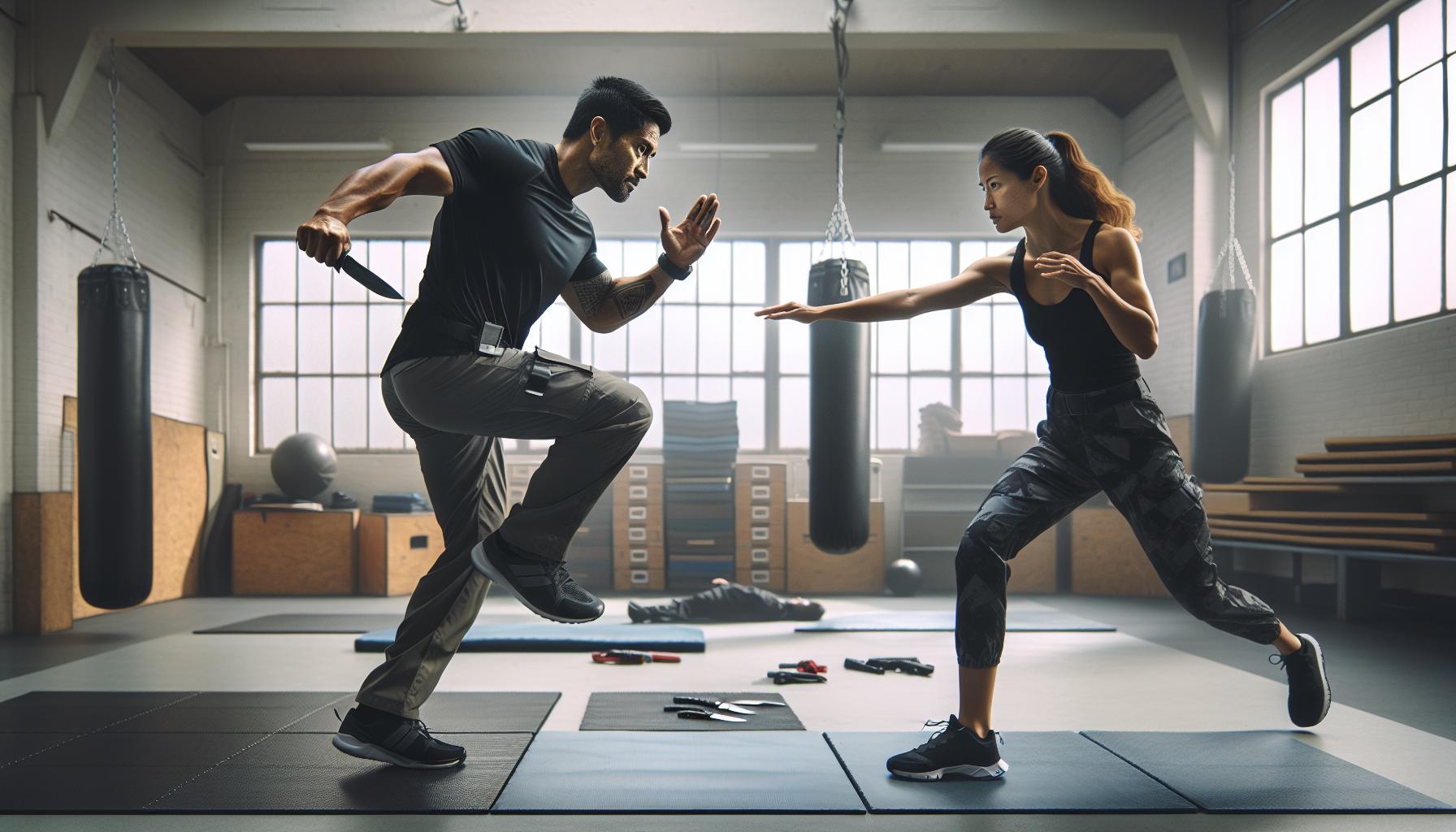
Physical Conditioning for Knife Defense Preparedness
Physical conditioning is a crucial aspect of preparing for potential self-defense situations where a knife may be involved. Understanding that physical fitness directly influences your ability to control and effectively use a knife can not be overstated. It’s not just about muscle power; it’s about agility, endurance, and coordination. When facing a threat, the rush of adrenaline often impairs fine motor skills, which is why conditioning can be the difference between maintaining a proper grip on your knife and losing control altogether.
To build a foundation for agility and effectiveness in a self-defense situation, focus on exercises that enhance both strength and stability. For example, incorporating functional exercises such as push-ups, squats, and lunges can improve overall body strength, allowing for better grip and control when holding a knife. Agility drills, such as shuttle runs and lateral movements, train your body to react swiftly and manage distance with an aggressor. Additionally, incorporating flexibility training through yoga or dynamic stretching can improve your body’s range of motion, vital for executing various knife techniques without injury.
It’s important to include specific grip-strengthening exercises in your regimen. Simple routines using grip strengtheners or even common items like a towel or a tennis ball can reinforce the musculature involved in holding and maneuvering a knife effectively. Regularly practicing these techniques under stress-such as simulating a high-pressure scenario-can further prepare you for the real-world dynamics of a self-defense encounter.
Lastly, focus on mental conditioning as much as physical. Practicing mindfulness can aid in maintaining calm during an encounter, allowing you to think clearly, prioritize de-escalation, and respond appropriately. Studying scenarios where self-defense was necessary, through knowledge and real-life stories, prepares your mind to react with the right balance of caution and assertiveness. Remember, while physical prowess is vital, the ability to de-escalate situations and understand the legal implications of using force remains paramount in self-defense training.
Teaching Others: Sharing Proper Grip Techniques Safely
When teaching others the fundamentals of proper knife grip techniques for self-defense, the emphasis must be on safety, responsibility, and practical effectiveness. Understandably, many may feel anxious about handling a knife, given its potential for harm. Therefore, creating a supportive and educational environment is essential, allowing individuals to build confidence while respecting the seriousness of using a weapon.
To impart effective knife grip techniques, start with the basics of grip types. Demonstrate the hammer grip, where the knife is held like a hammer, fingers wrapped firmly around the handle to provide maximum control during a defensive situation. Alternatively, showcase the ice pick grip, where the knife is held with the blade facing downward, allowing for thrusting movements. Each grip has its advantages in different scenarios, and teaching students why and when to use each enables them to make sound decisions under pressure.
While instructing, utilize a hands-on approach: allow students to practice with appropriate replicas or training knives under supervision. This hands-on learning can be enhanced by breaking the techniques into smaller drills-first focusing solely on how to grip properly, then progressing to footwork and distance management. Encourage students to practice these grips in slow motions before building up to more dynamic scenarios, emphasizing control over speed.
Throughout the training, it’s imperative to instill an understanding of the legal implications surrounding self-defense situations that involve a knife. Teach them about the importance of proportional response; using a knife should only ever be a last resort. Share real-life examples where individuals were able to de-escalate a situation, illustrating the effectiveness of conflict avoidance over confrontation. Legal ramifications can differ significantly by state, so consult local laws when discussing self-defense rights.
In conclusion, empowering individuals to handle a knife responsibly is a combination of technical instruction, ethical awareness, and practical skill-building. By creating a framework that prioritizes safety and ethical use, you equip students with not just the skills needed for self-defense, but also the knowledge to navigate the moral and legal landscape that accompanies such actions.
Success Stories: Real-Life Applications of Knife Defense Techniques
In the realm of self-defense, the value of proper knife grip techniques can’t be overstated. Many individuals have found themselves in life-threatening scenarios where a knife, held correctly, provided them a means of protection while avoiding unnecessary escalation. One compelling story involved a young woman who, while walking home late at night, was approached by an aggressive assailant. Earning confidence from prior self-defense training, she remembered the hammer grip technique. When cornered, she drew her knife, held it firmly, and de-escalated the situation by asserting her readiness to defend herself without engaging. This display of confidence was often enough to deter her attacker, demonstrating that knowledge and preparedness can effectively manage high-stress encounters.
Another instructive example came from a martial arts practitioner who unexpectedly encountered a potentially violent confrontation during a community event. He noticed a man attempting to accost a fellow attendee. Drawing upon his training, he first focused on de-escalation, speaking directly to the aggressor to redirect the tension. However, when the situation deteriorated and he felt physical confrontation was imminent, he switched to the ice pick grip, allowing for a defensive posture that was both threatening and controlled. Thankfully, the need for physical intervention did not arise; the mere presence of his grip and stance communicated readiness, leading to the assailant backing down without further confrontation.
These stories highlight that gripping techniques are not only technical but deeply intertwined with mental preparedness and situational awareness. In practical training, it is essential to practice grip techniques such as the hammer and ice pick grips in mock scenarios, allowing individuals to gain confidence without the fear of injury. It is this practice, paired with an understanding of legal implications and ethical force use, that prepares individuals to defend themselves effectively and responsively. Understanding when to employ these grips can often mean the difference between escalation and resolution, reinforcing the notion that self-defense is as much about mental acuity as it is about physical ability.
Frequently Asked Questions
Q: What is the correct way to grip a knife for self-defense?
A: The correct grip involves holding the knife firmly with your dominant hand on the handle, allowing your thumb to rest along the spine for control. Ensure that your fingers wrap around the handle securely but not too tightly, facilitating quick movements. Practicing this grip enhances your readiness in a self-defense situation.
Q: How can I improve my knife grip for better control?
A: To improve your grip, practice exercises such as squeezing a soft object and using various knife weights. Focus on grip strength and dexterity. Additionally, regularly practicing the grip to increase muscle memory enhances control, providing a balance between strength and fluid motion in action.
Q: What types of grips can be used for knife self-defense?
A: Common grips include the hammer grip, for power, and the ice pick grip, for versatility in thrusting. Each grip serves specific situations; research which is best for your intended use. Understanding these grips can enhance your effectiveness when defending yourself.
Q: How do I practice knife grip techniques safely?
A: Safety during practice involves using a training knife or a dull blade to avoid injury. Start with slow, controlled movements, focusing on your grip and forms, then gradually increase speed. Always have a partner with safety gear for added protection. Refer to the Essential Principles of Knife Grip Techniques for guidance on safety protocols.
Q: Can improper knife grip lead to accidents?
A: Yes, an improper grip can lead to loss of control and accidental injury to yourself or others. It’s crucial to consistently practice correct techniques to mitigate risks. Awareness of your surroundings and maintaining control over your knife can help prevent accidents in self-defense scenarios.
Q: What legal considerations should I keep in mind with knife self-defense?
A: Legal considerations include knowing your local laws regarding knife possession and use in self-defense. Always prioritize de-escalation techniques, as using a knife can have serious legal consequences. Familiarize yourself with the laws applicable to your state to ensure you act within legal limits.
Q: How does physical conditioning affect my knife self-defense abilities?
A: Physical conditioning significantly enhances your effectiveness in knife self-defense by improving strength, stamina, and agility. Longer practice sessions and focused workouts can enable quicker responses and better control over your movements. Integrate fitness routines for optimal preparedness.
Q: Why is situational awareness important when using a knife for self-defense?
A: Situational awareness is crucial as it helps identify threats and opportunities, allowing you to decide wisely when to use a knife defensively. Staying alert can help avoid potential conflicts and ensure that you only resort to knife defense in dire situations. Always be aware of your environment.
Future Outlook
Mastering the proper grip for knife defense is vital for your safety and confidence. Remember, it’s not just about holding the knife; it’s about understanding the legal and ethical implications of using it. As you refine these techniques, consider exploring more about other self-defense tools, like our guide on effective martial arts practices or the key principles of de-escalation in conflict situations.
Don’t wait until a situation arises-take action now by signing up for our newsletter, where you’ll receive expert tips and updates directly to your inbox. Also, share your thoughts or questions in the comments below; your engagement enriches our community. Equip yourself with knowledge, stay informed about the responsibilities of self-defense, and empower yourself responsibly. Your journey toward self-defense mastery starts here!