✨ This article was AI edited. Editorial responsibility: SelfDefenseGuides.info.
Produced with AI. This article was artificially generated. Editorial responsibility: SelfDefenseGuides.info.
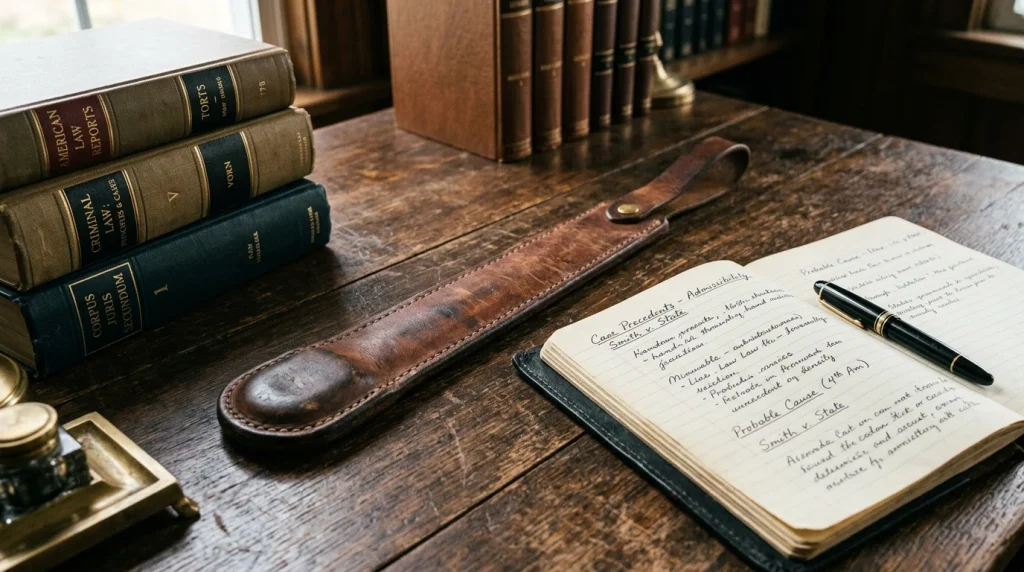
Personal safety equipment comes in many shapes and designs, but few defensive impact weapons carry as much historical mystique—and legal complexity—as the classic flat leather sap. Originally designed as a compact, silent impact implement carried by mid-century law enforcement officers, leather saps and blackjacks have seen a resurgence among tactical gear collectors and everyday carry (EDC) practitioners seeking non-ballistic defensive alternatives.
However, when asking are leather saps legal in Alabama, defensive practitioners must navigate a statutory landscape rooted in 19th-century public safety statutes, modern criminal code definitions, and recent legislative shifts toward constitutional carry for firearms. In this comprehensive guide, we dissect the exact Alabama statutory codes, judicial interpretations, carry boundaries, and self-defense justifications governing leather saps and blackjacks across the state.
Understanding Impact Weapons: Saps vs. Blackjacks vs. Slungshots
Before evaluating the criminal code, it is critical to clarify technical weapon taxonomy under criminal jurisprudence. Many state statutes, including Alabama’s historical penal codes, employ archaic terminology that conflates distinctly different defensive tools.
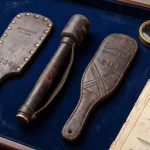
- Flat Leather Sap: A flat, multi-layered leather paddle encasing a shaped lead weight or lead shot, typically connected to a spring steel shank or stiff leather core, featuring a wrist retention strap. It is designed to deliver heavy kinetic energy while distributing force over a broader surface area to minimize lacerations.
- Blackjack (Cosh): A cylindrical, flexible baton-like impact tool consisting of a lead weight attached to a coiled spring and covered with tightly braided leather. Blackjacks concentrate kinetic impact onto a smaller focal point than flat saps.
- Slungshot: A maritime and street weapon created by suspending a heavy spherical weight (such as a lead ball or large steel bearing) at the end of a flexible cord, thong, or lanyard, commonly tied into a monkey’s fist knot. Under Alabama case law, slungshots are strictly treated differently from rigid or spring-steel saps.
Alabama Criminal Code on Impact Weapons: Section 13A-11-53
The primary statute governing impact weapons in Alabama is found in Title 13A (Criminal Code), Chapter 11 (Offenses Against Public Order and Safety), Article 3 (Offenses Relating to Firearms and Weapons).
Specifically, Alabama Code § 13A-11-53 (Carrying brass knuckles and slungshots) explicitly states:
“Anyone who carries concealed about his person brass knuckles, slungshots or other weapon of like kind or description is guilty of a misdemeanor, and, on conviction, shall be fined not less than $50.00 nor more than $500.00, and may also be imprisoned in the county jail or sentenced to hard labor for the county for not more than six months.”
The operative legal debate centers upon whether a flat leather sap falls under the statutory phrase “or other weapon of like kind or description.” In Alabama judicial appellate history, courts look to the primary manufactured purpose and kinetic mechanism of the implement. Because a leather sap is an impact force multiplier designed explicitly as an offensive or defensive striking instrument, prosecutors frequently argue that saps and blackjacks constitute weapons of “like kind” to brass knuckles and slungshots when carried concealed.
Concealed Carry vs. Open Carry in Alabama
In 2022, Alabama enacted landmark legislation (House Bill 272, effective January 1, 2023) establishing permitless carry (constitutional carry) for concealed handguns. Many citizens mistakenly assume this deregulation extends to all dangerous weapons. However, Alabama’s permitless carry statute applies strictly to handguns and firearms; it did not repeal or modify the statutory prohibitions against concealed impact weapons outlined in Section 13A-11-53.
Carrying on Private Property vs. in Public Spaces
In Alabama, possessing a leather sap or blackjack within your own home, private dwelling, curtilage, or fixed place of business is generally lawful. The Second Amendment and Alabama constitutional protections (Article I, Section 26) safeguard the possession of defensive arms on private property for self-defense purposes. The legal hazard arises when the weapon is carried concealed off one’s private property into public venues, municipal streets, or motor vehicles.
Vehicle Transport Laws
Under Alabama law, a weapon concealed inside an automobile glove compartment, under a seat, or within immediate reaching distance of the driver is legally considered “concealed on or about the person.” Unless secured within a locked container or inaccessible trunk compartment, carrying a leather sap in your vehicle’s center console could trigger a misdemeanor charge under § 13A-11-53 during a routine traffic stop.
Legal Comparison: Defensive Weapons in Alabama
To contextualize where leather saps stand compared to other personal defense implements under Alabama law, review the comparative matrix below:
| Weapon Type | Concealed Carry Status | Open Carry Status | Statutory Reference |
|---|---|---|---|
| Flat Leather Sap | Gray Area / Misdemeanor Risk | Lawful (Private Property) | Ala. Code § 13A-11-53 |
| Brass Knuckles | Explicitly Prohibited | Restricted in public | Ala. Code § 13A-11-53 |
| Collapsible Baton (ASP) | Unregulated (Not specified) | Lawful | General Common Law |
| Pepper Spray / OC Gel | Fully Lawful | Fully Lawful | Unrestricted |
| Handgun (Concealed) | Lawful (Permitless Carry) | Lawful (Permitless Carry) | Ala. Code § 13A-11-7 (Act 2022-133) |
Self-Defense Justification Under Alabama Code § 13A-3-23
Even if an individual lawfully possesses a leather sap on their private property, employing it against another human being immediately invokes Alabama’s statutory use-of-force laws. Under Alabama Code § 13A-3-23, a person is justified in using physical force upon another person to defend themselves or a third party from what they reasonably believe to be the use or imminent use of unlawful physical force.
Because a weighted leather sap is capable of causing bone fractures, severe concussions, traumatic brain injuries, or death when directed at the cranium or cervical spine, strikes to the head are legally classified as deadly physical force. In Alabama, deadly force is justified only if you reasonably believe that the other person is using or about to use unlawful deadly physical force, or committing designated violent felonies such as kidnapping, burglary, or forcible sexual assault. Striking a non-deadly aggressor in the temple with a lead-weighted sap will almost certainly forfeit statutory self-defense immunity and expose the defender to first-degree assault or manslaughter charges.
Practical Alternatives for Everyday Carry in Alabama
Given the legal ambiguity surrounding § 13A-11-53 and the absence of clear statutory exemption for saps, defensive practitioners in Alabama should consider alternative, legally unambiguous defensive tools:
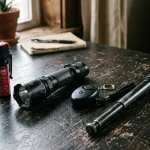
- Tactical High-Lumen Flashlight: Features hardened aircraft-grade aluminum bezels that can deliver defensive kinetic strikes while serving a primary utilitarian purpose as an illumination tool, completely bypassing concealed weapon statutes.
- Stream-Based OC Pepper Spray: Offers decisive non-lethal stopping power at 10 to 15 feet without legal ambiguity or lethal force liabilities under Alabama statutes.
- Concealed Handgun: Supported by Alabama’s robust statutory framework, permitless carry protections, and clear self-defense case law.
For more foundational legal analysis on state-level defensive regulations, explore our comprehensive state-by-state self-defense laws guide and our breakdown of legal weapons used in modern self-defense.
Frequently Asked Questions About Leather Saps in Alabama
Can I legally own a leather sap in Alabama?
Yes. Mere ownership, manufacturing, collecting, and possessing a leather sap or blackjack within your private residence or private property is lawful under Alabama state law. State prohibitions primarily target concealed carry off-premises.
Does Alabama’s permitless carry law protect carrying a leather sap?
No. Alabama’s 2023 permitless carry legislation (Act 2022-133) applies exclusively to handguns and firearms. It did not alter or repeal § 13A-11-53 regarding concealed impact weapons, slungshots, or brass knuckles.
What is the criminal penalty for carrying a concealed sap in Alabama?
Carrying a concealed weapon under Alabama Code § 13A-11-53 is classified as a misdemeanor offense punishable by a fine between $50 and $500, and up to six months of imprisonment or hard labor in the county jail.
Is using a leather sap in self-defense considered lethal force?
Any strike directed at the head, neck, or spine with a weighted leather sap is legally evaluated as deadly physical force due to the substantial risk of death or catastrophic brain trauma, requiring justification under Alabama Code § 13A-3-23.
Get our latest guides, news, and insights highlighted in your Google Search & AI Overviews.