✨ This article was AI edited. Editorial responsibility: SelfDefenseGuides.info.
Produced with AI. This article was artificially generated. Editorial responsibility: SelfDefenseGuides.info.
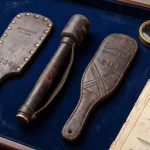
Mid-century law enforcement memorabilia, historical personal protection implements, and vintage leathercraft pieces occupy a unique corner of historical arms collecting. Among the most sought-after artifacts are antique flat saps, braided blackjacks, slapjacks, and pocket billys manufactured by legendary American companies such as Bucheimer, Tex Shoemaker & Sons, Jay-Pee, and Brauer Bros.
However, when discovering an antique sap in an estate sale, attic, or collector’s auction, the piece is frequently in dire condition: desiccated leather suffering from red rot, brittle linen stitching, powdery white oxidation on lead weights, and rusted spring steel shanks. Performing a proper sap/blackjack restoration demands a meticulous balance between historical conservation and functional leather rejuvenation. In this masterclass guide, we walk through the museum-grade cleaning, conditioning, stitching, and safety protocols necessary to preserve these historical leather artifacts.
Understanding the Anatomy & Construction of Vintage Saps
Before applying any solvent or conditioner, a restorer must understand the internal architecture of the tool to avoid accidental damage or hazardous exposure:
- The Outer Leather Envelope: Historically constructed from dense, vegetable-tanned steerhide (typically 6oz to 9oz weight). Over decades, vegetable tannins oxidize and lose moisture, leaving collagen fibers fragile and prone to cracking under bending stress.
- The Internal Weight (Lead Slug or Lead Shot): Flat saps house cast lead weights or tightly packed lead birdshot sewn into a canvas or inner leather pouch. Blackjacks often feature a cylindrical lead head crimped onto a steel spring. As lead ages in high humidity, it develops a toxic white crust known as lead carbonate (lead blooming).
- The Spring Steel Core: High-end blackjacks and flat saps (such as Bucheimer Clark models) incorporate flat spring steel shanks extending from the handle through the body to provide kinetic whip and snap upon impact. Internal moisture can cause hidden rust, compromising the spring’s elasticity.
- Stitching & Seams: Assembled using heavy waxed linen or early nylon thread. In vintage pieces, natural linen thread frequently rots faster than the leather itself, causing seam separation along the striking perimeter.
Essential Tools & Conservation Materials
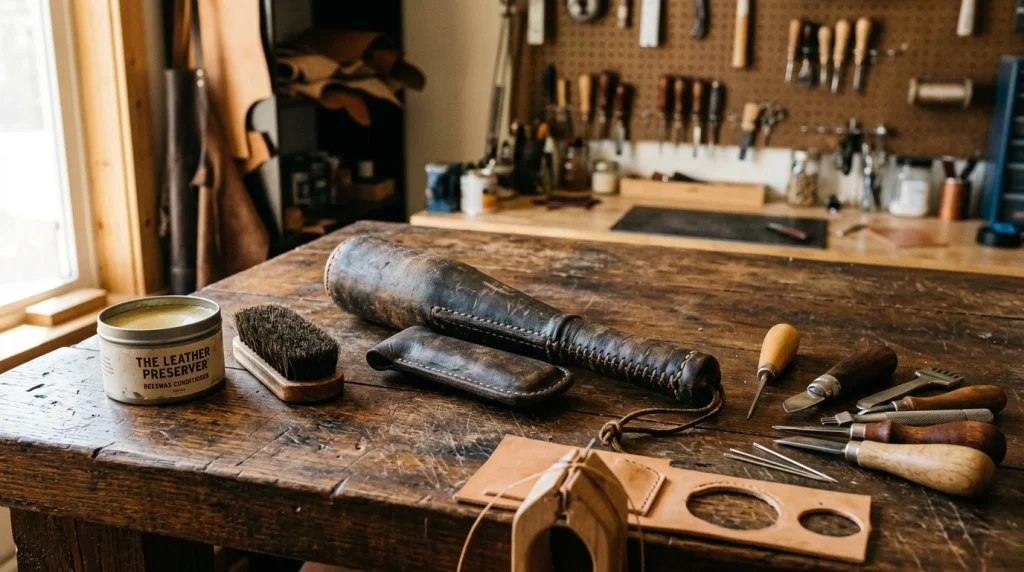
Never use petroleum-based automotive grease, WD-40, silicone sprays, or shoe polishes containing synthetic dyes on vintage collectible leather. Assemble the following conservator-approved materials:
| Material / Tool | Function | Recommended Product |
|---|---|---|
| pH-Balanced Saddle Soap | Gentle surface grime and salt removal | Fiebing’s Yellow Saddle Soap |
| 100% Pure Neatsfoot Oil | Deep fiber lipid rehydration (pH neutral) | Pure Neatsfoot (No mineral blends) |
| Beeswax Leather Conditioner | Surface conditioning & moisture barrier | Skidmore’s Leather Cream / Obenauf’s |
| Microcrystalline Wax | Museum-grade archival sealant | Renaissance Wax |
| Horsehair Brushes | Buffing without scratching antique grain | 100% Natural Horsehair Brush |
| Waxed Linen Thread & Needles | Restitching separated seams using original holes | 4-ply Waxed Irish Linen / Harness Needles |
Step-by-Step Restoration Protocol
Step 1: Safety Inspection & Lead Mitigation
Because antique saps contain lead weights, work in a well-ventilated space wearing nitrile gloves and an N95 dust mask. If the seam is split and white chalky lead oxide is visible, do not inhale or vacuum with standard filters. Wipe away loose residue with damp microfiber cloths and dispose of them as hazardous household waste. Wash hands thoroughly following inspection.
Step 2: Surface Cleansing & Decontamination
- Dampen a horsehair brush or soft cotton cloth with warm water (never soak or submerge the sap).
- Work a small amount of Fiebing’s saddle soap into a light lather.
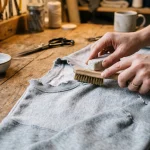
- Gently massage the lather across the leather surface in small circular motions to lift embedded sweat salts, dirt, and decayed waxes.
- Wipe away the lather immediately with a clean, dry microfiber cloth. Allow the piece to air dry at room temperature away from direct sunlight, heaters, or hair dryers for 12 to 24 hours.
Step 3: Slow Rehydration & Fiber Nourishment
Severely dried leather will drink oil rapidly, but applying too much oil at once will saturate the internal canvas lining and cause the leather to become mushy (spongy). Apply 100% pure neatsfoot oil sparingly using a cotton pad. Let the oil absorb for 48 hours. If the leather remains stiff, apply a second light coat. The objective is to restore supple flexibility to the grain without altering its natural historic patina.
Step 4: Seam Repair & Edge Burnishing
If original stitching has disintegrated, use the existing awl holes rather than punching new punctures in the vintage leather. Using a traditional two-needle saddle stitch with brown or black waxed linen thread, carefully re-stitch the seam with uniform tension. Burnish dry edges with a wooden slicker and a touch of gum tragacanth or beeswax to seal the edge grain against environmental moisture.
Step 5: Archival Wax Sealing & Final Buffing
Once rehydration is complete, apply a micro-thin layer of Renaissance Microcrystalline Wax or Skidmore’s Leather Cream. This museum-grade sealant repels moisture, prevents fingerprint acid etching, and creates a lustrous, semi-gloss luster when buffed with a dry horsehair brush.
Historical Value Preservation: What NOT to Do
Collectors of vintage police memorabilia place a premium on original finishes and historical character. Avoid these common amateur restoration mistakes:
- Never Sand the Leather: Sanding removes the original top grain and destroys vintage maker marks (e.g., \”BUCHEIMER CLARK / VALENCIA, CALIF\”).
- Do Not Re-dye Unless Completely Necessary: Black or dark brown dye obscures the natural age patina, reducing collector appraisal value by 40% to 60%.
- Never Force a Stiff Blackjack to Bend: Forcing a dried blackjack to flex will immediately crack the outer leather wrap and snap brittle internal springs. Always rehydrate thoroughly before testing flexibility.
For more foundational guides on impact tools and legal personal protection hardware, explore our guide to historical and modern self-defense weapons and our analysis on state self-defense statutory frameworks.
Frequently Asked Questions: Sap & Blackjack Restoration
How do I identify maker marks on vintage saps?
Look near the base of the handle or on the wrist strap for stamped markings. Renowned historic makers include Bucheimer (often stamped with model numbers like B-8 or Clark), Tex Shoemaker, Jay-Pee, and Boston Leather.
Is the white powder on vintage saps dangerous?
Yes. The white powdery substance frequently found near seams or exposed lead weights is lead carbonate (lead blooming). Always wear nitrile gloves and an N95 mask when cleaning, and never dry-brush lead powder into the air.
Can I use mineral oil or olive oil to soften old leather?
No. Vegetable oils (like olive or canola) spoil and go rancid inside leather fibers, creating mold. Mineral oil breaks down collagen fibers over time. Always use 100% pure neatsfoot oil or specialized beeswax leather balms.
How should restored saps and blackjacks be stored?
Store in a climate-controlled room with 45–55% relative humidity away from direct sunlight. Never store in airtight plastic bags, as trapped moisture promotes mildew and rapid lead oxidation.
Get our latest guides, news, and insights highlighted in your Google Search & AI Overviews.