✨ This article was AI edited. Editorial responsibility: SelfDefenseGuides.info.
Produced with AI. This article was artificially generated. Editorial responsibility: SelfDefenseGuides.info.
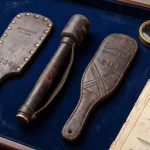
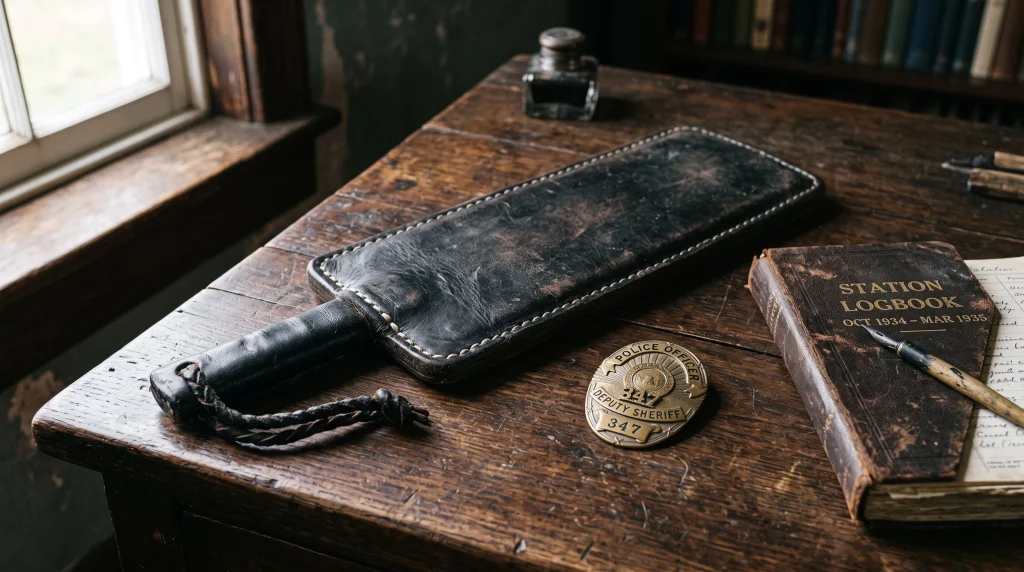
Among the wide spectrum of historical impact tools, few defensive devices possess the distinctive engineering and tactile balance of the classic slap jack. Often referred to interchangeably in vernacular slang as a beaver tail sap, flat sap, or slapjack, this specialized weapon was a staple of mid-century law enforcement utility belts and plainclothes detective arsenals across North America and Europe.
Today, antique collectors, martial artists, and modern self-defense enthusiasts frequently seek definitive answers regarding slap jack weapons. How does a slap jack differ mechanically from a round blackjack or cosh? What is the internal physics behind its kinetic shock delivery? And what are the modern state and federal legal restrictions governing manufacture, ownership, and concealed carry? In this comprehensive technical guide, we break down the internal anatomy, kinetic ballistics, historical policing legacy, and contemporary statutory status of slap jack impact tools.
Anatomy & Internal Physics of the Slap Jack
Unlike rigid wooden batons or flexible sand clubs, a genuine slap jack is a sophisticated kinetic energy multiplier constructed from several carefully balanced components:
- The Outer Leather Envelope: Made from dual-layered 7oz to 9oz vegetable-tanned steerhide. Heavy saddle stitching along the perimeter maintains internal pressure, preventing the lead payload from shifting during movement.
- The Kinetic Payload (Lead Slug vs. Lead Shot): The wider distal paddle houses either a cast solid lead weight shaped like an oval disc or tightly compacted lead shot. Solid lead discs provide decisive bone-level concussive shock, while lead shot formulations conform slightly upon impact, dispersing kinetic force across surface tissue.
- The Internal Spring Steel Shank: Running through the handle into the body is a tempered flat spring steel core (often recycled clock spring or automotive leaf spring steel). This spring acts as a kinetic lever: as the officer swings the tool, the spring flexes backward and violently snaps forward upon deceleration, dramatically amplifying terminal strike velocity beyond standard human arm speed.
- The Integrated Wrist Lanyard: A wide leather loop secured at the pommel ensures the tool cannot be stripped from the defender’s hand during close-quarters wrestling.
Slap Jack vs. Blackjack vs. Cosh: Defining the Distinctions
In common parlance and statutory criminal codes, law enforcement terminology often conflates distinct impact weapons. The table below delineates the structural and tactical differences:
| Weapon Type | Physical Profile | Internal Spring Core | Kinetic Impact Characteristics |
|---|---|---|---|
| Slap Jack (Flat Sap) | Flat, paddle-shaped, wide striking face | Flat tempered spring steel shank | Broad force distribution; concussive nerve disruption; low laceration risk |
| Blackjack (Jack) | Cylindrical, round leather wrap | Coiled helical steel spring | Focal kinetic concentration; high cranial fracture risk |
| Cosh (Life Preserver) | Flexible weighted cord / rubber rod | Often lacks spring; flexible rubber/rope | Whiplike momentum; unpredictable rebound dynamics |
The Law Enforcement Legacy: Why Police Adopted (and Retired) Saps
From the 1920s through the 1970s, legendary leather manufacturers like Bucheimer Clark, Tex Shoemaker, and Jay-Pee produced dozens of cataloged slapjack designs for American police departments. Police officers favored slap jacks for several compelling operational reasons:
- Pocket Portability: Unlike a 26-inch straight wooden nightstick that banged against cruiser doors and required awkward belt ring carry, a flat 8-inch slap jack slid discreetly into a uniform sap pocket sewn along the thigh seam of police trousers.
- Discreet Plainclothes Deployment: Detectives operating in plainclothes could carry effective blunt-force protection beneath a tailored suit jacket without printing.
- Nerve Motor Dysfunction: When deployed against large motor nerve clusters (the brachial plexus in the shoulder, radial nerve in the forearm, or femoral/common peroneal nerve in the thigh), a slap jack delivered temporary muscular paralysis without requiring lethal firearm discharge.
Why Modern Departments Phase Out Slap Jacks
By the late 1980s, high-profile lawsuits and changing administrative force continuums led to the widespread retirement of saps in favor of expandable metal batons (ASP), chemical aerosol sprays (OC pepper spray), and conducted electrical weapons (TASER). Strikes with weighted saps carried significant risk of unintentional skull fractures, epidural hematomas, and lethal brain trauma if an officer missed a limb target under duress.
Legal Status Across the United States
The legality of owning, manufacturing, and carrying slap jack weapons varies dramatically depending on the specific state jurisdiction:
States with Total Prohibitions
In several states, slap jacks, saps, and blackjacks are classified alongside brass knuckles and switchblades as prohibited weapons per se:
- California (Penal Code § 22210): Any person who manufactures, imports, keeps for sale, offers, or possesses any leaded cane, blackjack, slungshot, sandclub, sap, or sandbag is guilty of a misdemeanor or felony (a \”wobbler\” punishable by up to 3 years in county jail).
- New York (Penal Law § 265.01): Criminal possession of a weapon in the fourth degree explicitly includes any blackjack, bludgeon, or plastic knuckles (Class A misdemeanor).
- Massachusetts (General Laws ch. 269 § 10): Prohibits carrying or possessing any blackjack, slung shot, or metallic knuckles.
States with Deregulation or Permit Recognition
- Texas (House Bill 446 – 2019): Texas enacted historic legislation repealing the statutory ban on clubs, blackjacks, and brass knuckles. In Texas, adults may lawfully carry clubs and saps in public without a permit.
- Florida (FS § 790.01 / FS § 790.06): Florida’s concealed weapon license specifically covers \”concealed weapons,\” which statutory definitions extend beyond handguns to include billies and electronic weapons.
For a complete breakdown of weapon legality across all 50 states, explore our comprehensive state self-defense laws map and our analysis of legal weapons for personal defense.
Defensive Use of Force Realities
Even in jurisdictions where possessing a slap jack is lawful, striking an assailant with a weighted impact implement triggers rigorous legal scrutiny under state self-defense statutes. Striking an attacker in the head, temple, neck, or throat with a lead-weighted leather weapon is uniformly classified as deadly physical force under American jurisprudence. To justify a strike to lethal target areas, the defender must reasonably perceive an imminent threat of death or serious bodily injury. Striking a non-deadly combatant with a sap will result in aggravated assault or second-degree murder charges.
Frequently Asked Questions About Slap Jack Weapons
What is inside a slap jack weapon?
A slap jack contains an oval lead weight or lead shot payload encased in heavy leather, reinforced by a flat spring steel shank running from the handle through the body to create kinetic leverage.
Is a slap jack illegal under federal law?
No. There is no federal statute banning the manufacture or possession of slap jacks or saps. Legality is governed strictly by state penal codes and municipal weapon ordinances.
Why were slap jacks called beaver tails?
Due to their distinctive wide, flat paddle profile resembling the tail of a beaver, designed to spread kinetic impact over a wider surface area than cylindrical blackjacks.
Can I carry a slap jack for concealed self-defense?
In most states, carrying a concealed slap jack or sap in public is classified as a misdemeanor or felony weapon violation. Always check your specific state penal code before carrying any impact tool.
Get our latest guides, news, and insights highlighted in your Google Search & AI Overviews.